
My Easy Half-Hour Garage Door Makeover (And Landscaping Question)
I worked on about three different outdoor projects yesterday, but one that I did took me less than an hour (probably closer to 30 minutes), and I think it made such a difference. I added a little flourish to the plain garage door on my workshop.
This has been the view of my workshop from the back doors of my studio. I love the view of the front of the workshop, but unfortunately, I can’t see that cute view from the studio. I just see this big, white, plain garage door.
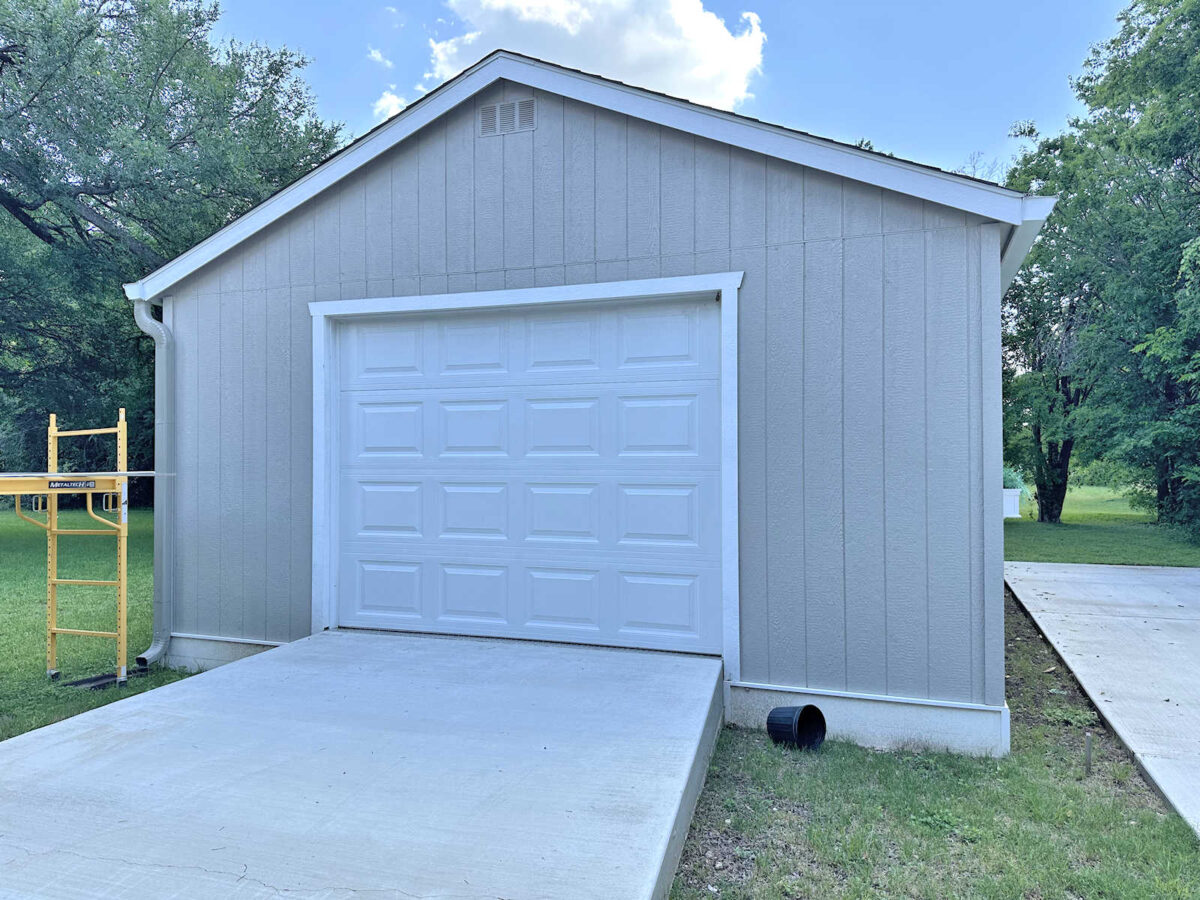
And every time I pull into the driveway, I do at least get to see the cuteness on the back of the workshop, but that big garage door still demands so much attention.
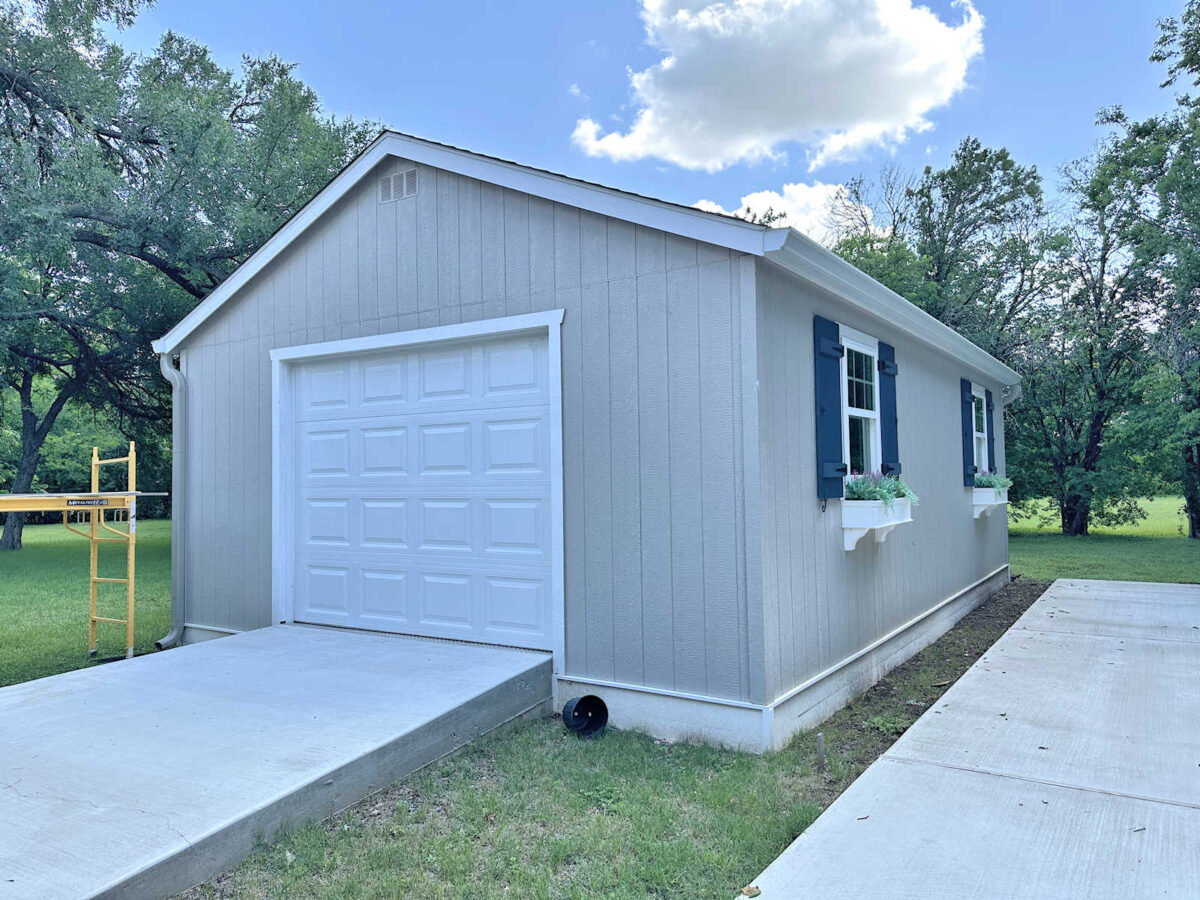
A while back, I purchased these magnetic faux hinges and handles (affiliate link) that kind of give a garage door the look of carriage doors. I put them on, and I did like the accents, but to my mind, they didn’t make any sense. Carriage doors open from the center and swing like a door, but it’s obvious that my garage door is just one, single, solid garage door. So the handles in the middle didn’t make sense, and the hinges don’t make sense.
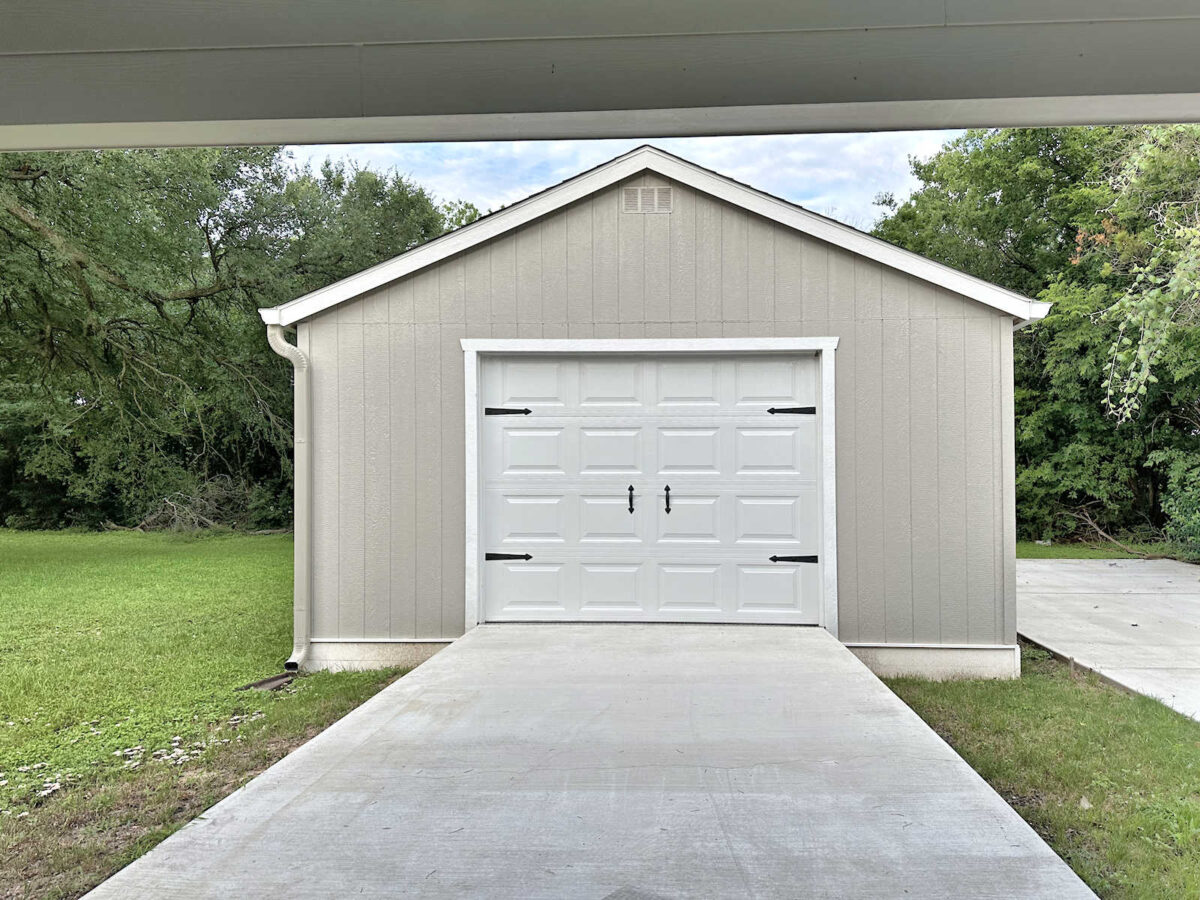
But I do like the black accents. Those coordinate nicely with the black accents on the shutters, so I really wanted to use them. So I decided to throw caution to the wind and paint a tiny strip down the center of my garage door in hopes that it would give the impression, at a glance, that the one garage door was actually split in the middle. I used black oil-based paint for this.
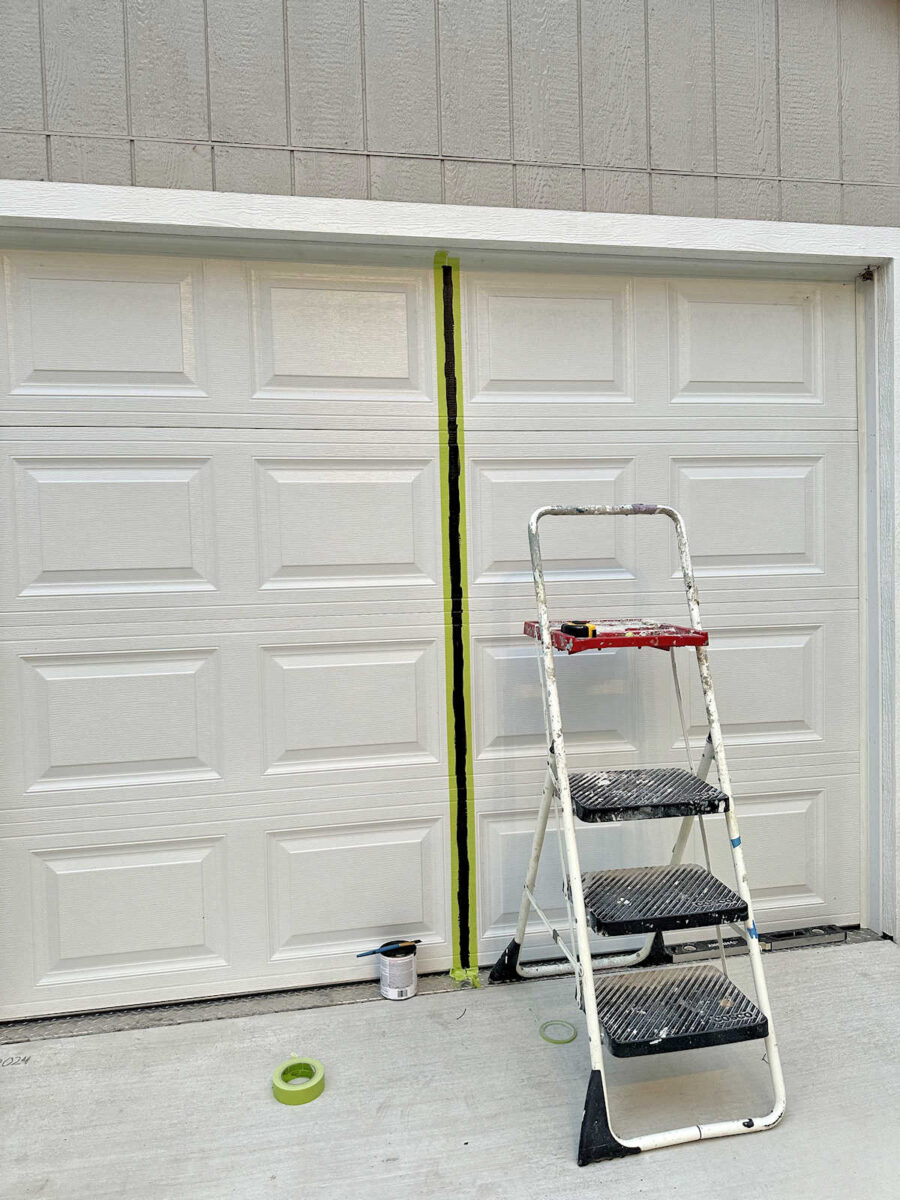
It’s a tiny detail, and it’s much harder to see in tiny pictures than it is in person, but it was the detail that my brain needed to make the hinges and handles make sense.
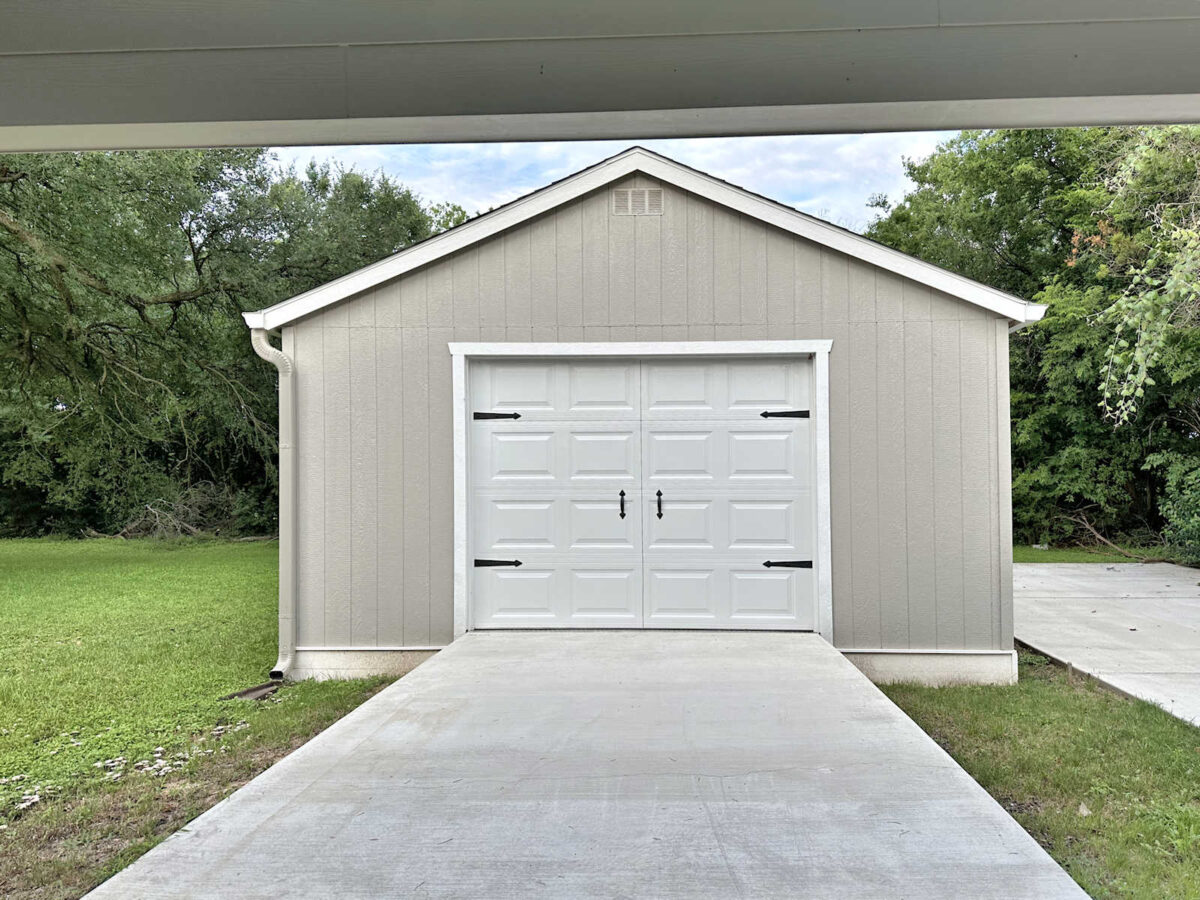
I really wish I could do some sort of faux treatment to those top four squares to make them look like windows, but I tried that about a year ago, and they’re just way too close to the top framing to make them look real. But that’s okay. I’m grateful for what I have.
I still don’t think anyone would really be convinced that these are carriage doors, but I do think the black accents added just enough flourish to the garage door for now. They took it up a notch, and now when I look out the back doors of my studio, I’m not staring at a plain white garage door. Sometimes, those small details can make a big difference.
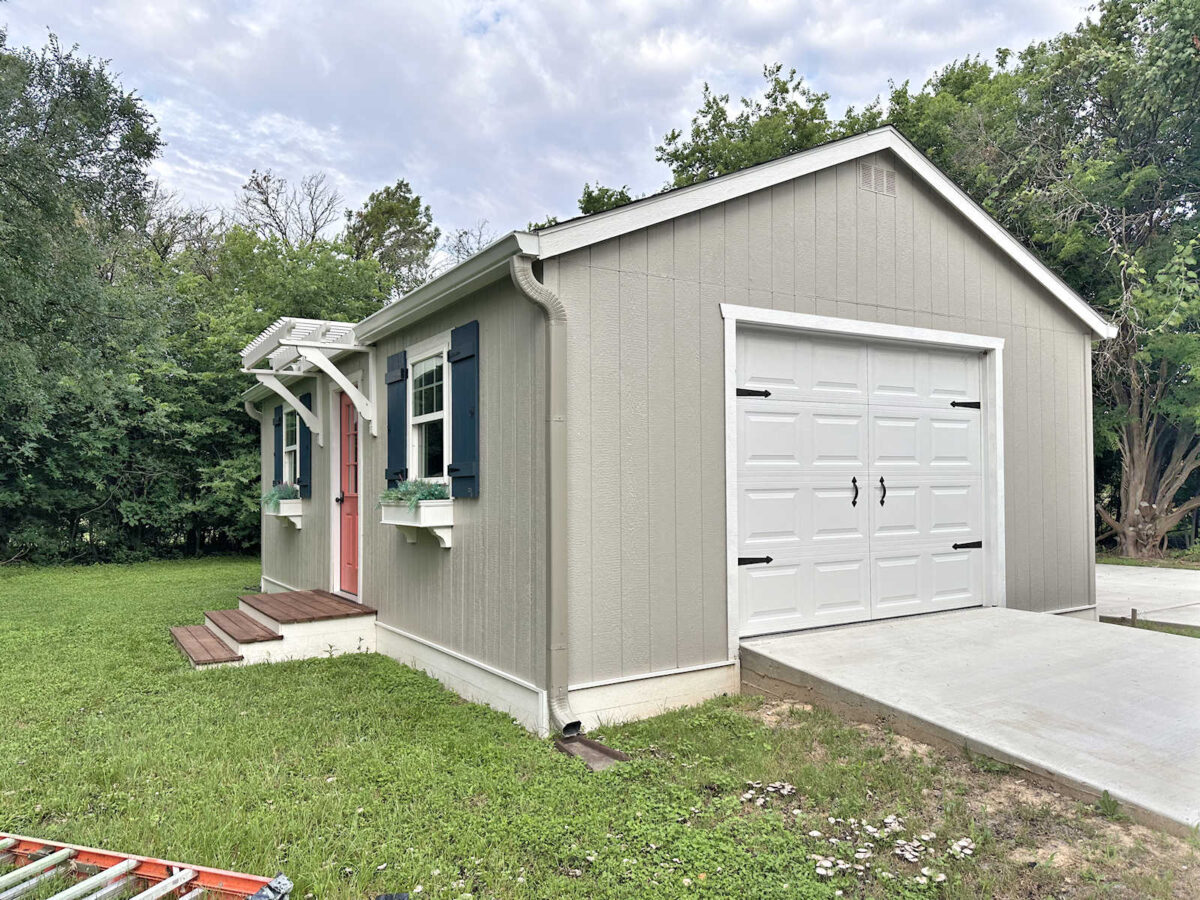
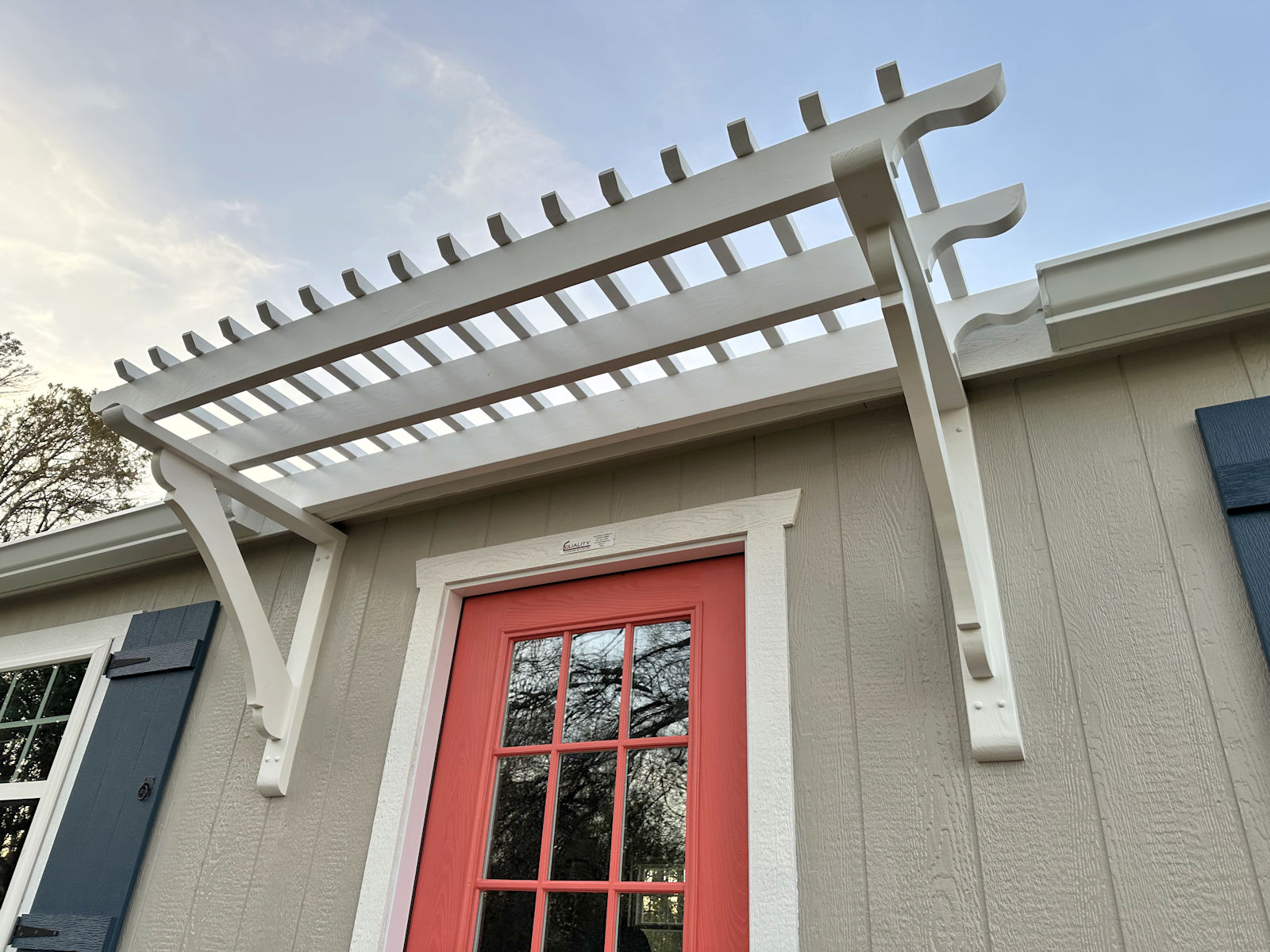
I do still eventually want to build a pergola above the garage door and have actual vines of some sort growing on it. And I also want to install a pretty light above the door. But until then, I’m pleased with this small upgrade.
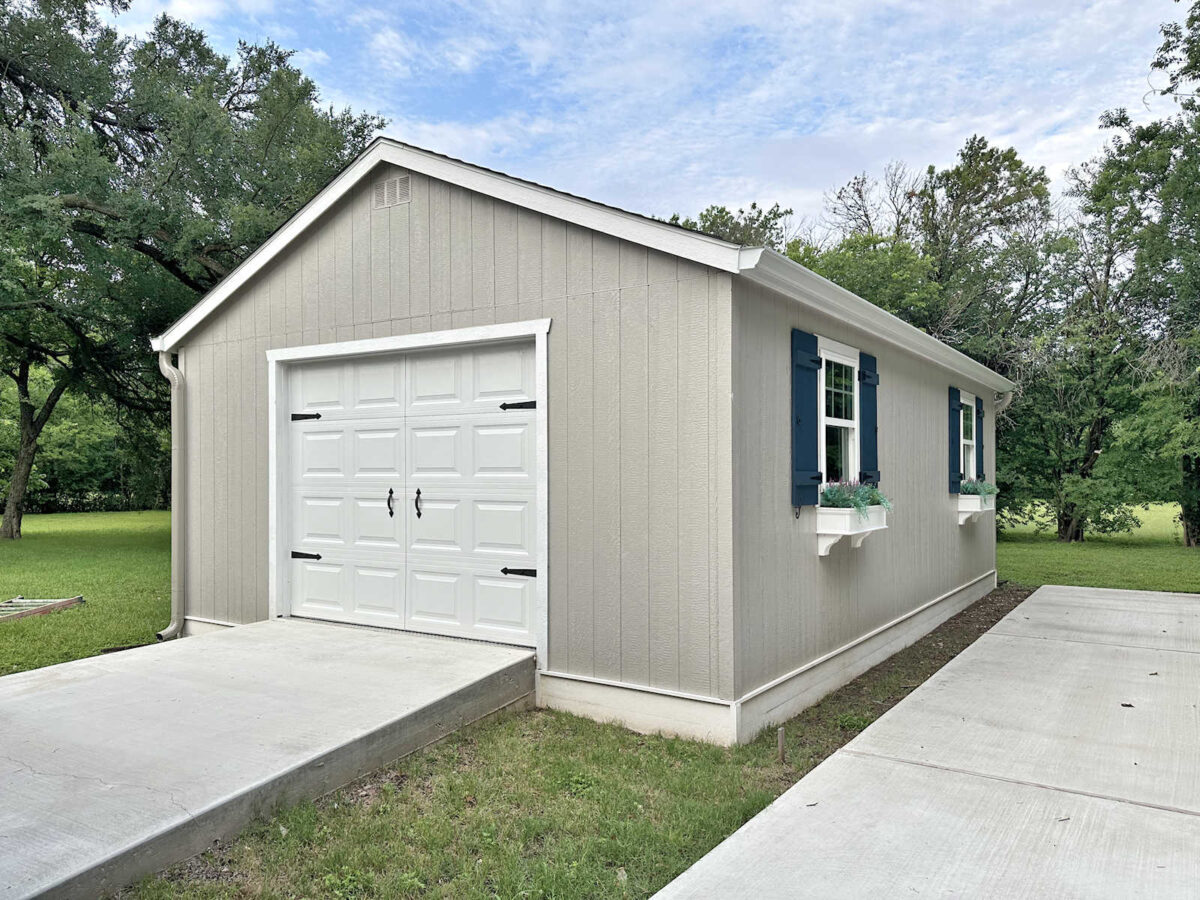
UPDATE: I also added the magnetic “windows”. Here’s a look at the difference those made. I love how easy this was, and I think they made a huge difference! These are the ones I used (affiliate link).
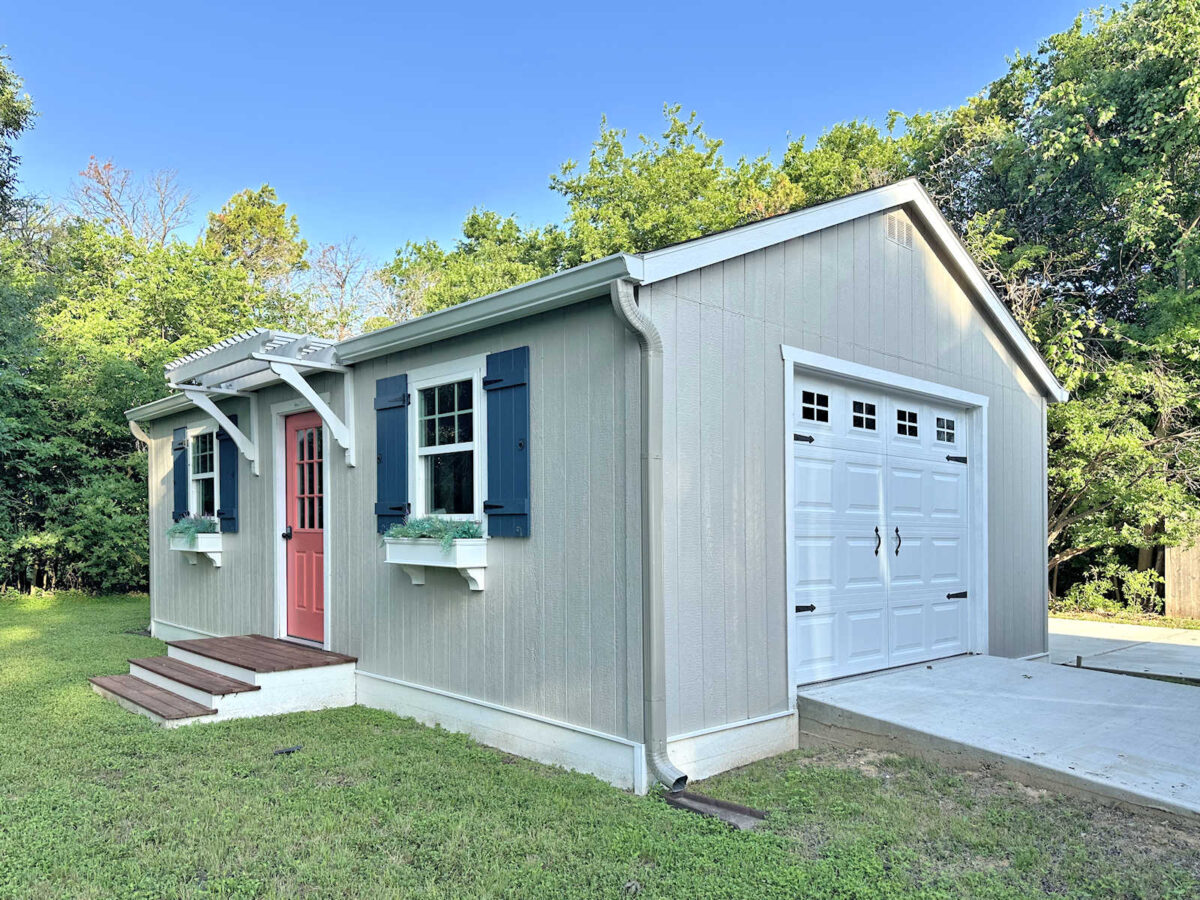
And of course, my mind is always thinking about landscaping lately. I want to put a walkway that connects the carport to the front steps of the workshop. On our landscape plan, the walkway was supposed to go from a concrete pad between the carport and the workshop to the front steps of the workshop.
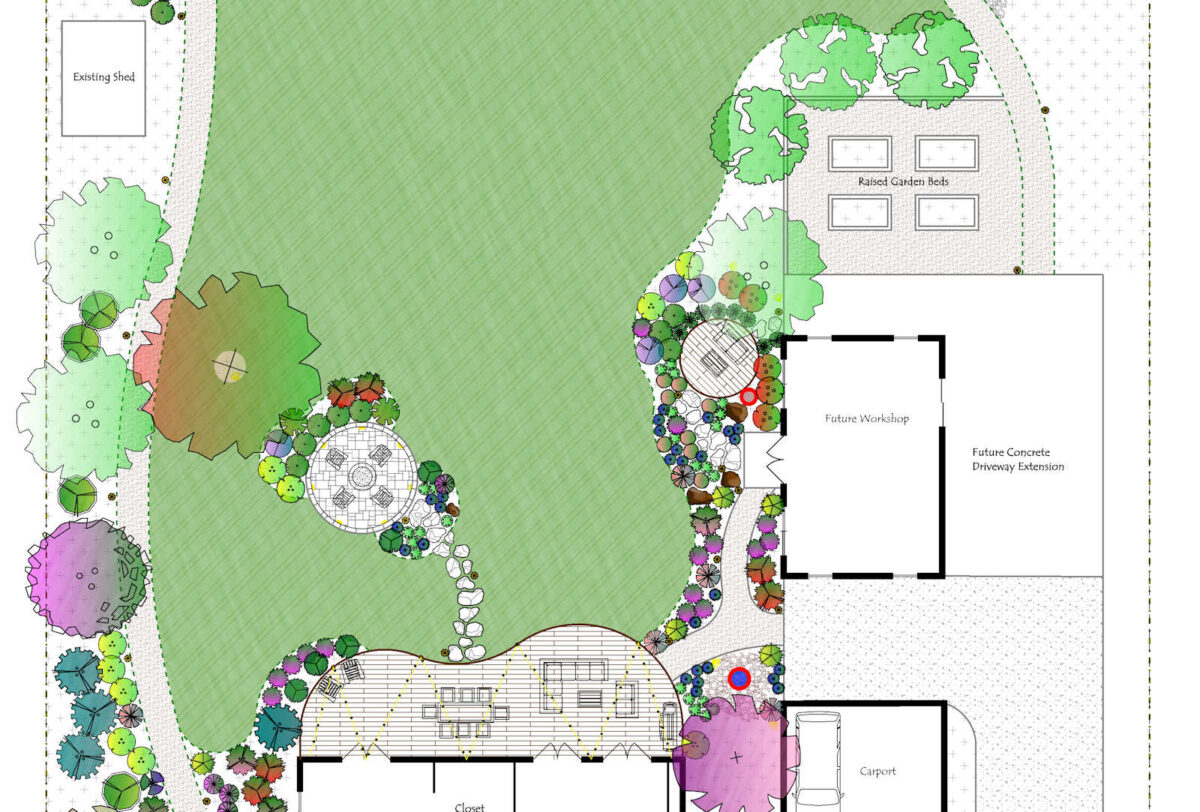
But when I gave the landscape designer my thoughts, I was thinking at that time that the workshop would be built at ground level on a concrete foundation. We went with a different option, with the workshop built on skids so that it’s raised above the ground about 12 inches or so, and then the concrete connecting the carport to the workshop ended up being a ramp instead of a flat concrete pad. So now the placement of the walkway needs to be reworked just a bit.
Now it needs to come off the side of the carport and lead to the front steps of the workshop. And unlike what the landscape plan shows, where the walkway meets the side of the front workshop entry, the walkway will need to go to the front of the steps. As I mentioned in a previous post, I’m really leaning towards using crushed granite for all of these walkways that I want to add. I think that would be the most user-friendly for Matt in his power wheelchair. It can go over grass very easily, so I think it would handle crushed granite easily as well. And while Matt wouldn’t ever be using this particular pathway (he would obviously use the ramp), I want the pathways to be the same material, and I want most of them to be accessible to him.
So I’m envisioning that this particular pathway would look something like this…
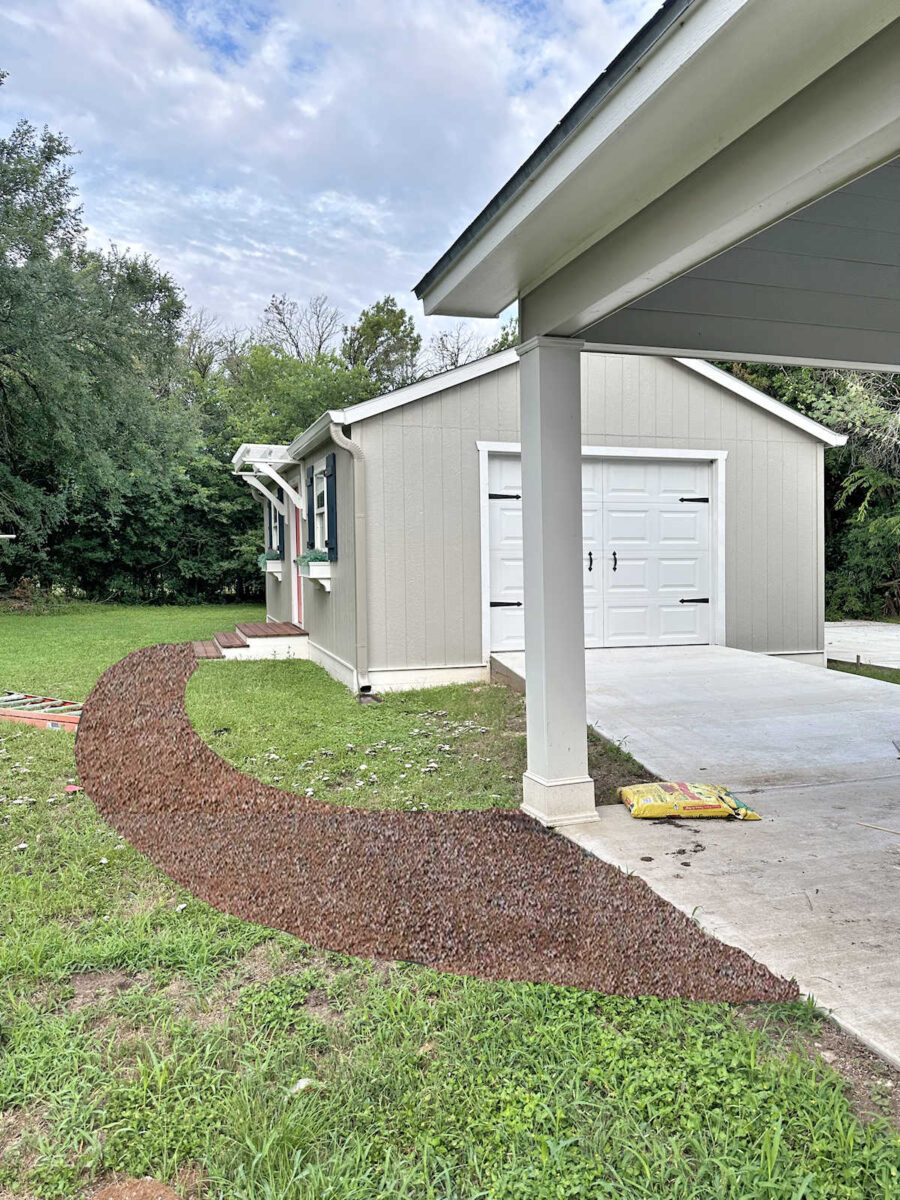
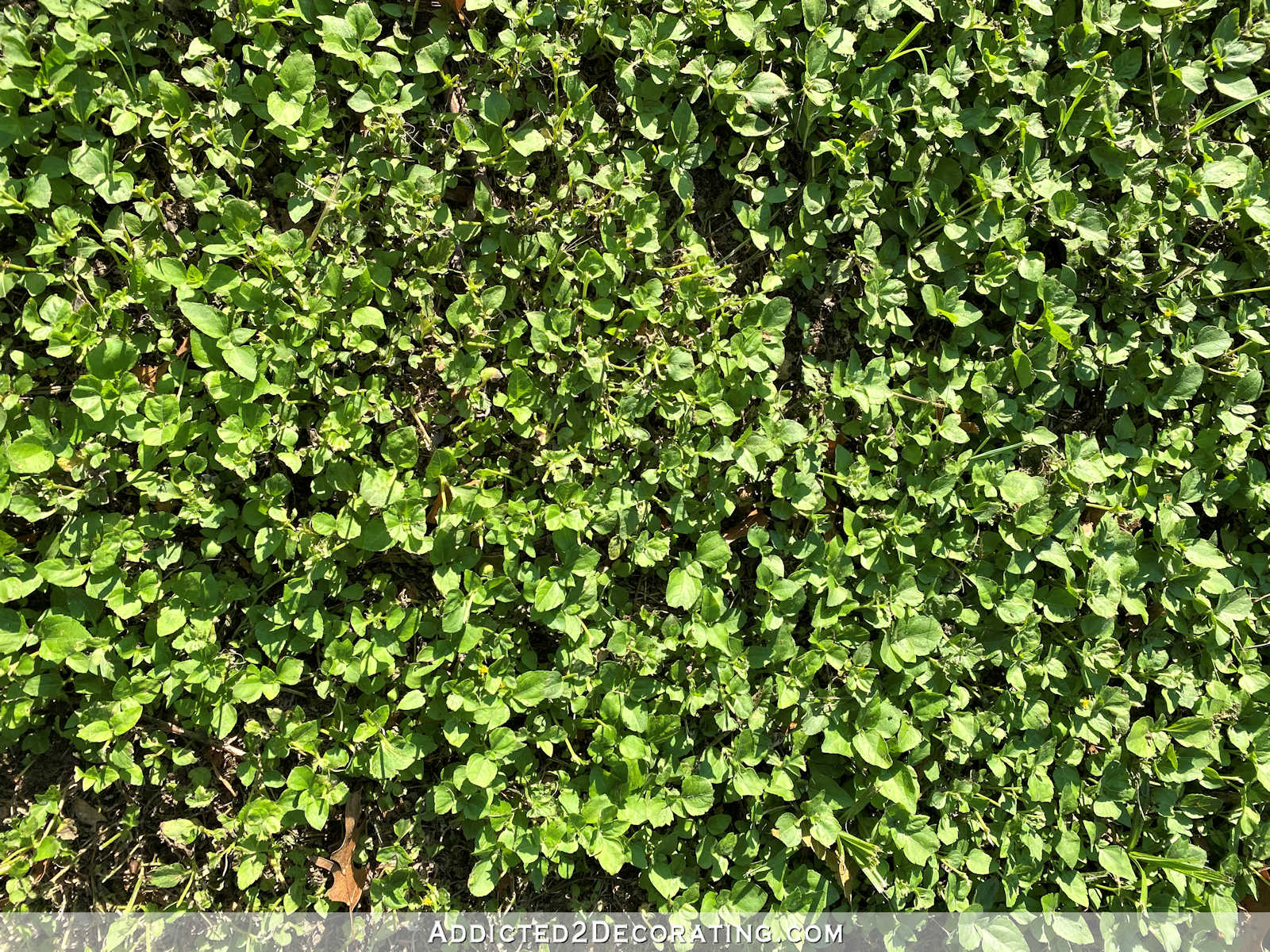
But then that leaves me with the question of what kind of ground cover I want to use for the planting beds that are left between the pathway and the ramp on that side, as well as the area between the ramp and the driveway, and the area behind the workshop on the other side.
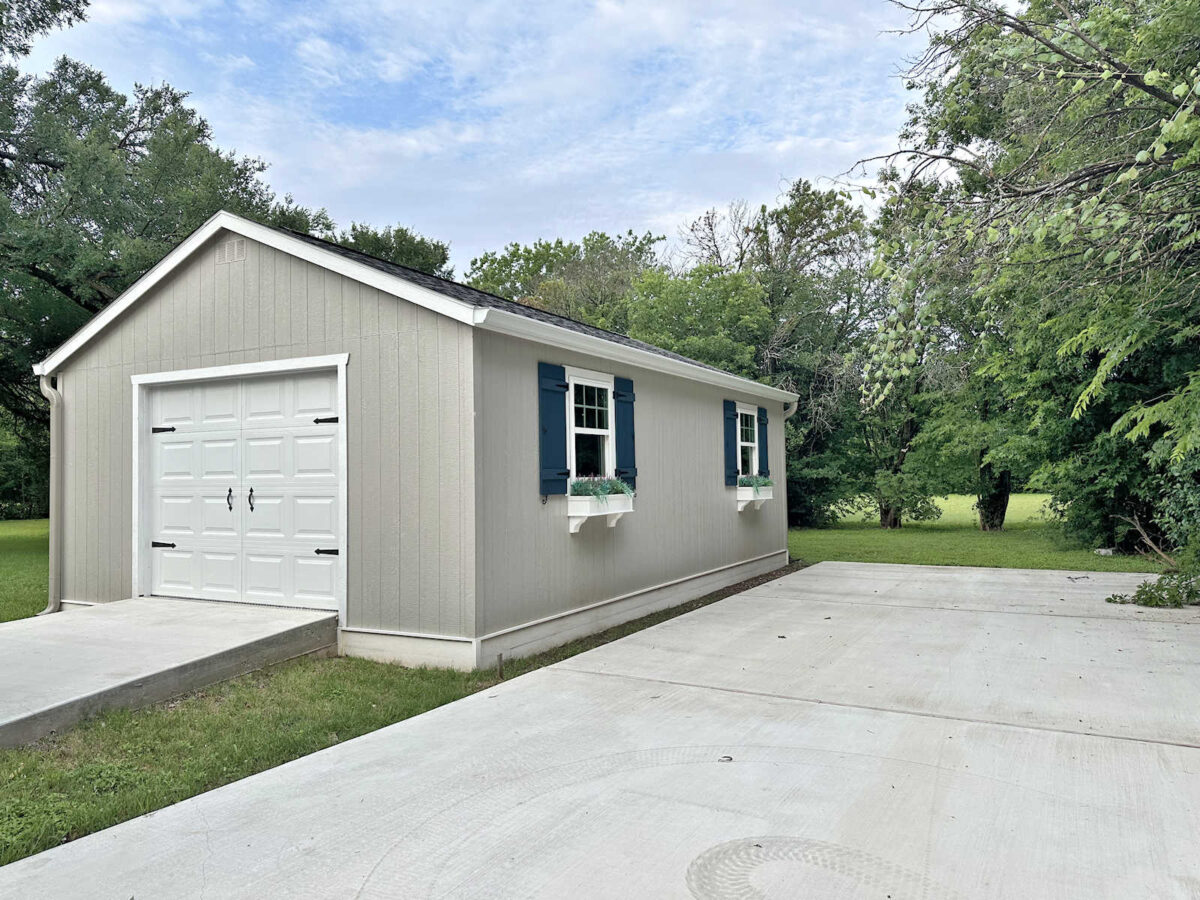
And really, this is a question I’m wrestling with for all of the planting beds around our house. I can’t decide of I want to cover them with pebbles or mulch, and I’d love to hear your thoughts on this. I really love the idea of pebbles. That’s the direction I’m leaning right now. But I’m way out of my element with this outdoor landscaping stuff. Interiors are my thing, so I feel very insecure about making firm decisions when it comes to landscaping.
So if any of you have had experience with using pebbles as a cover in your planting beds, I’d love to know your thoughts. Share the good, the bad, and the ugly with me. Is it better to just stick with mulch? I guess I could use pebbles in some areas and mulch in others, but I’m not even sure about how to make those decisions. I only have a vague idea of what I want all of this to look like, so I need some guidance here from those of you who have way more experience with landscaping and planting beds than I do.
UPDATE: Please excuse the ladder just lying in the middle of the grass. I pulled it out yesterday to work on a project, and it was COVERED in ants. So I threw it down on the grass (well, weeds) and grabbed another ladder from inside. I won’t tell you what project I was working on because I don’t want to give some of you the satisfaction. 🤣🤣 But my goodness, I never realized how many mothers I have. 🤣 I always thought I just had one. But from the comments on the last few posts, it turns out I was very wrong. 😀

Addicted 2 Decorating is where I share my DIY and decorating journey as I remodel and decorate the 1948 fixer upper that my husband, Matt, and I bought in 2013. Matt has M.S. and is unable to do physical work, so I do the majority of the work on the house by myself. You can learn more about me here.
I use pebbles in the planting beds all around my house. You will want them to be mostly light colored, black/dark retain to much heat and the plants don’t like that. I used a river rock mix in a medium size. I tried tiny pebbles first and that did not work well.
Look forward to seeing what you do! I really enjoy your blog.
Oh, I kind of had my heart set on small pebbles. Can you tell me why they don’t work well?
Small pebbles do not stay in place very well. They end up in the grass and do not stay very level. I also put a light colored med. river rock in all of my flower beds and all of my plants are doing very well (I live in Austin and the heat has not been a problem). I like the idea of stamped concrete path. Rocks and pebbles are terrible to walk on.
There is a new, fairly inexpensive product on Amazon. Search for “PEBBLE GLUE FOR LANDSCAPING. There is also some glue for mulch. Once you get the path the way you like it, spray this glue over the pebbles/gravel and it keeps them from moving around.
Just remember that Palmetto bugs, AKA huge flying cockroaches just love mulch. Especially in our hot, humid climate.
I would stick with the pea-gravel. It was used a lot when I lived in the FL Keys. Grass was not an option with water at $3/thousand gallons.
I see raised beds flanking or grow bags along the workshop ramp. Fill with the mulch and place fabric planters on top. Learn what grows okay what you want to handle there then buy stuff for more elaborate or pretty beds after that trial based on what works for you.
You can start with fabric bags start to grow small 1 gallon versions of the 3-5 gallon big plants your landscape plan has. Surround it with fun seasonal stuff but the goal is to replant as wherever needed they grow bigger. You can move them around easier to their home after they get to the wanted size. They’d be close to your studio to tend to and enjoy as they grow bigger.
Somehow I see I missed an essential ask. I used to be team pebbles, pebbles-for-days. But found the few areas I pebbled were not fun to work in over time they settle in and add an extra level of difficulty digging also didn’t provide much of a weed barrier past that first year. Then then HOA paid landscapers had an oops and mulched over my rocks one fall. That worked better. I made a sifter to remove rocks with 1/4″ hardware cloth to relocate to line the perimeter of my house against the foundation with rocks to minimize a bug bridge of organic material.
Laying cardboard, then mulch on top is my new favorite. The mulch & cardboard decomposes into soft stuff. When you do need to change things you could remove unworkable material easier to replace with fresh cardboard. Your soil likes and makes the changes easier to handle as you go.
Garage door update looks great! It does make quite a difference.
Hi, Kristi,
For what it’s worth, I would go with pea gravel, edged subtly with the brown or green landscape barrier that comes in a rill. Mulch can swamp out in a hard rain, and the fun crunchy sound of gravel is a bonus, at least to me.
I out in a small pea gravel walkway in two former yards and just loved it. Obviously a weed barrier helps.
In any case, enjoy the walkway project…your outside is getting lovlier by the week.
From a soil/plant perspective, mulch is far superior. It breaks down and adds organic matter to your soil, which enhances the quality of your soil and the health of your plantings. My yard is glacial till (i.e. lots of rocks) but the years of mulch have vastly improved the soil. It acts as a better insulator to the plants’ roots as well. I don’t see how using pebbles as mulch would do anything except degrade the health of your soil and plants.
No to mulch or pebbles. Plant red creeping thyme. It is a wonderful ground cover that does well in the Texas soil and tolerates the heat. It is low growing and proficient in spreading within the area planted and gives a pop of color pleasing to the eye. Live plants are always imo Gods gift and we should use them wherever we can. The garage door looks wonderful and now has character.
Oh, that looks so nice, and perfect…but it won’t work in my zone…good for TX though? I like you way of thinking on the mulch or pebbles.
I had to smile at this clever 30 minute addition. Looks just like the real thing.
OK, here are my two pennies worth…by the by, the back stairs are AWESOME!!! You should be proud of yourself; I know patio and deck builders who aren’t this clever and can’t build like you can. OK, back to the pathways. Go with concrete, it might feel sterile at the first, but you don’t have to weed it or keep adding to it because it sinks into the ground. It is super easy for people with mobility issues, and wheelchairs to use concrete. I have 83 cubic yards of the stuff just off the back of the house so our veteran friends can navigate the patio and pavilion and be right there in the midst of everything. A good spring pressure wash is all that is required. The front of the house is all concrete, but it is stamped and a lovely shade of gray. Looks real chic.
It may not be the most inexpensive option, but it is a heck of lot less maintenance. The few pathways that we have that do have gravel on it, most of our guys even with their powerchairs have a hard time with it and then they pick up the stones in their tracts or tires and it makes for a lot more work for their caregivers to wipe down wheels and check for stones before coming in the house, or going home to their house. Pebble or gravel walkways need a barrier to keep them from spreading out and a mesh like pad for them not to sink into the ground to be done right and look just like a magazine all the time, not to mention the weeds and what not that can get lodged on them. I love concrete, what the pressure doesn’t do, the super-duper leaf blower can.
Everything is looking great. Love the waterproofing membrane and I am sure you can find some faux stone to adhere to the wall to tie it all in, you got this.
And an outdoor kitty is not only helping his mommy, but he is also a DIY paperweight.
Cheers to you, Matt and the Fur Construction Team!!!
We had a garden bed with pebbles (in Michigan) and it was a nightmare! Hard to weed. And if you change your mind at any point, it is terribly difficult to get the pebbles OUT of the dirt to be able to re-plant or re-design the garden. Landscape fabric to block weeds we have also found to be terrible long term — weeds can get into whatever you use on top, the roots intertwine in the fabric, and if you ever decide you want to plant something in those spots, it is very very difficult to get the fabric up and out of the area. Just our experience…
We had mulch for years. Two years ago, we went with gravel. I was tired of pulling weeds. The guys put down heavy weed barrier fabric. Then added the gravel. I always said I’d never have gravel. But my weeding is minimal now. I highly recommend gravel.
I love the line you painted on your garage door. We have the same garage doors and hardware. We have a three bay garage so the line isn’t really necessary, but it looks really great on yur door.
Thank you for painting the black crack in the carriage doors. It drives me nuts when I see the magnetic hinges without it. If you want windows, there are a number of magnetic products for that as well. https://www.amazon.com/Strong-Glossy-Magnetic-Garage-Windows/dp/B0FRZ2HF2Q/?th=1
I’ve never seen pebbles used in a garden bed except in the west where people have succulent gardens. With many bushes and especially perennials, they get too hot in the South. They are good for 2-3 ft unplanted foundation boarder however especially in areas that get a lot of rain. They protect the foundation and are unfriendly to termites. I recommend putting in some edging between the gravel next to your foundation and the beds and use rocks slightly larger, say 3/4″, rather than pea gravel. Rain has a tendancy to move smaller pebbles or pound them into the dirt. Just know that any mulch, including gravel, needs to be 3-4 inches thick to keep the weeds down and even then you will be getting some weeds anyway. Please be kind to the environment and don’t use synthetic weed barrier or rubber, cypress or dyed mulch. Weeds still grow though a barrier especially as it eventually deteriorates and then you will have to remove the mulch or gravel to replace it. It’s just easier IMHO to top off your mulch annually and pull any weeds as you see them. Forest byproduct mulch is sustainable and I suggest pine mulch, needles if you’re going with acid loving bushes or plants and bark (not too fine) otherwise. Cedar mulch is also good as long as it’s marked as byproduct but as someone from south Louisiana, I’m begging you not to use cypress mulch. This is rarely byproduct so they are cutting down native trees just so you can mulch your yard. Should be illegal.
I have pebbles on some of my beds and the pebbles need to be pulled away from any plantings they will burn.
For your plant selection, before you decide, you will want to do some research into your options for local low-water and native plants. Before you proceed with the beautiful landscape plan, contact your local county Master Gardeners. Ask them about demonstration gardens in the area, where you can see these plants and trees, to find out which ones you really love and which ones, not so much. Also know that they will help you select hardy groundcovers and can advise you about pathway options.
https://txmg.org/mclennan/
These experts will help you free of charge to find the best, most beautiful, most durable, and waterwise plants for your area and the best ones for each planting area. I would also expect that Baylor has lots of resources available to you.
Just like you have really educated yourself in the construction arena, this is a new area for you to learn. You will be glad you took the time to do so, and you will save yourself a lot of money downstream, both in choosing plants that will thrive and not die on you, and also ones that will not bankrupt you on utility charges!
The quickie garage door renovation looks cool!
You know me, I’m team plants, native plants. I usually prefer shredded bark mulch but pebbles work for xeriscaping, a low-water landscaping style that works in dry TX. Some plants you could try for that: Texas Sage
Red Yucca
Blackfoot Daisy
Agave
Mexican Feather Grass
Desert Willow
Otherwise you can put some taller small shrubs or grasses in the back of the bed area btn workshop and carport, and work down to medium to shortest plants. Like your plan, oraganized groupings in odd #’s looks tidier than cottage style. Since you’ll be walking by there often (I presume) you might also want to plant plants you’ll enjoy looking at ie, nice texture, various bloom times, pollinator friendly. And it doesn’t have to be a lot of varieties. Grasses, sage, some flowers. Perennials and room to plant annuals along the curved part of the bed, or in pots, if you like tha. I would advise against just filling it with 1 vigorous ground cover. My parents had a thick bed of Japanese spurge in the front. needed little maintenance, but it was also boring. A master gardener can give you vision.
Concrete vs decomposed granite paths…concrete is lower maintenance long term but DG is cheaper initially and water will drain through it. It does need to be topped off after 10 yrs. It looks more natural. Both are fine but consider the long term pro & con of each.
Here’s what ya do with da mamas:
Hold up your hand ✋️
Say “not the mama!”
😆 🤣 😂
(I am one of da mamas, methinks)
I like the carriage door look. I think it would be even better painted the shed color-white garage doors are a pet peeve of mine- and the handles look odd on the squares, could you move them in to the vertical area?
Think long term when planning your garden and ease of upkeep because it will be a lot. When considering mulch think of leaves, pine needles, fallen petals and how difficult it would be to clean up.
Our friends had a gravel walkway that hardened after spraying it down almost like concrete. Im not sure what type it was.
Have you considered pine needle straw as mulch? They don’t float away in rain because the needles form an interconnected mat and hold together. They are great for the environment and the plants, and also acidify your soil a bit, which you probably need to help your plants flourish based on your location. As an added bonus, you can usually find inexpensive bulk delivery. My other favorite option is filling in between plants with low growing native plants that that are okay with shade and keep the weeds out. Many of those options are also butterfly host plants, at least where I live.
When I saw the photo of the garage door with the hinges and pulls, I thought Kristi should paint a black line down the center then read that’s exactly what you did. I really like the dressed up look of the garage door! I like your idea of adding a pergola with vines over the door. It was interesting reading everyone’s opinions and suggestions on mulch vs rocks. I have had mulch for over 40 years but it needs to be replaced every 2 years. The mulch alone (6 cubic yards for our yard) cost $320 this year. Moving and spreading mulch has become more problematic as I’ve aged. I was quoted $1,485 for mulch and installation. I had been thinking of stones and these comments give me food for thought.
Oh, I’m guessing what the ladder was for…and ants,…too many in Florida too…and they mostly all bite! That little decoration on the doors really stepped it up a bit. The awning and vines will be gorgeous. One day at a time. I wish I knew a lot about landscaping, but I have just as much trouble as you deciding what to do. I find them ALL unacceptable at times. Have some more fun in the yard and outside projects before it gets too darn hot…it is here already.
Is someone rehanging a fallen shutter?🤣😂😬
As to the gravel issue…I may have mentioned a ‘glue’ type of product our local park is using to give wheelchairs access. ( there’s a nursing home next door and staff will assist some residents who want to visit the park).
But it doesn’t sound like Matt needs that. In my Ohio backyard I used 2 kinds of mulch, cocoa chips—smelled great but deadly to dogs—and finally pea gravel with irregular stepping stones scattered in the gravel.
I loved the crunch I heard when walking on it. But as with anything there is some maintenance involved. If not concrete which is the most ‘once and done option, I’d use the crushed granite and not mulch which tracks everywhere!
Am I the only one who thinks the gravel issue for a path and NOT to put in any planting beds? Here in Arizona where I live, it’s true that rocks get hot but don’t seem to bother native plants so much. This kind of xeriscaping is crucial to the desert as we’re running out of water!
I have pebbles in the flower bed in front of my house and mulch in the beds in the backyard. I had pea gravel and switched to river rock, because the pea gravel didn’t stay in the bed. Mulch has to be replaced every year and the rock has been replaced once in 10-15 years. I have bushes and trees in the bed with rock. I’m not sure how it would do when you are planting flowers.
Mulch, especially at first. We had little red pebbles/rocks in our front 2 garden beds and we hate them. But it’s not just that, it’s removing them. It is such an ordeal to try to get rid of them. Try mulch and then later, if you want to add pebbles, you can. But they are a permanent thing so even if you get sick of them or just want to change them later on, you’re stuck.
Seems like equal pros/cons until I read Lori Ann’s comment about pebbles getting stuck in wheelchair tires.
That changed my thoughts on material.
I have experience with stamped concrete and it can look exactly like pavers and they can use dye to make it any color you want. It is more cost up front but definitely lower maintenance in long run.
And Glue doesn’t fix the issue because it breaks down over time with heavy loads or traffic.
Maybe adding the faux windows in the next section down from the top, instead of the top section, would work?
I would not use pea gravel for a pathway. The smoothness of pea gravel prevents the rocks from locking in place and the rocks move around too much. You could use crushed aggregate base and that packs down nicely for pathways. For a desert landscape rocks work well but your yard doesn’t seem to be desert. If it were me, I would use natural bark mulch, at least 3 inches deep. Yes, you will need to periodically replace/refresh it. Rocks are difficult to plant in and they will eventually sink into the soil. Landscape fabric or geotextile should only be used under walkways/patios and not planting beds.
About your garage door have you seen or tried the magnet windows they sale on Amazon? They really add that extra touch!
Using rocks is hard on plants (the heat is much more intense). I’ve used peagravel (doesn’t stay put), slightly larger river rock(hard to walk on without twisting your ankles), wood mulch (works great to hold in moisture in summer…if thick enough). I used to need to add mulch every spring until I switched to larger wood nuggets. They are GREAT! Only need a little replenishing every three years or so.
Mulch if you have to, but honestly I would use a native groundcover to fill in the space or some of the shorter native grassess. Pebbles/rocks heat up the soil worse than anything other than bare soil, killing anything good below it (bugs, worms) and don’t do a great job of blocking weeds either. Depending on your soil, they will also eventually sink in and make it impossible to remove or add plants at a future date.
Exactly this. Natives tend to grow in quickly and take care of themselves. Grasses or groundcover would be ideal.
Looking good.
Your comment on having many mothers mad me laugh out loud! I know what project was getting… “motherly nagging”. 😂 My house is full of those kinds of projects too. Oddly, they’re never as interesting or satisfying as a NEW project! 😏
I’ve been a gardener for 50 years. Do not use small pebbles, large pebbles or rocks of any kind as a topping for landscaped areas. Pebbles will hold dirt within and you will have as many weeds as you would have without them. Rocks hold heat and especially in your climate, that can be very damaging to plants. Pebbles and rocks tend to migrate OUT of the beds and into your lawn and do nasty things to lawn mowers.
Best thing to do is lay a layer of cardboard or brown paper bags over an area and then use wood mulch. It will all break down and enrich the soil, unlike pebbles. Don’t use colored mulch, just get ordinary regular uncolored natural mulch. You will have to renew it every couple of years but it is so much better for everyone than rocks. If you want rocks, find some huge boulders and use them as an accent piece. We have three that were unearthed during road reconstruction and the workers were glad not to have to haul them off. I don’t know a thing about home decorating but I do know planting.
Sorry for this late comment, but life has been so busy lately, I hardly had time to check e mails, let alone other fun stuff! As a homeowner/gardener of over 50 years, I have spent hundreds of dollars on mulch/weed fabric and edging over three homes we’ve lived in. We now have switched to 3/4″ landscape rock for the planting beds, in a depth of 1-1/2″. In Missouri where we live, the mulch would get moldy, weed fabric would grow weeds on top of it as soil/leaves would decompose on top of it. So we would replace things every spring! So much wasted money! In this last house, we edged the beds with decorative stone that locks together with a male/female edge on the ends that you can glue together if you like. They are about 2-3″ wide and about a foot long. We’ve had this in place for 8 years now, and have been very happy with it. Pea gravel is a pain, the cost is crazy due to the depth you would need, and it goes everywhere. The glue that you can use (as someone else mentioned) needs to be re-applied about every year, and I question if it would harm soil/plants over time. I also would advise spending the $$ on a concrete walkway, and recommend you plan all the concrete work you need as one project. Small jobs are more costly for the contractor, so you pay more if you do the jobs separately!
More groundcover!
Stick to the native ones.
https://sunriselawncare.com/texas-landscaping-tips/19-best-drought-tolerant-ground-covers-for-texas-landscapes/
Long time reader here, first time to comment. Please send me some of your energy that you have to do all of the things that you do! Hubby or I push our adult (she has CP) daughter’s manual wheelchair. It’s difficult to push over rocks/gravel. I know Matt has a power chair. I suggest you go to a park or some place that has gravel and have him roll over it to see how it will be for him before spending money on the pea gravel. I hope you two are able to do some outings together since you have an accessible van. We are the 2nd owners of a 2010 Odyssey that we bought in 2013 & we’ll drive it until the wheels fall off.