
Front Porch Progress (And Idea Fail)
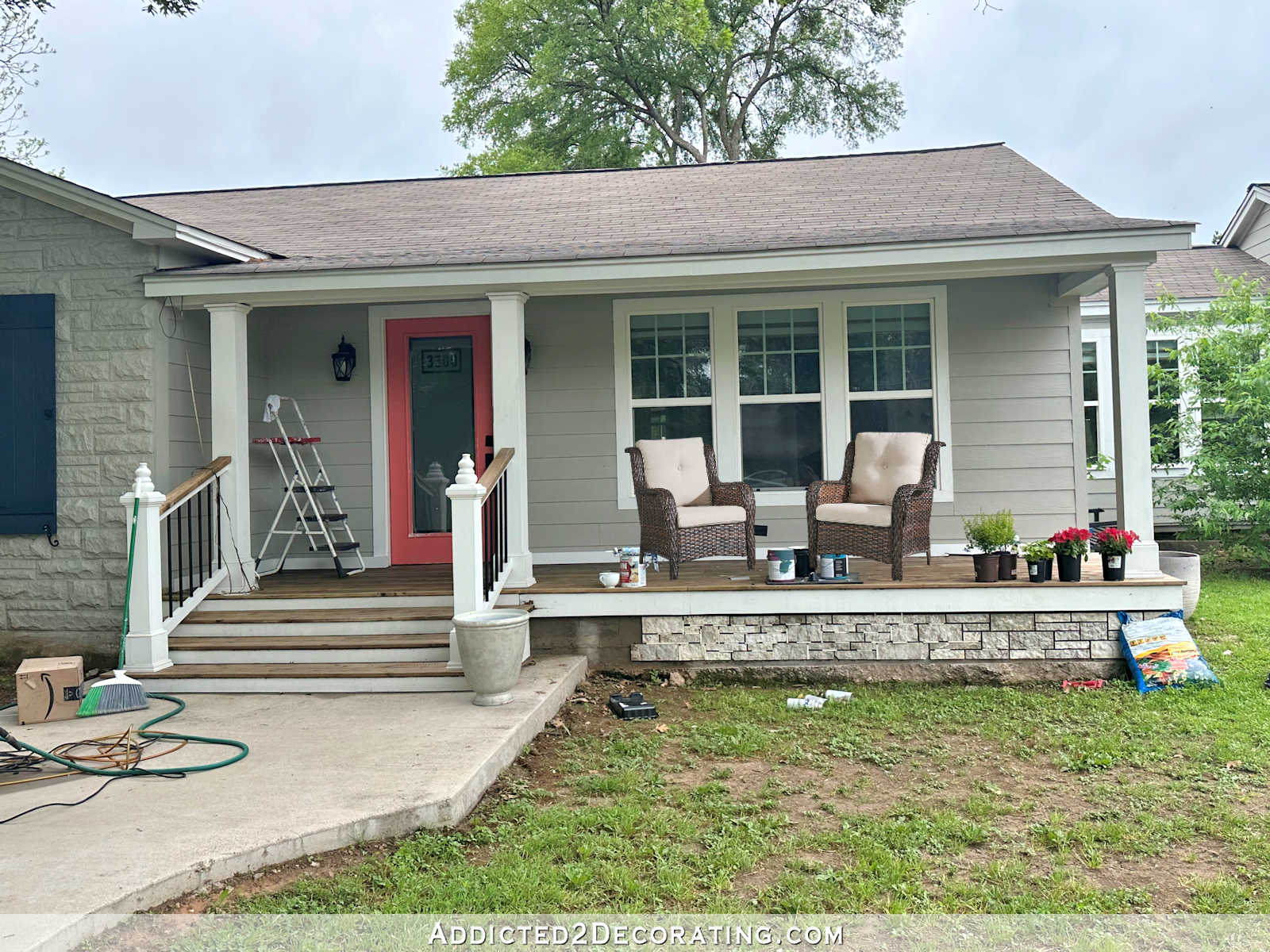
We actually had some beautiful weather over the weekend, so I headed outside, determined to make some progress on the front porch. I really wanted to get the old, rotted fascia boards removed and replaced with PVC boards, and then make some headway on the skirting to cover up the concrete.
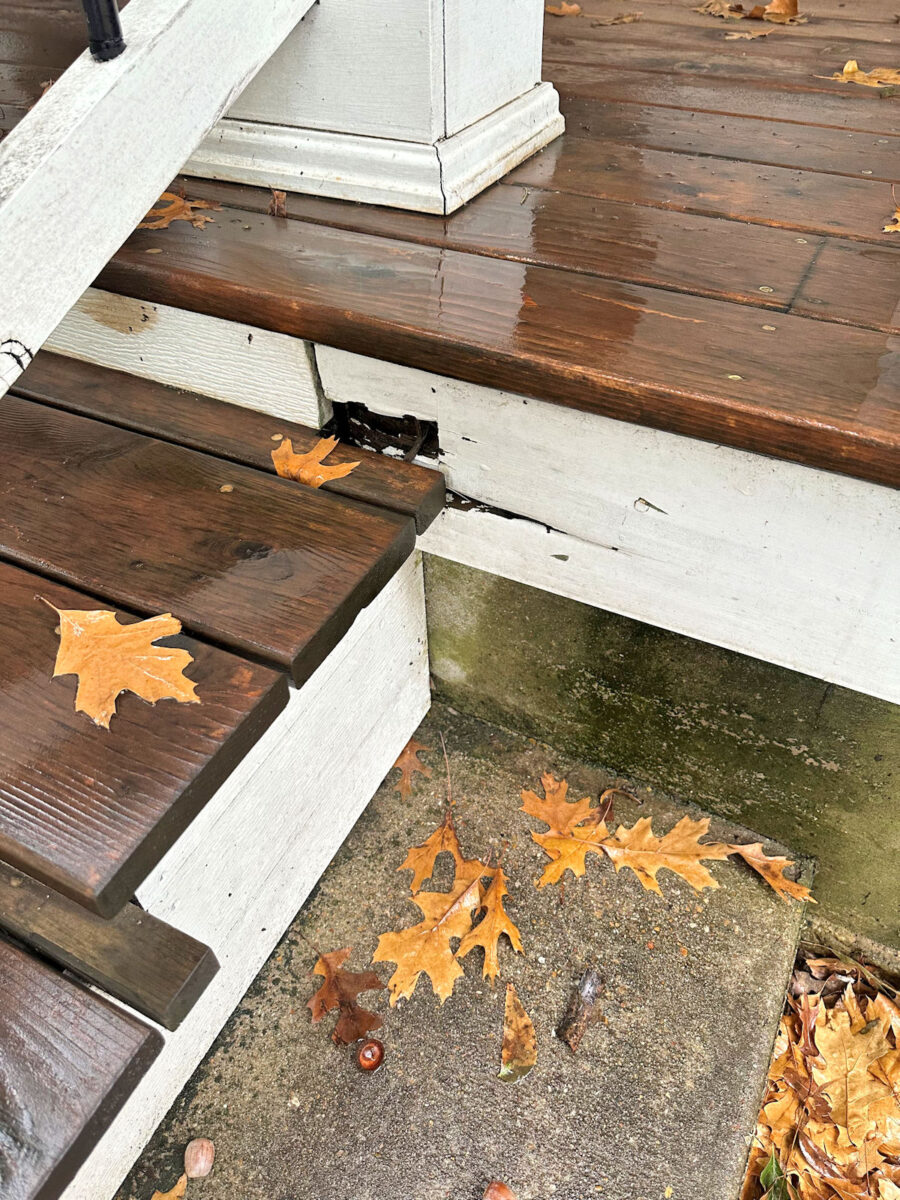
Just as a reminder, this is why I’m even focusing on the front porch (when we have nice weather outside) right now. You can see here how rotted the old boards were.
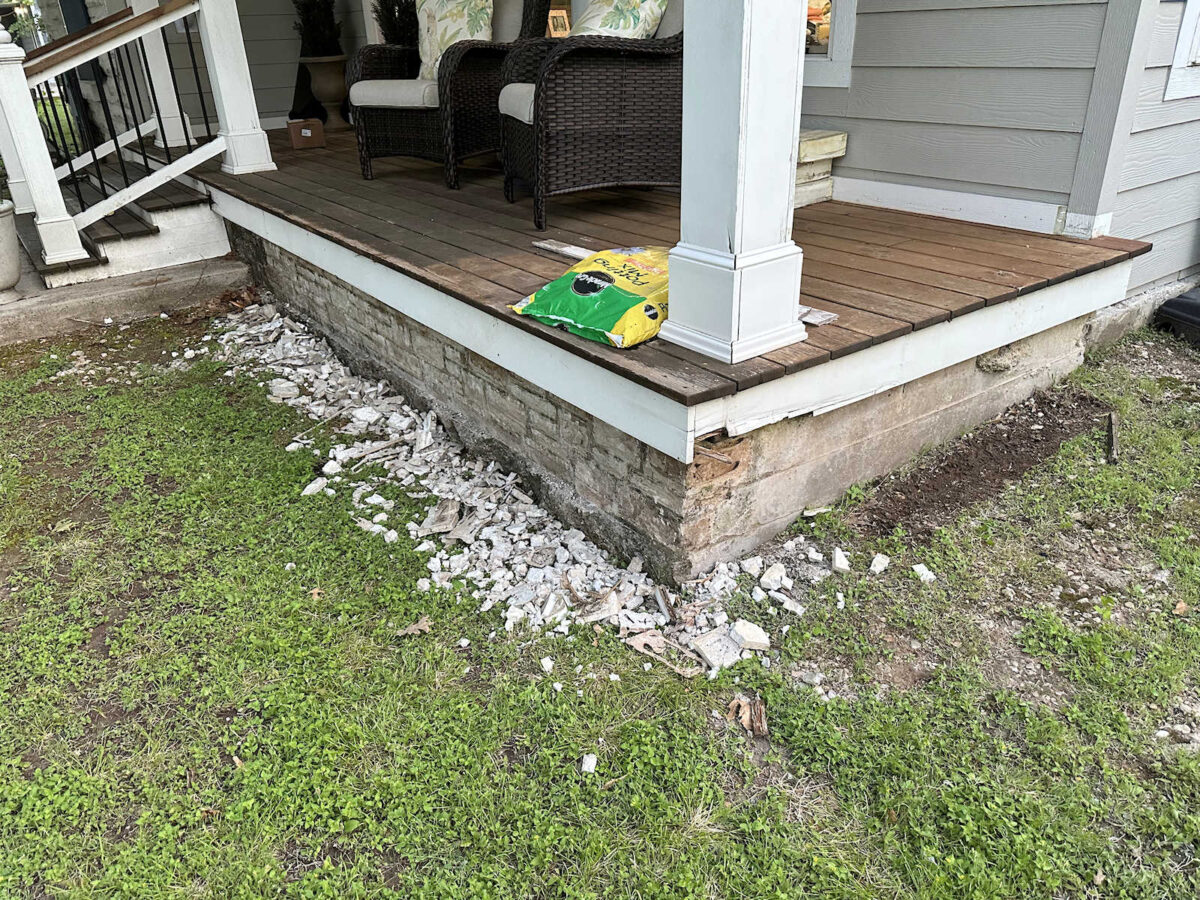
And it wasn’t just the front board. The board on the side of the porch was even worse.
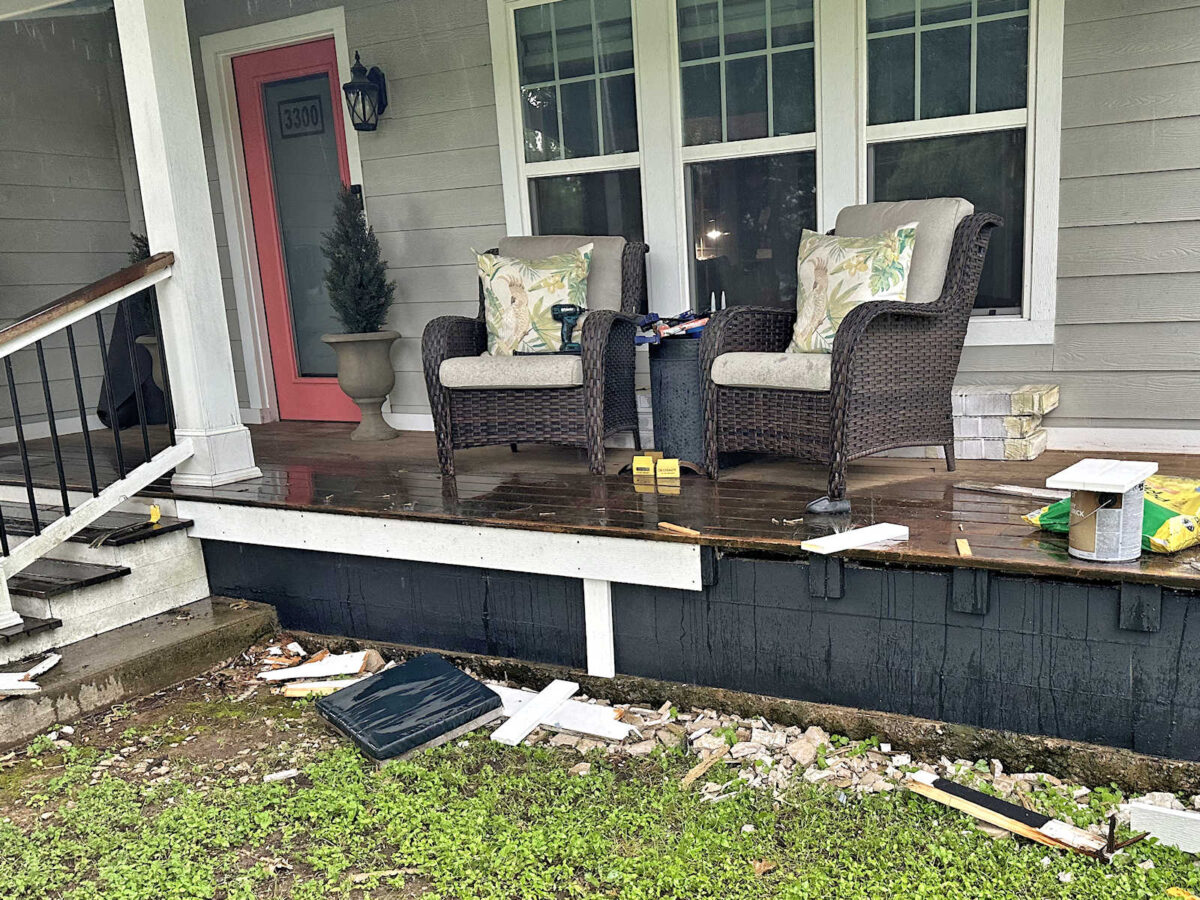
It took quite a while to get those old fascia boards off. Let’s just say that when I build things, I don’t intend for them to be undone. 😀 But once I got the old boards off of the front of the porch, I started by painting the whole thing solid black. And then my idea was to attach the new PVC fascia boards, and then to cover over the bottom skirting area, I was going to use PVC 1″x4″ boards vertically and spaced about 1/4″ to 1/2″ inch apart. (And as you can see, the rain came back while I was working. I took most of these pictures after the rain started again.)
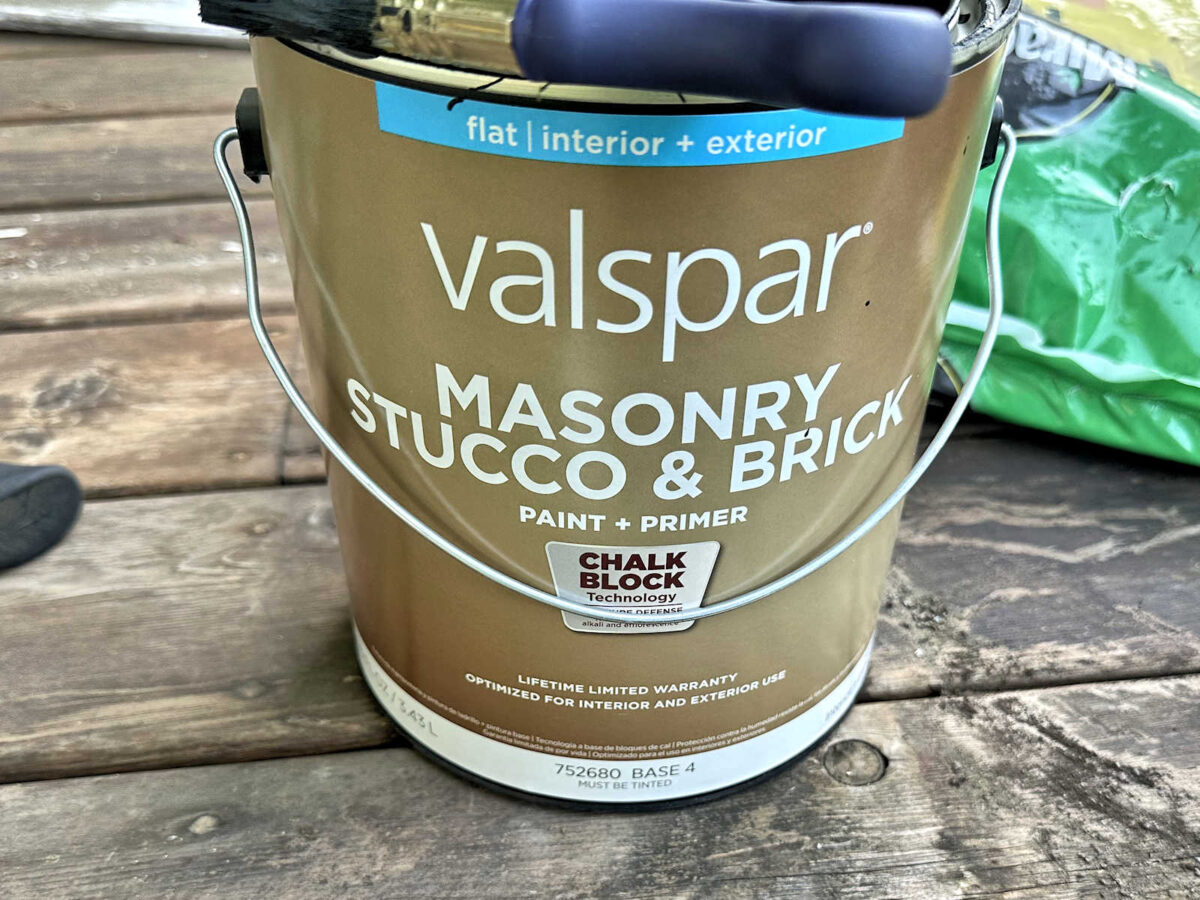
This is the paint that I used to paint the concrete, and I asked them to mix a solid black for me. I didn’t choose a color from the paint swatches. I just asked for pure, solid black. I was quite impressed with this paint. It went on very easily and covered really well.
I did all of the painting first thing on Saturday and then gave it over 24 hours to dry before I continued. My idea was to simply glue on the vertical boards using a polyurethane adhesive. That’s what I used to adhere the faux stones that were here before, and I figured if the polyurethane adhesive will work on faux stones (and they were still on there really well when I took them off), it will work on PVC boards as well.
My concrete does have these horizontal ridges where the boards for the framing met when the concrete was poured, but I didn’t think they would be a problem since they weren’t a problem when I glued on the stone.
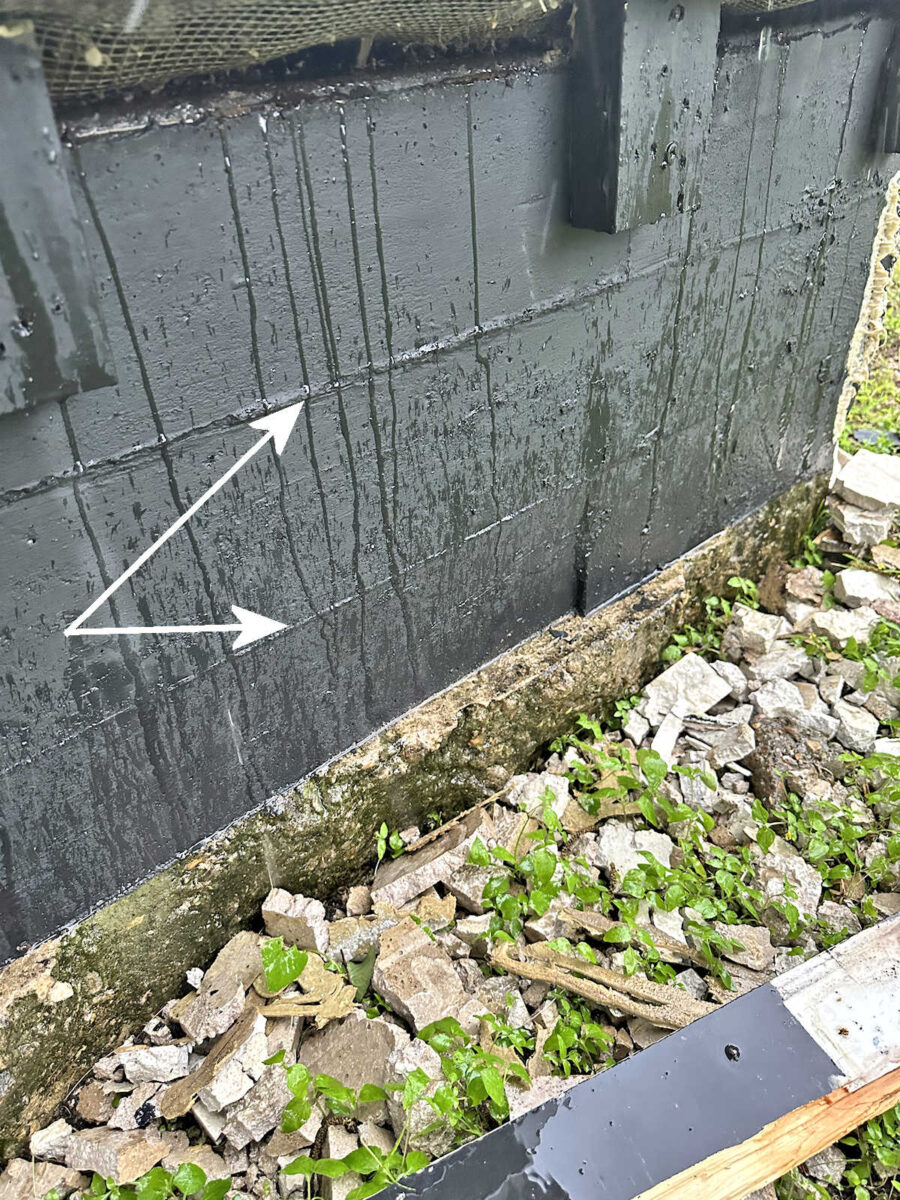
But I wasn’t quite sure about areas like this. I have two areas like this, and I thought they might be a problem, but I was prepared to notch out the back of the PVC board to accommodate these areas.
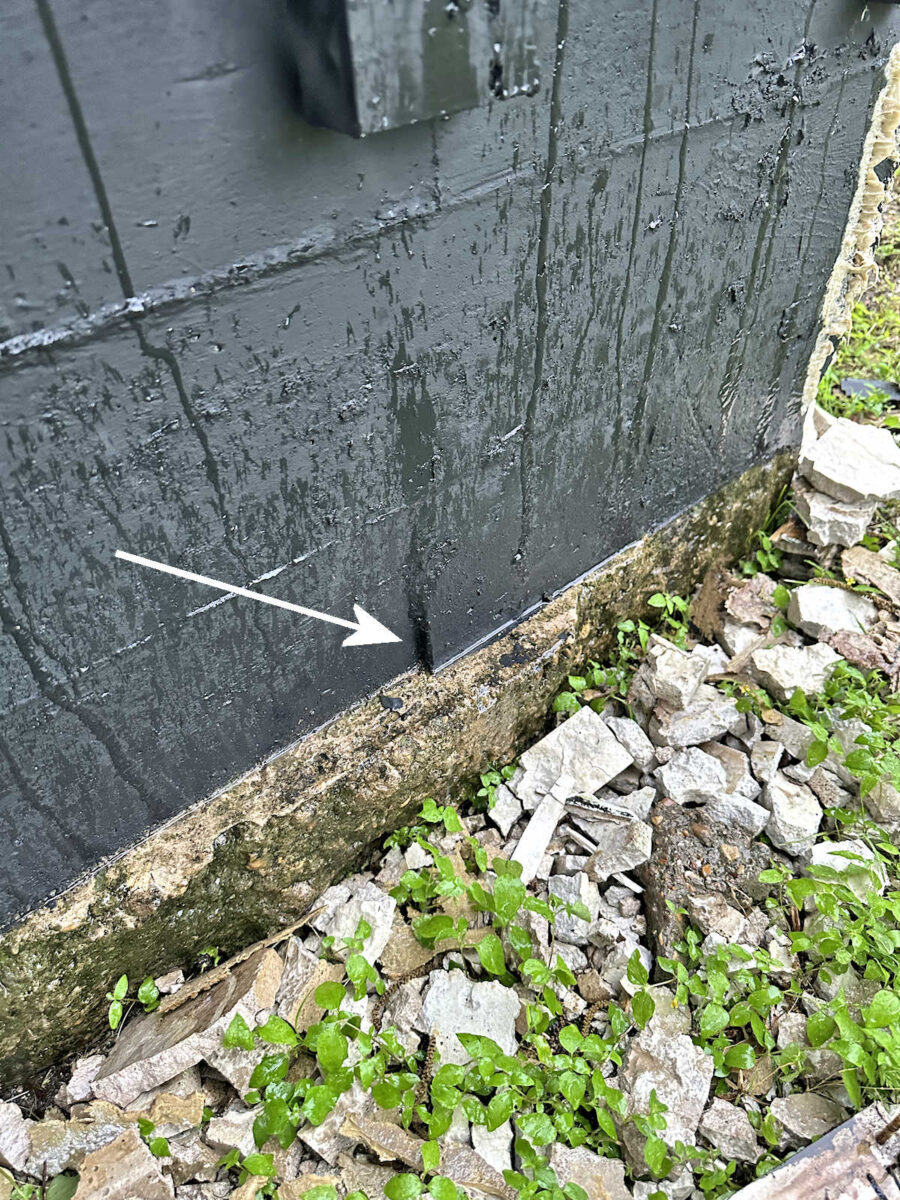
But my whole idea fell apart pretty quickly. I decided to hold off on attaching the other fascia board on the front until I had all of the vertical skirting boards on. It seemed like it would be easier to attach these without the fascia boards in the way. My idea was to start on the right corner of the porch with two vertical boards attached to each other at a 90-degree angle, and the work in either direction from that corner, spacing the rest of the vertical boards about 1/4″ apart.
I attached two vertical pieces together using PVC glue.
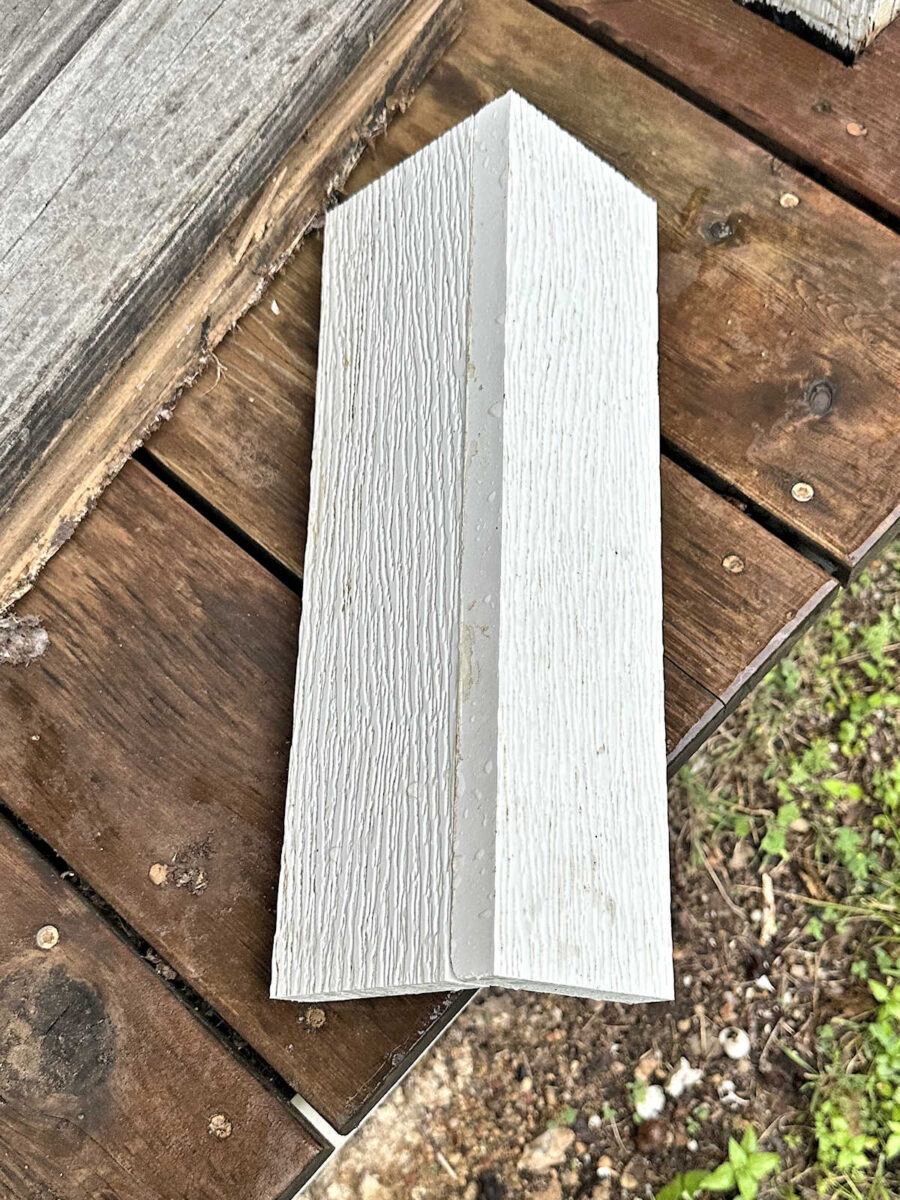
And the I put polyurethane adhesive on the back. And that’s where I ran into problems. I mean, right off the bat, my confidence went right down the toilet. Initially, I put a generous amount of polyurethane adhesive on the back, and the put the piece in place on the corner of the concrete. But I couldn’t get the corner PVC pieces plumb on both sides to save my life. So I took it off and then saw that almost none of the polyurethane adhesive had even touched the concrete on one of the pieces. In order for it to look plumb on the front piece, the side piece wasn’t even touching the concrete in most areas.
So I took it off and decided to load it down with a ridiculous amount of polyurethane adhesive and try again.
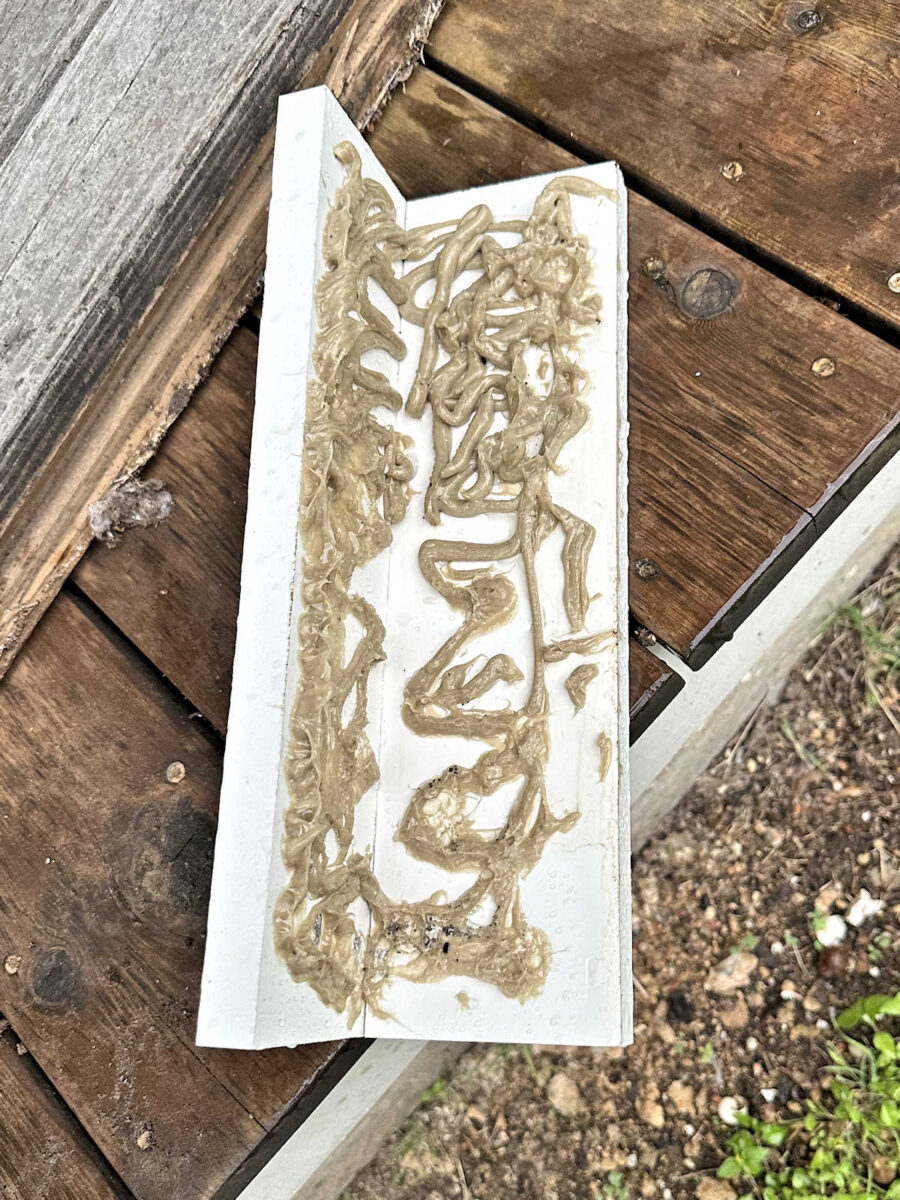
No matter what I did, I couldn’t get that corner piece situated so that it was plumb on the front and the side at the same time. Worked and worked and worked with it, and then I finally gave up. And of course, it left a complete mess.
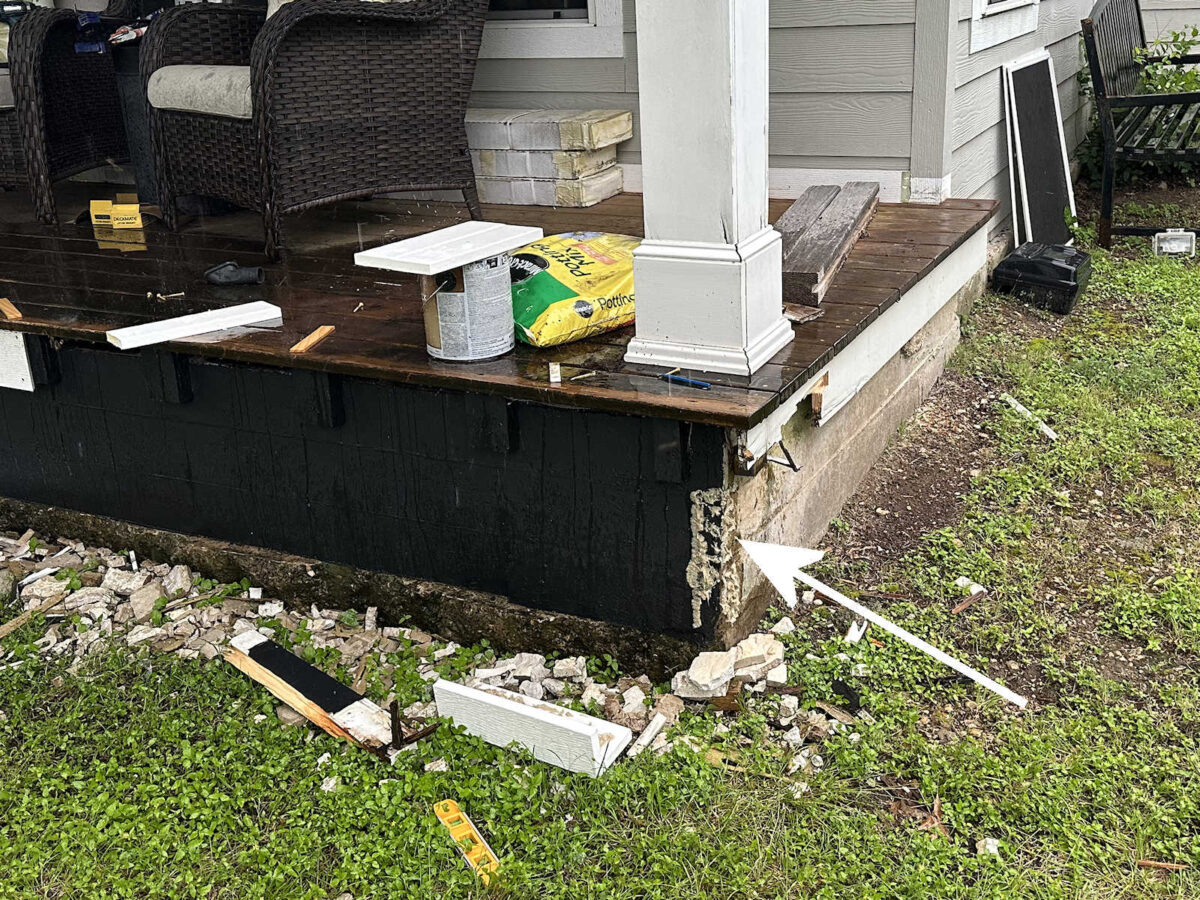
And that’s about the time it started raining, and I certainly didn’t want to be gluing PVC boards to wet concrete, so I called it a day.
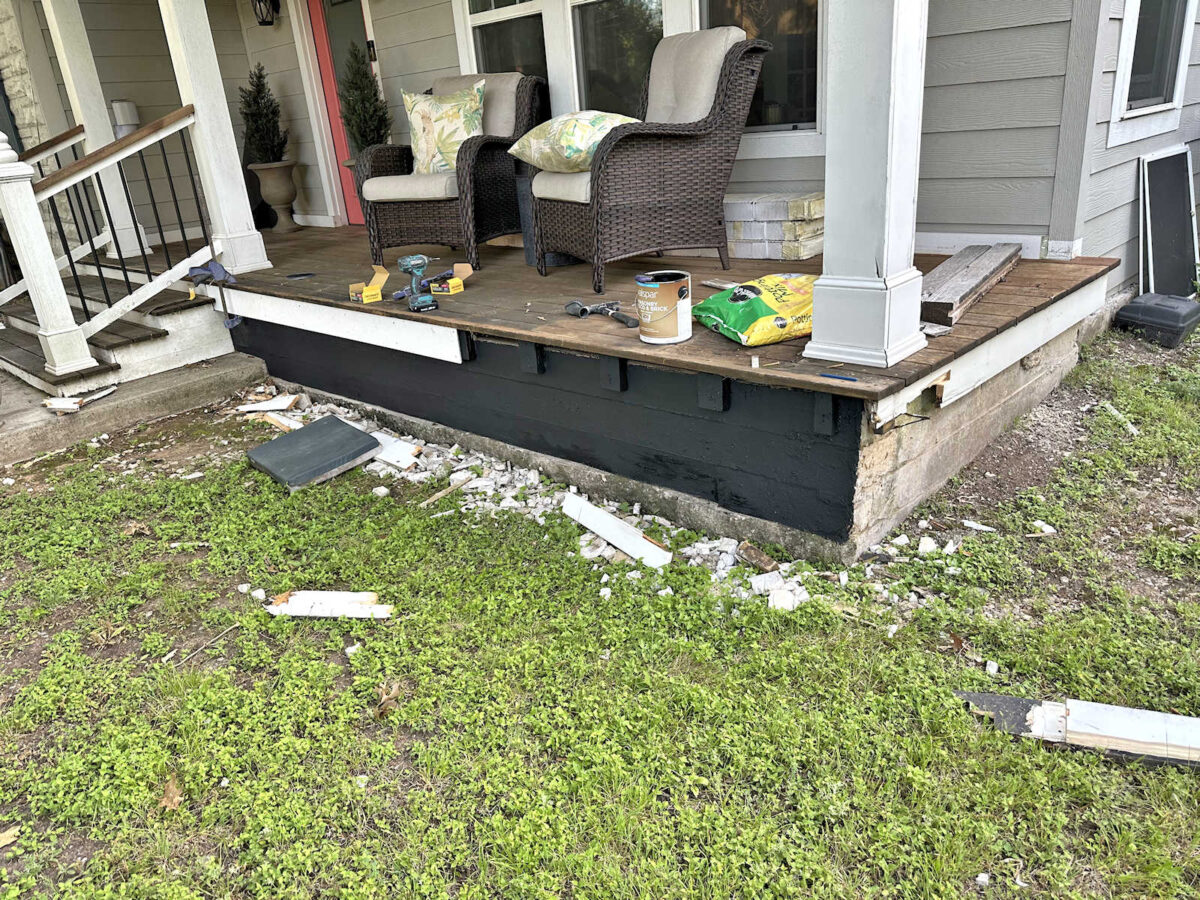
And now, my confidence in my plan is totally shattered. I honestly thought it would be a quick and simple project, but it’s obviously not. And because that corner of the concrete is so wonky, I don’t think I’m going to be able to do any kind of skirting that requires me to attach anything to the concrete. I had this exact same problem when I was trying to do the faux stone facade as well. The pieces that wrapped around the corner looked great on the front, but they were way off on the side.
So yesterday evening, after being forced to stop because of the rain, and forced to reconsider my plan because of that wonky concrete corner, I came inside and started looking for other ideas for the skirting. I came across this really great YouTube channel called Michael Builds, and he has this video on how to create different looks directly on concrete using mortar mix. He created a stone look, a stucco look, and a brick look on these concrete blocks just using mortar mix and a few tools.
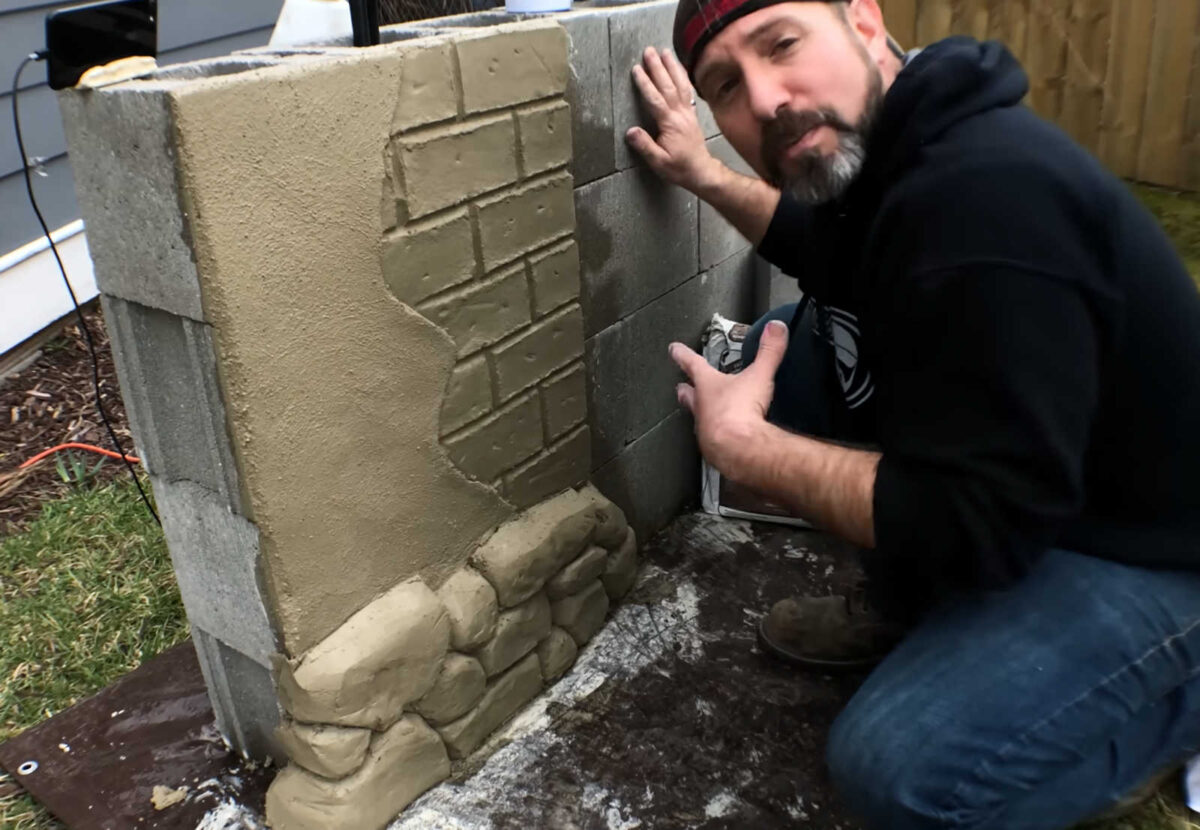
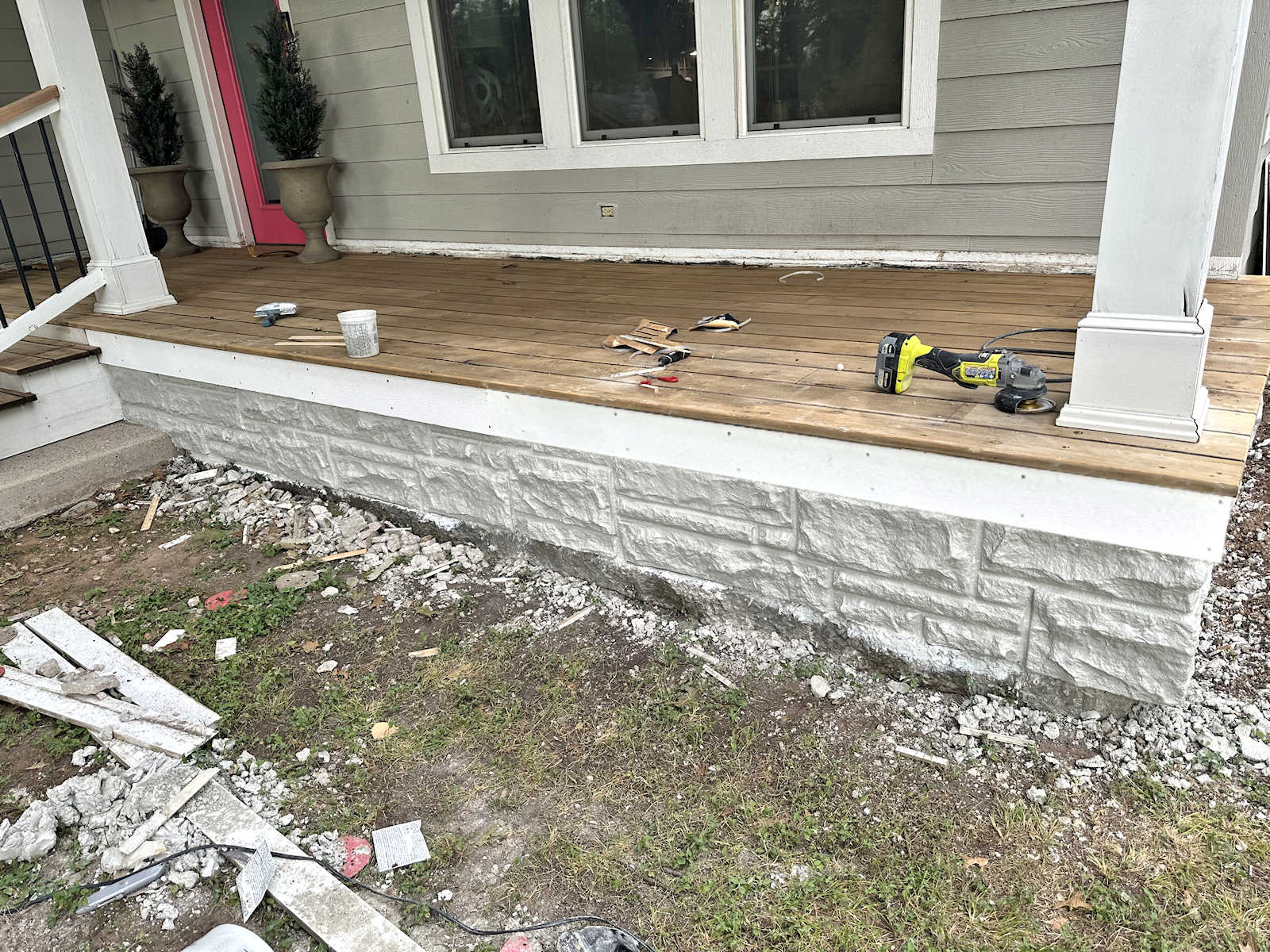
I think I’m going to change course completely and try this instead. The only problem is that it has to be applied to unpainted concrete. Of course it does. 😀 And of course, I just painted my concrete. Ugh. But I think I can use my grinder and get the paint off fairly quickly and easily. But I think an idea like this is the only way I’m going to be able to work around that wonky concrete corner on the porch and get a consistent look from the front to the side of the porch skirting.
Also, it looks fun, and I love trying new things. I’ve never worked with mortar mix before, so it may end up being another fail, but I think I’ll at least have fun trying! And to make it easy, instead of trying to match the stone on our house, I think I’ll just go with a brick pattern. Once it’s painted, I think it’ll coordinate well with the stone. I’d rather it be obvious that it’s a different material instead of trying to match the stones and failing.
That’s the new plan. Now I just have to get that black paint off of the concrete and then wait for another day of pretty weather before I can try out this new idea.
More About Our House Exterior & Yard

see all exterior &
yard diy projects
read all exterior &
yard blog posts

Addicted 2 Decorating is where I share my DIY and decorating journey as I remodel and decorate the 1948 fixer upper that my husband, Matt, and I bought in 2013. Matt has M.S. and is unable to do physical work, so I do the majority of the work on the house by myself. You can learn more about me here.

You never cease to amaze me. I can’t wait to see how using the mortar turns out!
I’m currently taking off rotted trim boards on my shed, so now I’m worried. I had planned on screwing the pvc trim on the door from the back. Any thoughts?
I’m having a hard time envisioning what you’re doing, but if you’re replacing rotting trim boards with PVC, you’re heading in the right direction. Those PVC boards will last forever. I wish I had a way to screw my new PVC fascia boards on from the back, but that wasn’t an option for me, so I’ll have to fill my screw holes with an exterior caulk before painting.
Instead of caulk, believe you want the Cortex screw & plug system.
Just curious….do you not have pressure treated lumber for outside use there? If lumber is not pressure treated for outdoors…..it won’t last barely a season. We have two decks….one being a pool deck – both built with pressure treated lumber….then stained. Every couple of years the decks get a quick fresh coat of stain….but pretty much maintenance free. PVC is way too expensive here….although some do use it.
Of course she does.
If you’ve never used mortar mix, it will dry your hands out and can burn them if you’re not wearing gloves. Since my husband doesn’t like wearing them, we’ve found that rinsing with plain white vinegar helps to neutralize the alkalinity. I also keep a tallow balm on hand so that every time he washes his hands, he applies it to help rehydrate. I’m sure whatever moisturizer you like best would work similarly. Looking forward to your new plan!
Try attaching one side of the corner plumb, then put the side piece in place where it meets the other piece and scribe it to plumb and attach. The side piece won’t be as noticeable once you have it in place. You could also build the frame and attach with concrete screws as I’ve seen done on This Old House.
These sound like great ideas! I much prefer the look of the skirting Kristi was working on over the mortar finished to look like stucco, stamped or shaped like rocks.
Great idea, and I also agree. With the black paint Kristi is moving in the right direction to complete the pvc, it’s so hard after losing confidence but keep going!
In my opinion, all you really need is landscaping. Add mulch to build up the area and add layered landscaping. Even if you “refinish” the concrete block, you’ll still need landscaping. Put your money and effort there not on the backdrop.
I admire your ability to pivot. Good luck. I hope this works for you.
Maybe you could attach lattice strips to the concrete and then attach the boards to the lattice strips. Then you would have to strip the paint you just applied. The do have the lattice strips in pvc.
We live and we learn, eh? I think the brick look will be classic, and the idea of trying that new technique will be fun for all of us! I really appreciate that you are willing to change course and try new things. We never know what we’ll see when we open your page, lol. Onward and Upward!
Before committing to a different skirting than what you have imagined, think about your mom’s suggestion of extending the porch and creating a deck in the area in front of your Breakfast/Dining room.
Previously, I have suggested removing the large window in that room and replacing it with French doors allowing Matt to better access to that new front deck. Having both front and back porches allows you to use them at different times during different seasons (depending on if you are seeking or hiding from the sun).
Perhaps hold off on skirting the side of the porch and just do the front for now, in anticipation of the new front deck being extended from that area of the porch. Then you will be able to replace the cedar planks with Treks decking, or something similar that is low maintenance. And match everything to the new landing and steps in front of your bedroom door.
Could you put like 1×2 on the cement wall and then screw the pvc to it? Like if you were putting up drywall.
Before removing all the paint, which sounds messy and labor- intensive, you might want to try covering it with a bonding primer instead. The mortar should stick to that just fine.
Attach 1×2 PVC horizontally to the concrete using masonry screws as furring strips, then attach your 1×4 PVC vertically using your finish nailer (stainless nails). This will be much faster, easier, look better and zero maintenance in the future. If you do the faux masonry route, you may have failure in the future, will need to keep it sealed, etc. Go with your original plan, but just change your application.