
My Workshop Building Permit Wasn’t Approved (Plus, What Is An Engineered Foundation, and When Is One Needed?)
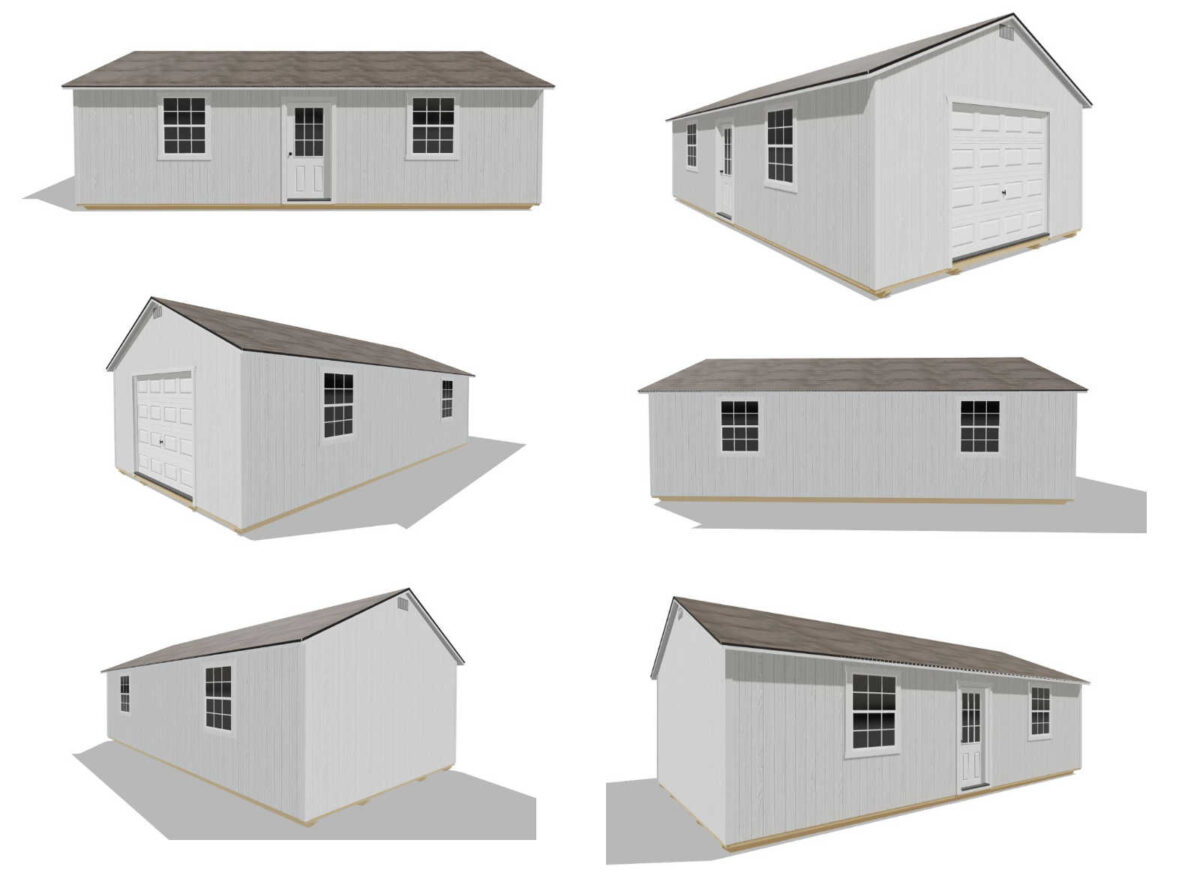
Last week, I submitted all of the information to get my building permit for my workshop that will be built behind our carport. The building was going to be 18′ x 32′, sitting 14 feet behind the carport. I had to submit a detailed description of the building, plus several drawings. I submitted much larger versions of these drawings that I’ve already shown y’all.
I also submitted this floor plan of the building…

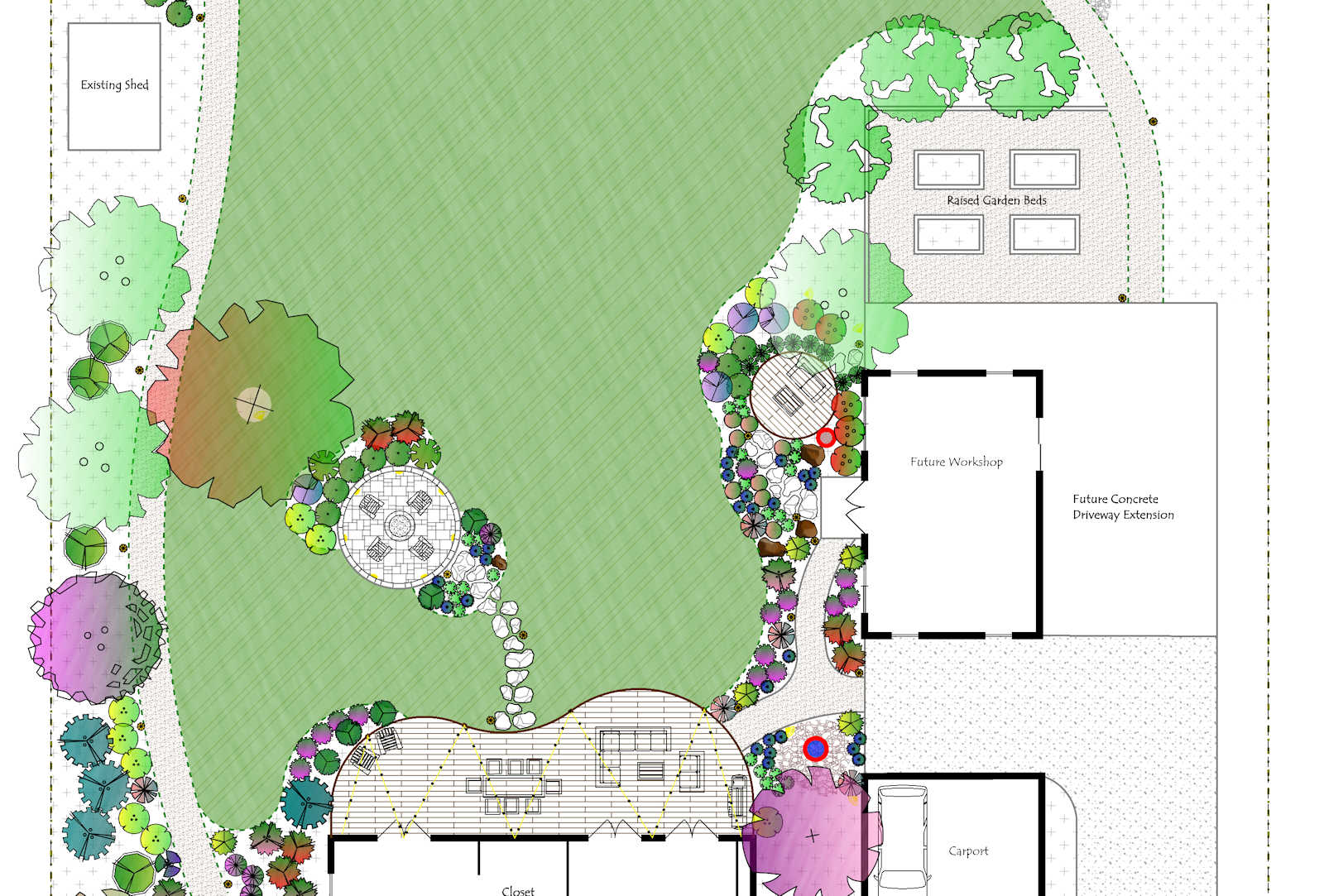
I also had to submit a drawing showing our property with existing structures and where the new building was going to be located. So I submitted this…

I thought I had covered everything, but when I checked the status of my permit yesterday, it said it was on hold because I hadn’t submitted a foundation plan. There was also this note: “New foundation over 500 sf shall require engineer sealed design.” And my workshop was planned for 576 square feet. Ugh.
So there’s good news, and there’s bad news. The bad news is that there’s no way I’m spending money for an engineered foundation for a workshop that’s being built by a local shed company. So I’m having to reduce the size of my workshop to get it as close to 500 square feet without going over. My workshop will now be 18′ x 27′. I’ll lose five feet of width on the building, which is a real bummer, but I’m okay with it. The workshop will still be about 86 square feet bigger than both my studio and the carport, so it’s a very nice size. I’m okay with it, especially if I can avoid the expense and hassle of having to have an engineered foundation.
The good news is this. The one thing that was holding me back from feeling confident that I could actually act as my own contractor on the kitchen addition was the foundation. I kept hearing this term “engineered foundation” and I had no idea what it was. I spent time for several days trying to google and research and find information and answers, but I wasn’t finding anything helpful. I tried searching on my city’s permitting and inspection website, and couldn’t find any information. I couldn’t find any answers to my questions. What is an engineered foundation? Do I need an engineered foundation? If I need one, where do I go for that? I had so many questions, but could find no answers.
And then yesterday, on a completely different and unrelated project, the information I’ve been searching for just happens to land in my email inbox coming directly from a building plans examiner for my city! Ha! Perfect! So here’s what I learned…
What is an engineered foundation?
Simply stated, an engineered foundation is a foundation that is designed by an engineer. They take into account many factors, such foundation of the existing building (if there is one), the condition of the foundation of the existing building, the type of soil that the building/addition will be built on, etc.
This probably isn’t the case in every jurisdiction, but it’s my understanding that in my city, the city doesn’t have to inspect engineered foundations because the engineer is the one who signs off on the engineered foundation, and that’s filed with the city. But again, every county/city may have different requirements.
When is an engineered foundation needed?
In order to know whether or not you need an engineered foundation, you will have to check with your own local permitting and building inspection office. But to give you a general idea of when one might be required or not, I’ll share the requirements specific to Waco, Texas.
Existing pier and beam house:
If you’re building an addition onto a pier and beam house, and the addition will also be pier and beam, the addition foundation does not need to be engineered as long as the existing foundation has not failed.
Existing slab foundation:
This is the same as the existing pier and beam requirements. As long as the addition will have a slab foundation, and the existing slab has not failed, the addition will not require an engineered foundation.
Conditions:
- An engineered foundation is required if the addition will have a different type of foundation from the existing structure. If a house has a pier and beam foundation, but the addition will have a slab foundation, an engineered foundation is required. Or if a house has a slab foundation, but the addition will have a pier and beam foundation, an engineered foundation is required. An engineered foundation is also required on an addition if the existing foundation has failed.
- New foundations for shops, storage buildings, and residential additions 500 square feet or larger need to be engineered.
So those are the guidelines specific to Waco, Texas, as of the summer of 2024. And if you’re not in Waco, those guidelines can give you a general idea or a jumping off point as to whether or not you may need an engineered foundation for your addition or your accessory building. But of course, you’ll want to get the specific with your own permit and inspection office.
Now that I have this information, I really do feel like I could be my own contractor. I feel more empowered with this information, and I feel better equipped to make a decision. I’m still not sure if I’ll go with an engineered foundation or not for my kitchen addition, but at least now, I know what the city requires. And if I choose a pier and beam foundation for the kitchen addition, it doesn’t require an engineered foundation since (1) the existing house has a pier and beam foundation, (2) the existing foundation is in great condition and does not have any points of failure, and (3) the kitchen addition is under 500 square feet.

Addicted 2 Decorating is where I share my DIY and decorating journey as I remodel and decorate the 1948 fixer upper that my husband, Matt, and I bought in 2013. Matt has M.S. and is unable to do physical work, so I do the majority of the work on the house by myself. You can learn more about me here.


Since you are having to scale down, which is a bummer but will still accomplish what you need, could you put in some pull down attic stairs to store things you absolutely dont need constant access to? It might free up a little space in the shop
Is it possible to have the roof line extend out past the structure (we call them a lean-to) if you have things that can be stored outside but kept under a roof and still be in the 500sq ft requirement? You could still put some type of storage cabinet out there if you need more storage options.
Great information and happy that it helped you in deciding to be your own contractor.
Trust me, you are way smarter than most of the contractors we have met here in Tennessee, all that is required for a contractor’s license in this state is that you first, fog a mirror, and second write the check for the license fee. That’s it. We found this out the hard way with our first big project on the house. I handle all the rest from here. Some of the guys are not real keen on taking orders from a “Little Lady”, which being 6 feet tall sort of helps a lot. Would the shed company be able to provide you with an engineered foundation plan for the city??? It seems like they would have run into this long before, but I was just thinking out loud. I hate giving up square footage, and you’re in Texas, the place of go big or go home. Keep the faith, and remember you know way more than most of these guys.
Cheers!
You made me laugh about your description of most contractors in every state. I agree that Kristi knows way more than most of them and also has common sense which seems to be lacking with most, if not all, of them.
Hmm there’s a partly economical way to get an engineered foundation. But that knowledge is out of my reach. We used a company called Restruct Engineering. They do have PE’s in TX. I’d reach out to learn the a ballpark cost first. Send what you had so far and see? They were surprisingly quick for the needs in my community.
https://www.restruct-eng.com/
Licensed professional engineer here. PE’s are similar to architects with degrees, special training, expertise, a minimum of 4 years experience and…passing grades on very difficult state licensing exams. An engineer’s stamp exposes the engineer to lawsuits for poor or inadequate design and is not given lightly. Your building department is taking a middle road between letting you doing “minor” projects without special expertise and not letting you do “major” projects that carry a significant financial investment without including some professional technical review and applied expertise. It’s possible that the shed company has some existing foundation designs that are already engineered and stamped by a Texas professional engineer. If they don’t have them available, the shed company may be interested in getting them for you and future clients. If standard plans are available but are not acceptable to your building department, or if they require additional information added about say, your soils and drainage at your address, ask a licensed engineer to review those existing designs. The PE may be willing to add their stamp to suitable existing designs – or you may learn you dodged a bullet by getting expert advice and a better foundation design. Aside from these issues, I suspect if you compromise and give up 500 sf of shed area that you planned on, you will come to regret that. Your other choice is to phase construction or do two “workshop” buildings. To find a good engineer, do research and then make calls or ask contractors and architects who they like. This would be a tiny job that may not interest larger engineering firms.
One more thought – consider the value you see in the landscape architect’s plan compared to what you’d do on your own. Engineering is no different.
Lynne — This is very interesting background info. I’m facing foundation issues with my garage (part of the back wall has shifted over the edge of the foundation) and there’s mysterious sinking of the ground outside a section of my basement’s foundation. I haven’t known what kind of “expert” to reach out to and now think a licensed professional engineer might be my best bet. Thank you.
Cyndel – Civil Engineers have many engineering specialties, including geotechnical or structural for your issue. A good overview of specializations is here: https://www.indeed.com/career-advice/finding-a-job/civil-engineering-specialization Your state education department will have a public list of all engineers licensed to practice in your state. It’s not unusual for employees of larger firms to be licensed in many states. It’s also possible a good contractor with experience can solve your problem. Often these problems are related to the flow of water causing displacement of soil. Some soils don’t make a good base for buildings, for example clay-ey soils swell when they get wet. If you live in a place where soil freezes in winter, you’ll want foundations to extend below the frost line which varies. In my state it’s 3-4 feet deep. It’s possible to use innovative techniques like foam foundations to reduce the weights of buildings or structures to be put on structurally poor soils.
Cyndel, Here’s a decent overview of soils and foundations: https://www.drymich.com/resources/foundation-repair/soil-layers-types-foundation-damage-repair/
Thank you, Lynne. I’m in northern New Jersey, which gets lots of rain and yes, frozen soil in winter. Your info is very welcome.
I believe she is only giving up 76 sq ft
oops – thanks for catching my error.
I would find out what the cost would be to get an engineer to draw your foundation. If it isn’t terribly costly, I would go with it to have the space you wanted. Knowing you as we do, you will probably be able to fill it! I hate to see you scale back over a couple hundred dollars when you have set your sites on this. As simple as your building is, I can’t imagine it could cost a lot anyway! Maybe the college has a professor who is licensed, and would do it for a reasonable cost?
In my area, Oklahoma, this was called a “percolating test” years ago when my home was built. To make sure the soil would hold up the structure without failing.
Brenda, perc tests determine water absorption rate of soil. You dig a hole with specific requirements, dump water in and measure time for the water level to drop within the hole by a specific measurement (was 1 inch many years ago). Usually these tests are done in preparation for the building of a septic tile drain field – slow percolation will necessitate a larger more expensive drainage tile field. I don’t know if perc tests are typically done for foundations, but soil identification and consideration of soil type in the design of foundations is good practice.
18 x 27??? Not going to be big enough for you. My sewing room in my new house is 18 x 26 and now that it is built, I’m trying to figure out how I’m going to get everything in there. So far, no big cutting table. That is AKA my island bar in the great room kitchen area. About 25′ from the door to the sewing room. Planning on hooks in ceiling to hang my batting roll since I have 9 ft ceilings. Design boards for quilting will be on rolls similar to barn doors & hiding my 7′ tall bookcases.
I would definitely get in touch with the shed company as the first step. If they have larger buildings available, they will most likely have an engineer that signs off on their buildings. My contractor did. A concrete floor with footers shouldn’t be that difficult to get approved. Had to have one for my new house and it wasn’t that expensive here in Hurricane Alley Florida. I think it was less than 2K to get the Engineer’s stamp. Or the Engineer’s approval may already come with the shed.
You might also check to see what requirements are for a “pole barn”, like for storing hay or farm equipment. FL doesn’t require a permit for those! If you downsize to 500 sq ft for the actual bldg, you could later attach a pole barn to the side or end for storage. Also check out the website https://www.repurposedmaterialsinc.com/ They have a warehouse in TX. Basically it is an industrial thrift store. New & used stuff. I have ordered from them a number of times. Got some new RTA cabinets 36 x 42 x 12 for $75 ea. Bought a big box of methyl Cel for substrate for marbling fabric or paper. $10/lb. Retail is $40/lb. Got 10 oz duckcloth for < $5/yd. In 3 yd pieces. I got 10 of them. Get on their email list and you get notices of new products for sale.
Anyway, they might have something that would help now or in the future.
The shed company doesn’t do engineered foundations. As soon as I found out it was required, I sent a text to find out what to do.
Accessory buildings under 200 square feet don’t require a permit, so if I find that my workshop isn’t big enough, I’ll just add another building at a later date.
Is getting (and paying for) an engineered foundation worth it in the end for the extra space/storage you would lose otherwise?
I really don’t think so. I sit here in my studio and imagine if it were my workshop. This room is huge, and could easily accommodate all of my tools. It’s only 400 square feet. So my workshop will be even bigger. I think it will be just fine.
My son is a licensed contractor and if cost is ever a factor in building, he always recommends building foundations, walls, decks, etc. be built to a length divisible by 4. There is less waste that way, since lumber most commonly comes in lengths of 8′, 12′, 16′, etc. So rather than 18′ by 27′, you might think about 16′ by 31′ or 15′ by 32′ or even 20′ by 25′. Just something to think about.
When I read this I immediately thought “it’s approved by an engineer with his seal” and not ‘engineered’ like engineered flooring vs real wood.
So I’m still confused as to why you can’t put a bigger garage/workshop on your property. It’s not attached to the house so why does having a slab change things?
I can…at a cost. And I’m not willing to pay the cost. It would be more money, more time, and it’s not worth it for five additional feet in width.