
Porch Makeover Progress (Plus, Two More Projects Added To The List)
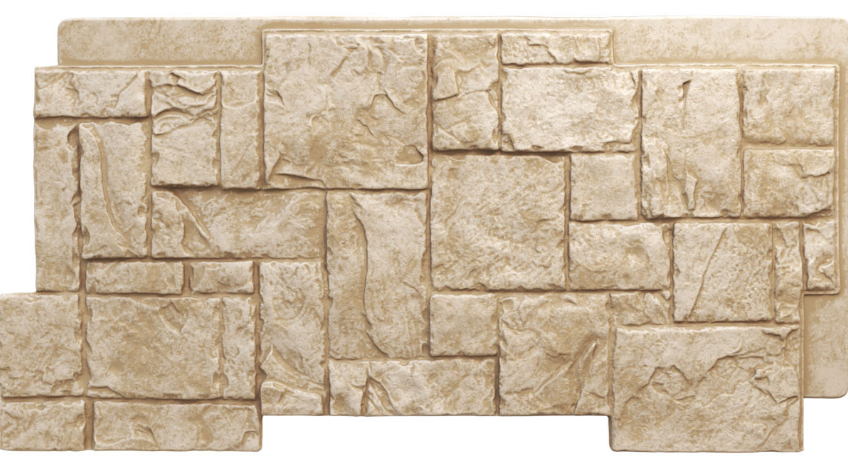
I promise that I’m not intentionally trying to frustrate anyone, but I know I’m going to anyway. I made progress on the front porch makeover, but I still haven’t tackled the one project that I know we’re all the most curious about and anxious to see — the faux stone facade on the skirting. When I started working yesterday, I decided that I need a little more time to research the exact products and process I want to use to attach those stones. I don’t want to rush into it, make a mistake, and have those stones fail and fall off in a year. So I did take time to do that yesterday, and I think I have the process down. I’ve made a list of everything I’ll need, so I hope to make it by Home Depot today to pick up all of the supplies so that I can start on it tomorrow.
With the remaining time I had left yesterday, I decided to tackle the porch boards. A few weeks ago, I had seriously considered completely redoing this porch and swapping them out for a composite material like Trex. But for now, I’ve decided to sand and paint them. The fact is that while these boards were looking really rough and pretty ugly at the moment, they’re cedar. And cedar is a pretty tough, weather-resistant wood.
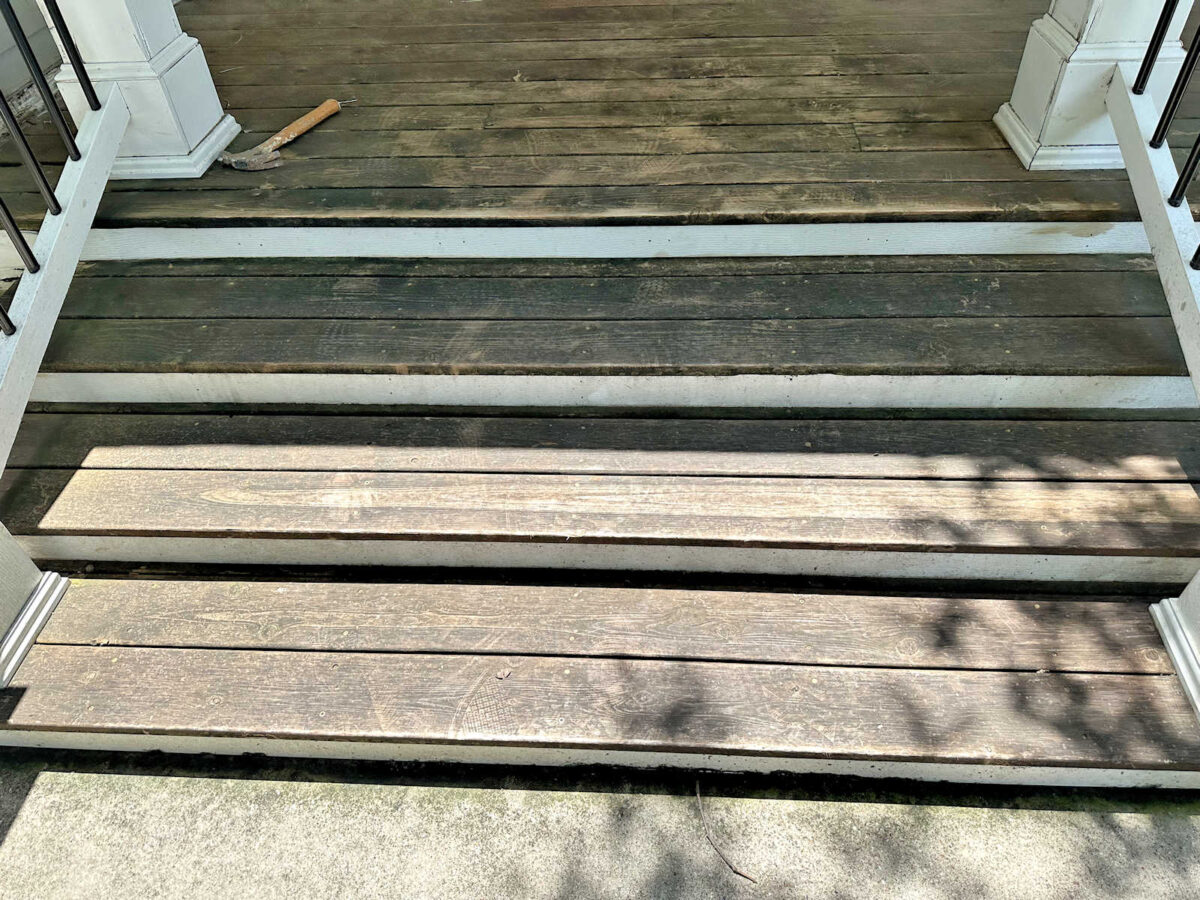
And while it doesn’t cost as much as a product like Trex, it wasn’t cheap. What made the porch look so bad isn’t that the boards were rotting and falling apart. It’s that the last finish I used was wearing off and looking very patchy and worn.
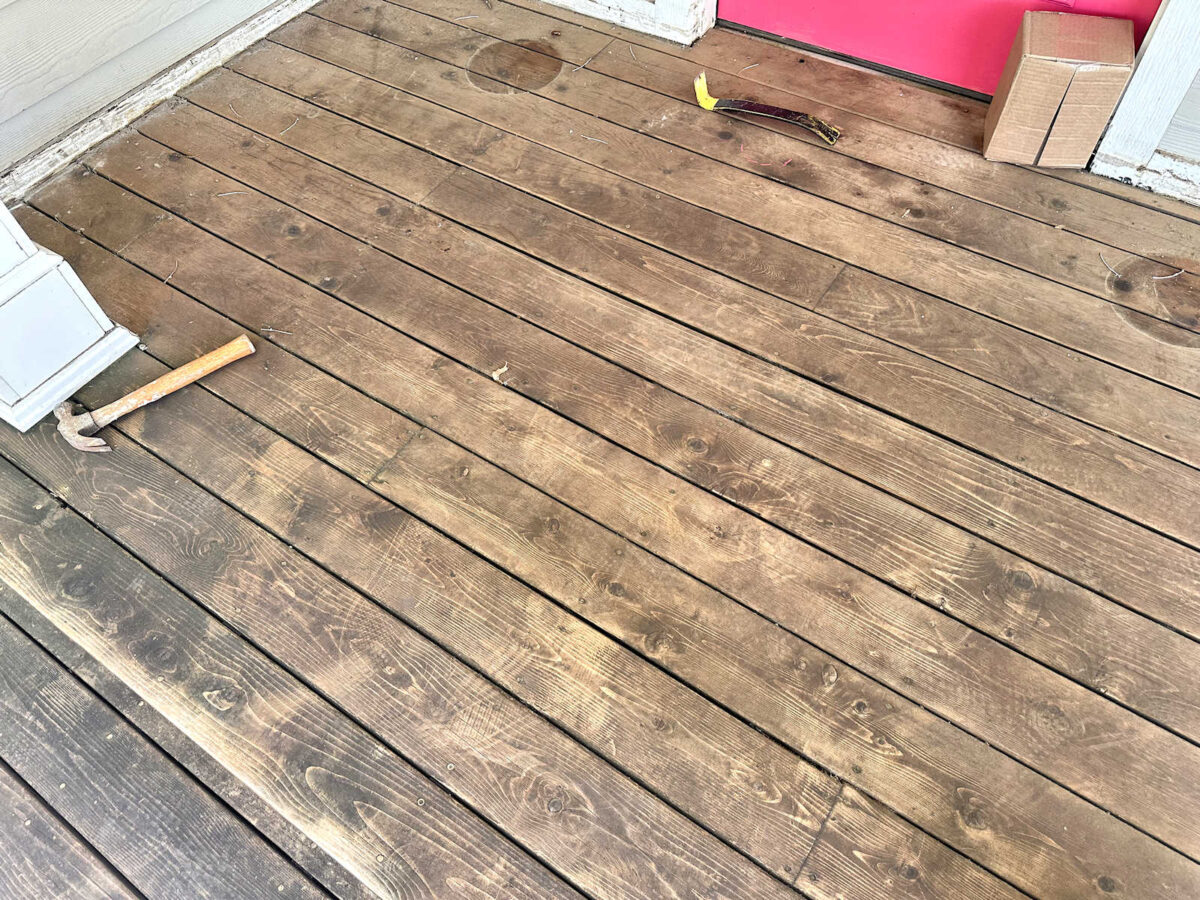
Even the areas on the edges, where it looks the absolute worst, was just the previous stain wearing off. the boards themselves are still in great condition.
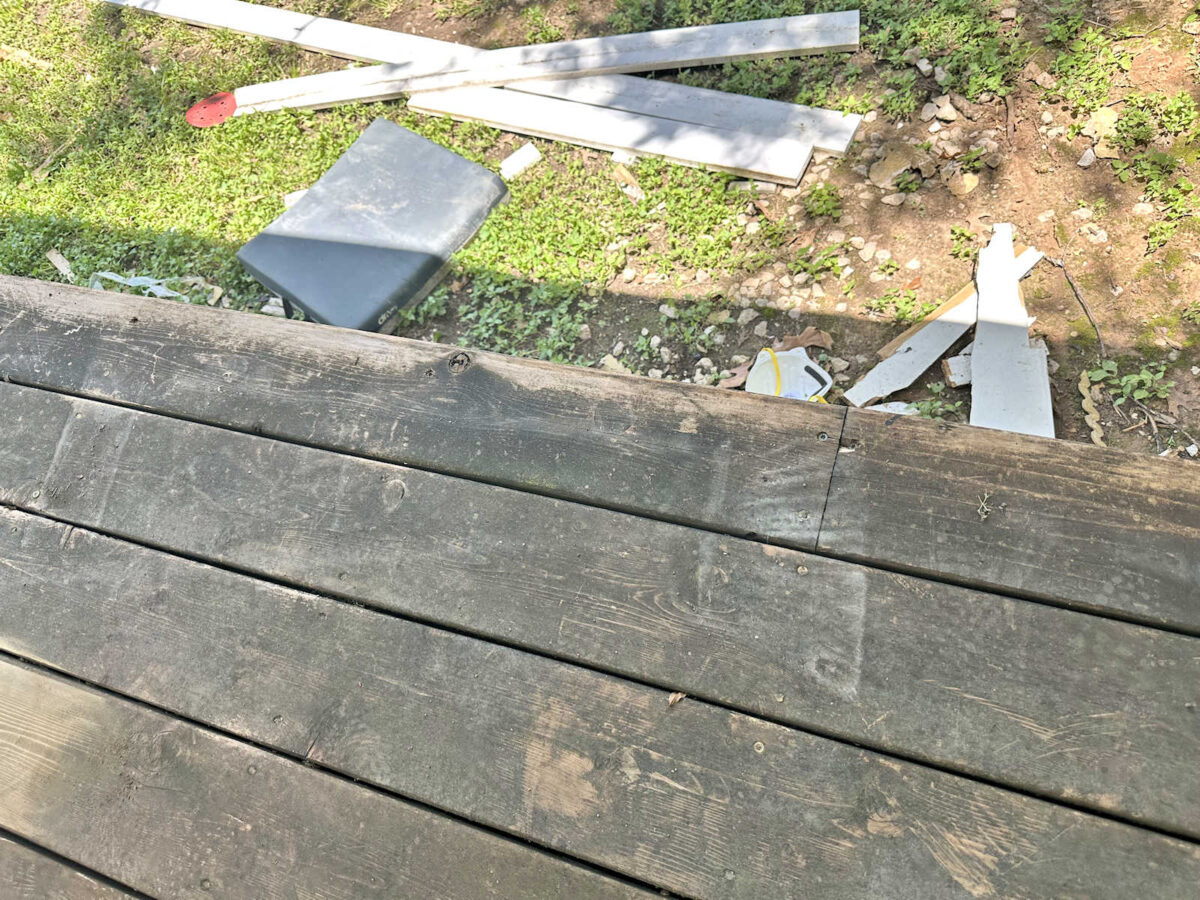
So, seeing that I have so many other projects that I want to do, and so many other things I want to spend my money on, I decided that tearing up a perfectly good cedar porch and replacing it with Trex really isn’t the best use of my time and money. Instead, I took a couple of hours to sand the boards down using 80-grit sanding discs on my handheld rotary sander.
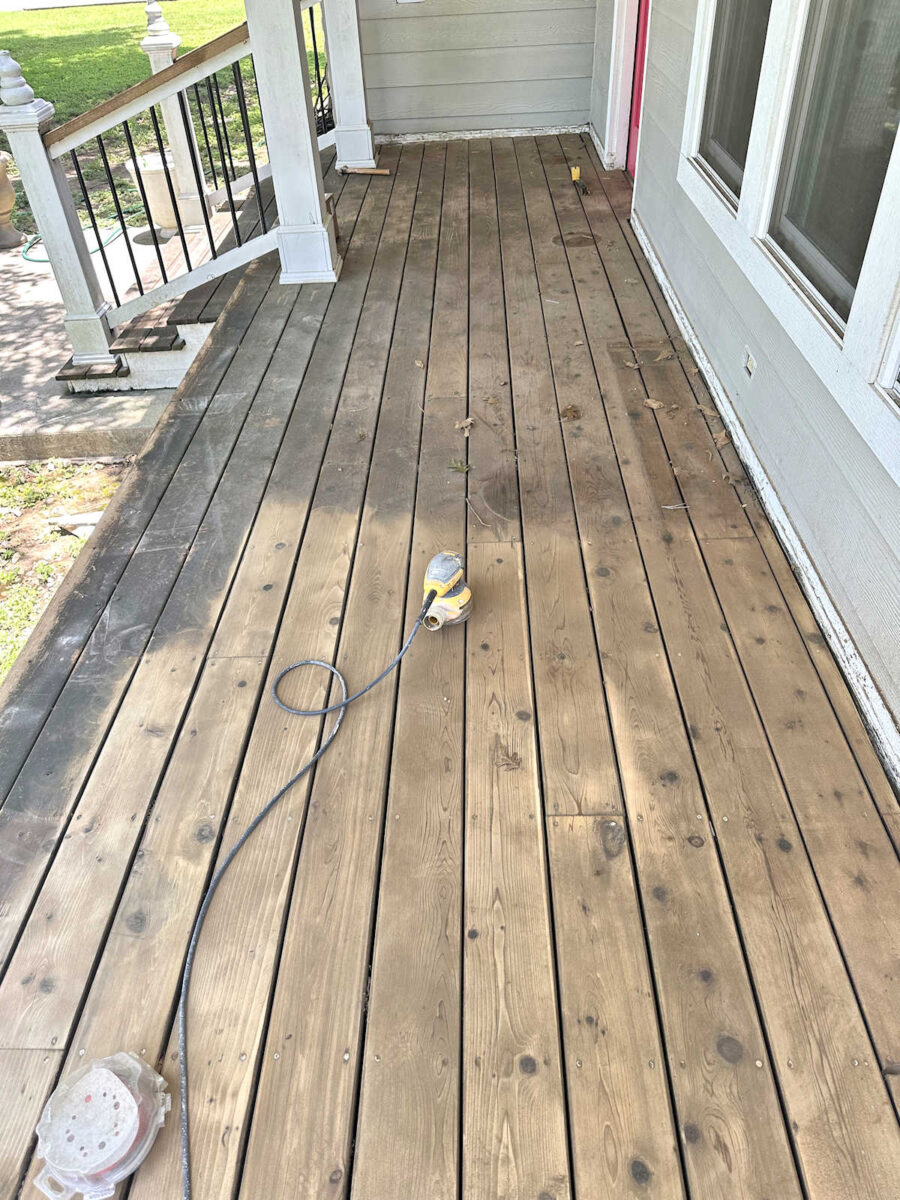
Once that old stain was sanded off, the boards looked great.
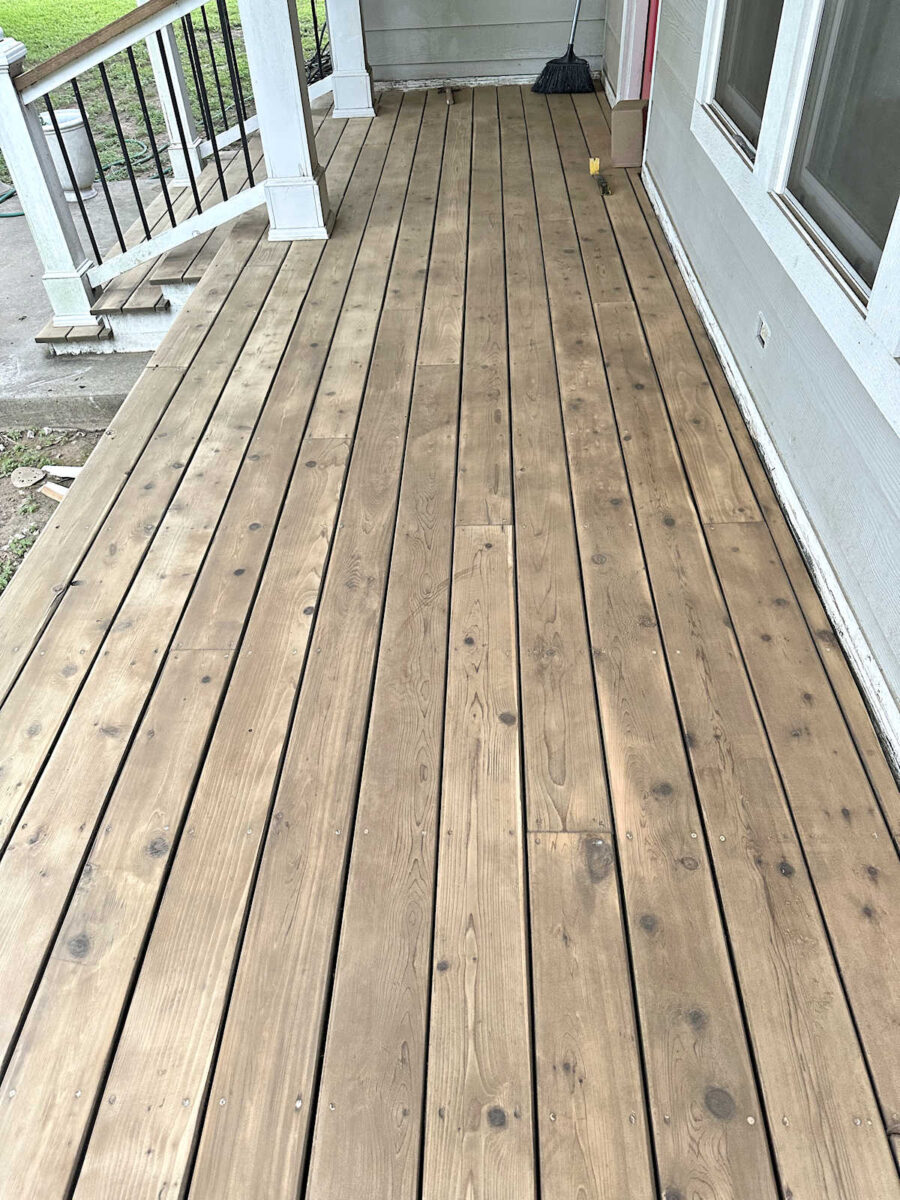
In fact, they looked so good that I had a moment where I struggled with the idea of painting them.
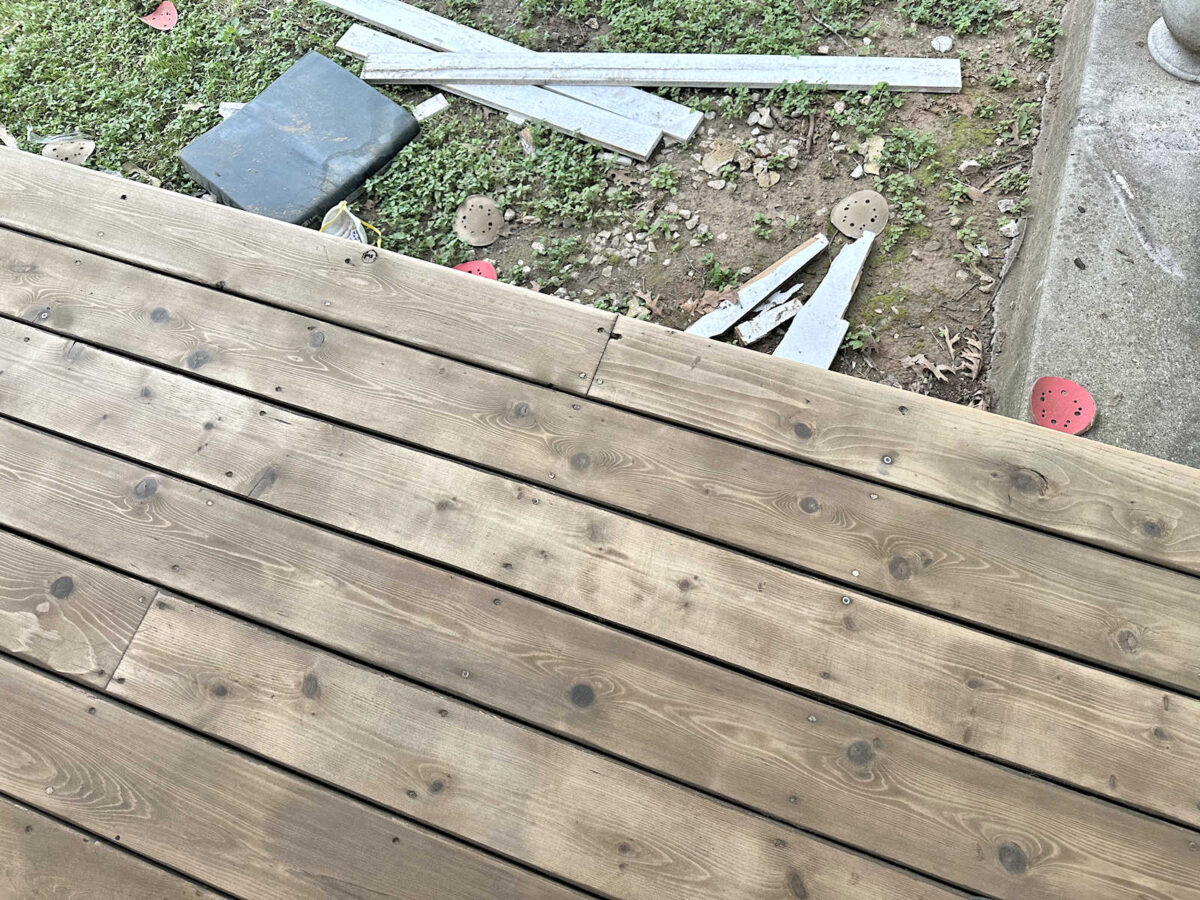
But after going back over the pros and cons of painting vs. re-staining the boards, I’ve decided to keep with my original idea of painting them. I do love the natural wood look of the boards. I love the wood grain and the knots that give it that natural wood appearance. And when it’s painted, I’ll lose all of that. The porch will be one solid, dark brown color.
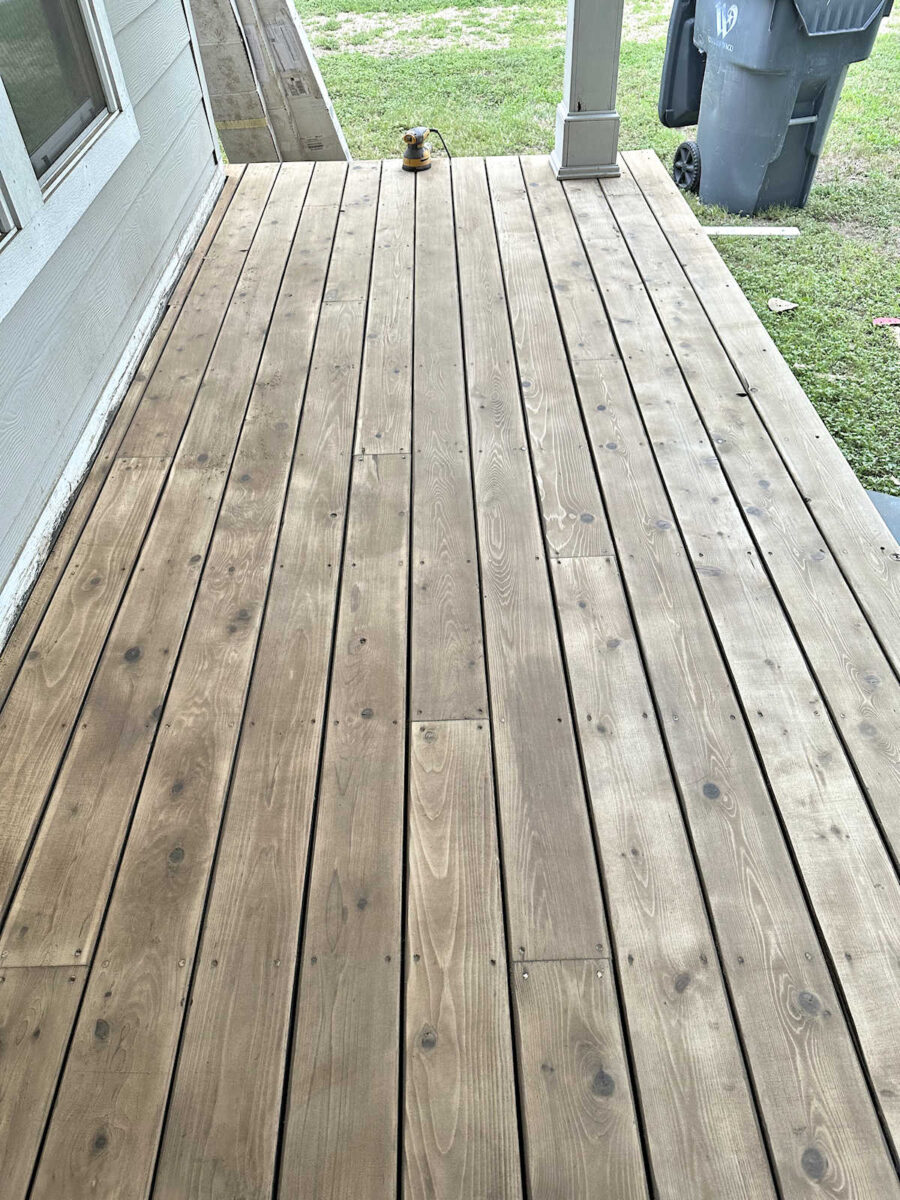
But I also know that if I re-stain it, I’ll be back out here in a year or two re-sanding and re-staining/sealing this front porch all over again. And then I’ll have to repeat that again, and again, and again, every year or two, if I want to keep it looking nice. I’d like something that is much lower maintenance, and I have high hopes that the Behr Porch & Patio Paint will give me a much longer lasting finish.
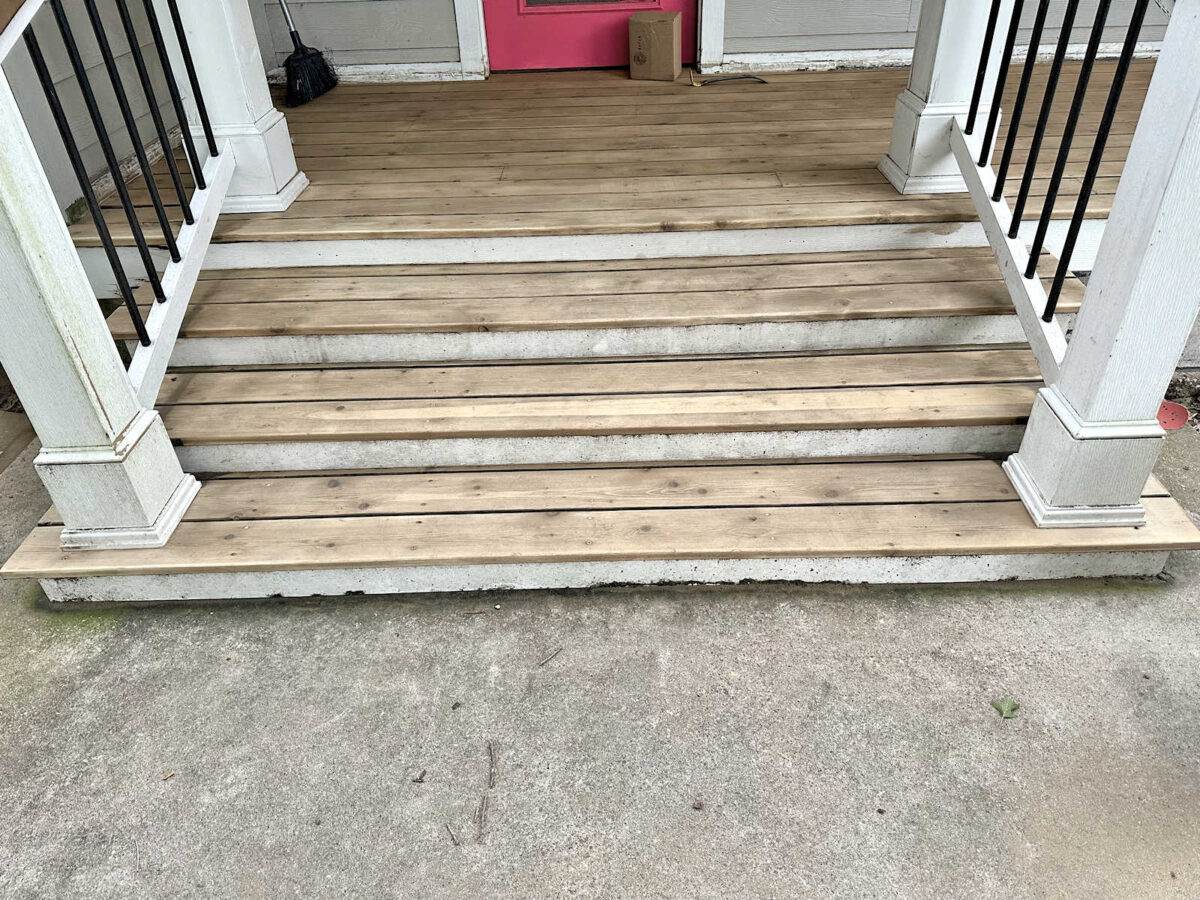
While I was working on this and going up and down the steps, I realized that if I’m going to paint the porch, I’ll also need to paint the stained wood portion of the handrails. And while I was inspecting the handrails, I noticed that I have a loose handrail.
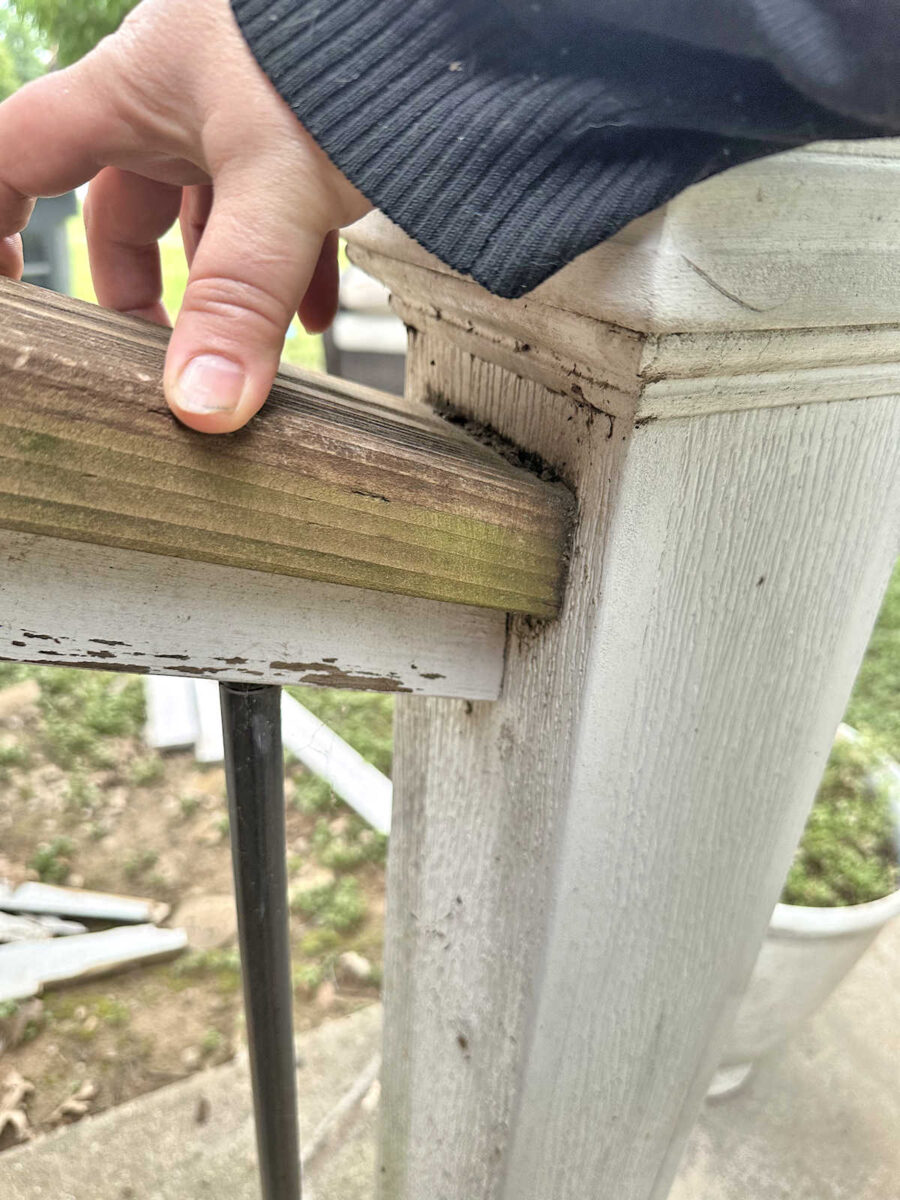
The post is secure, but this one area where the handrail attaches to the post isn’t secure. It shifts about 1/4-inch every time I grab it. Since this is a safety issue, this will need to be repaired sooner rather than later.
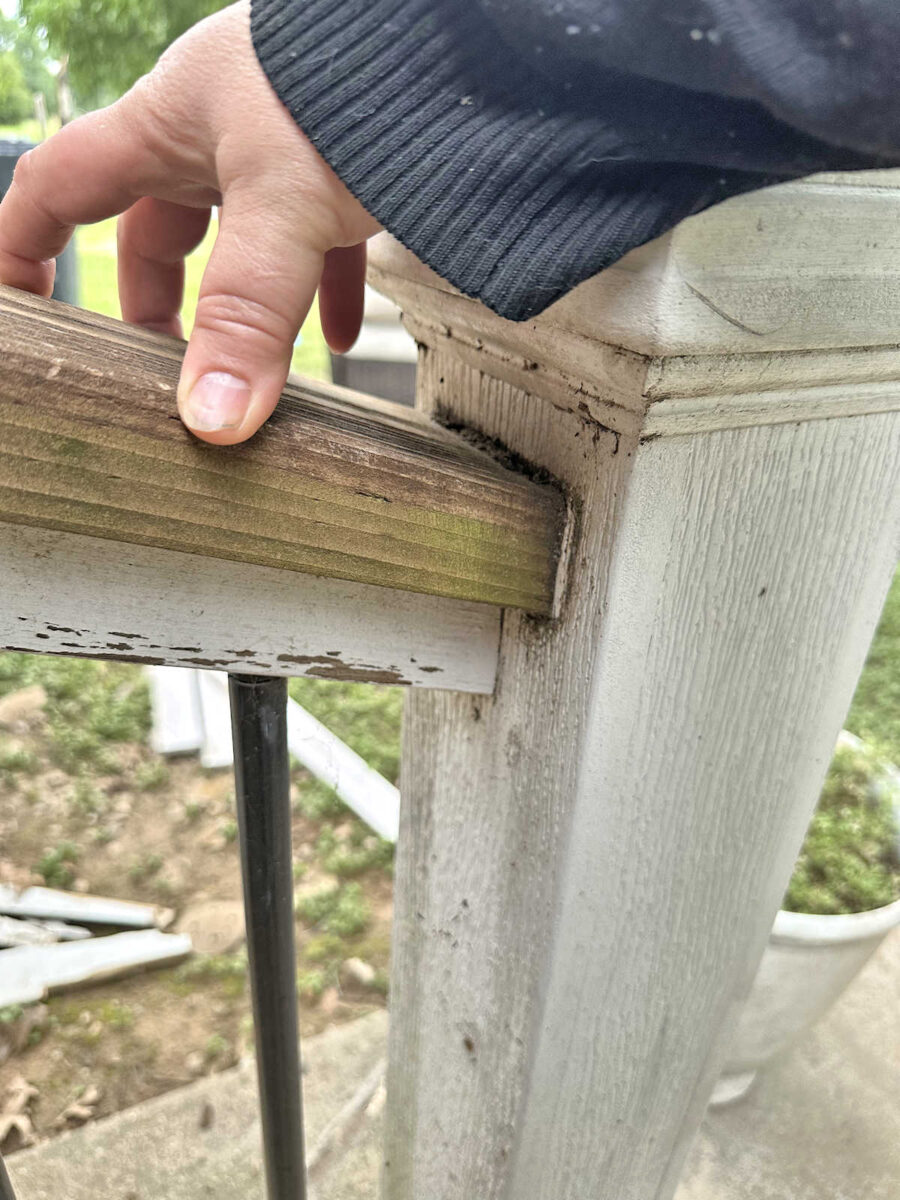
And as I was going over the steps that would be required in order for me to repair this (which would require me to take the handrail apart and replace the white piece of wood that the stained piece is attached to), I decided that I may as well take this opportunity to swap out those real wood pieces (just the white pieces on top and bottom) with PVC boards. After all, that’s my long-term goal. I want all of the wood that isn’t cedar and that rots a lot faster than cedar to be swapped out for PVC boards that will never rot. So that project needs to be added to my list. And since an unstable handrail is a safety issue, it needs to be done now.
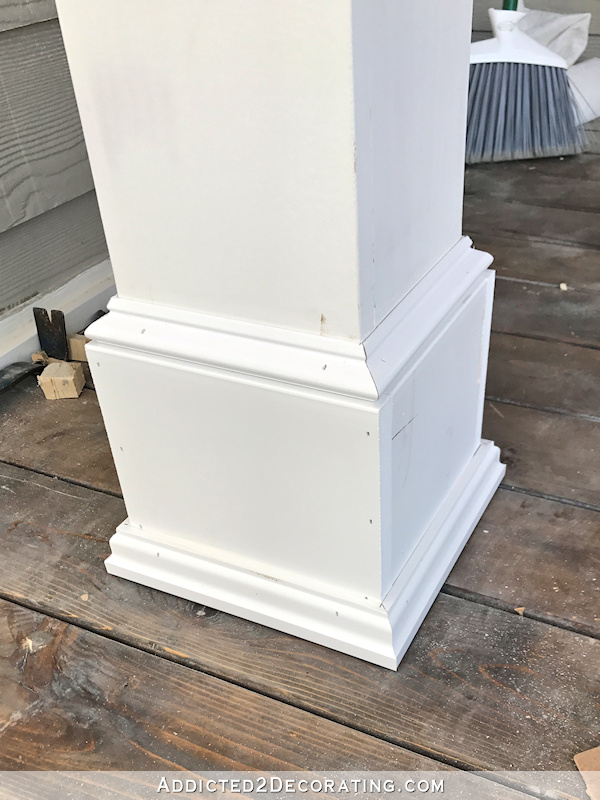
And since I’ll be redoing that with PVC boards, I thought that maybe I should go ahead and replace these rotting boards on the columns with PVC boards as well.
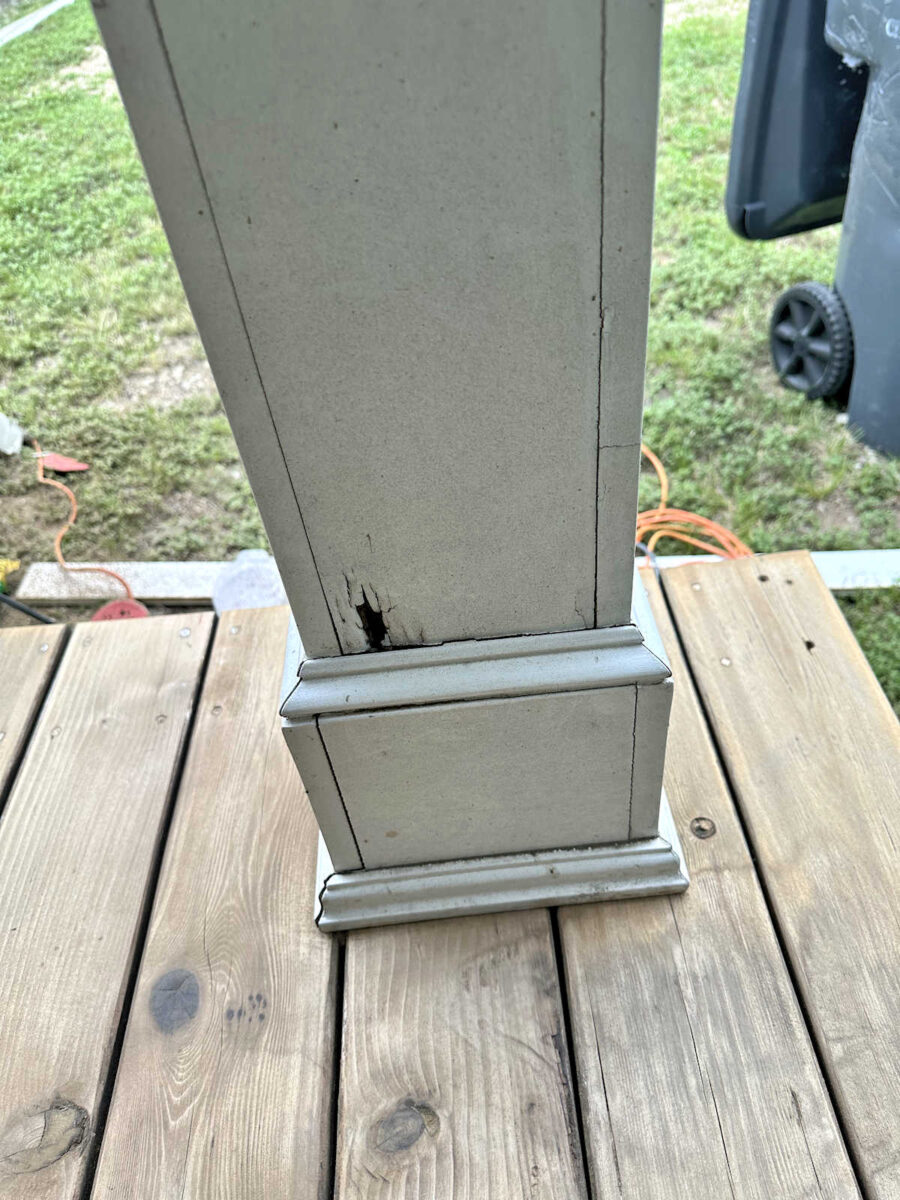
Yes, I could repair them and paint them for now, but why keep kicking this can down the road when I know it needs to be done. The wood on all three columns is rotting, and since I’m in “front porch makeover” mode right now, I may as well go ahead and replace these. It may extend the time I need on these projects by two or three days, but at least it will be done for good, and I won’t have to waste time repairing this right now only to have to come back to this project in the future.
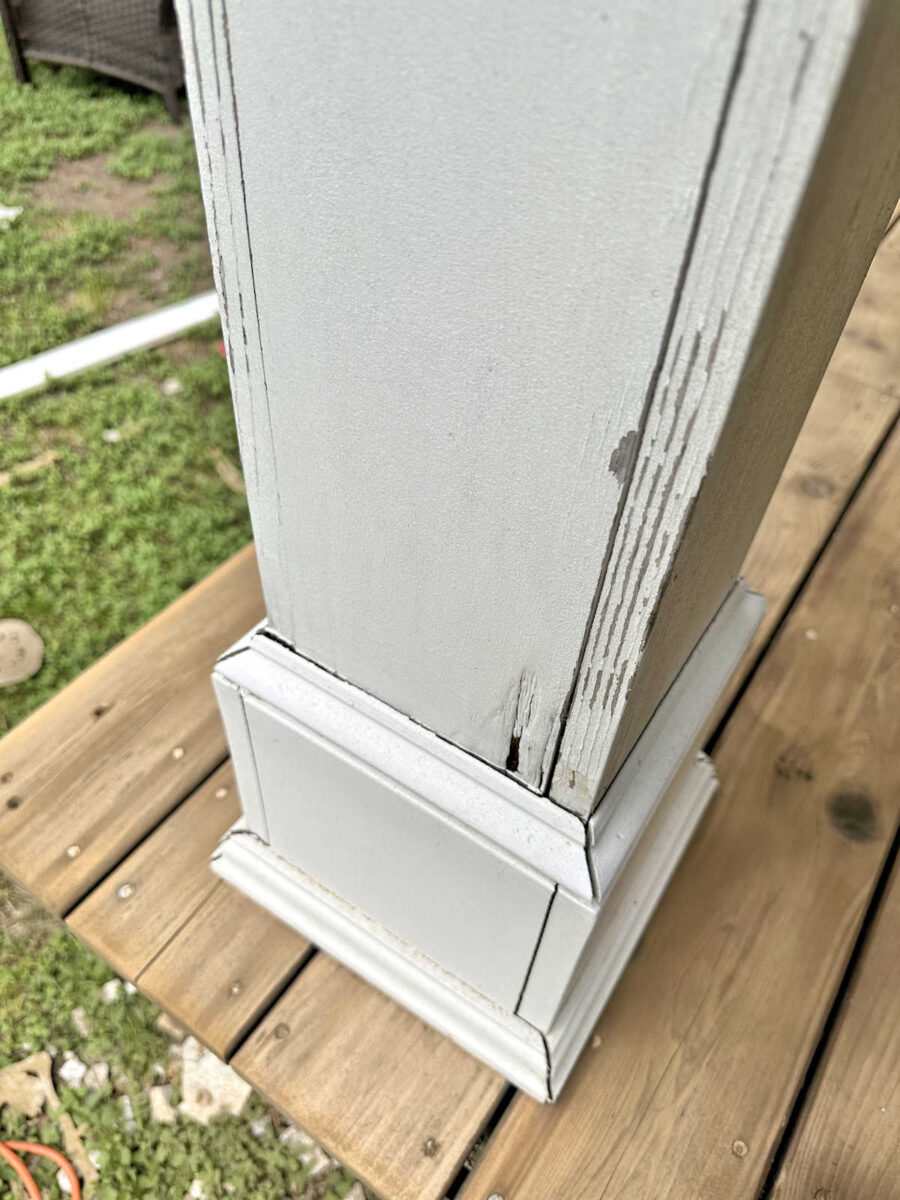
Plus, it’ll look so much nicer if it’s all done properly, and it’s all done at the same time.
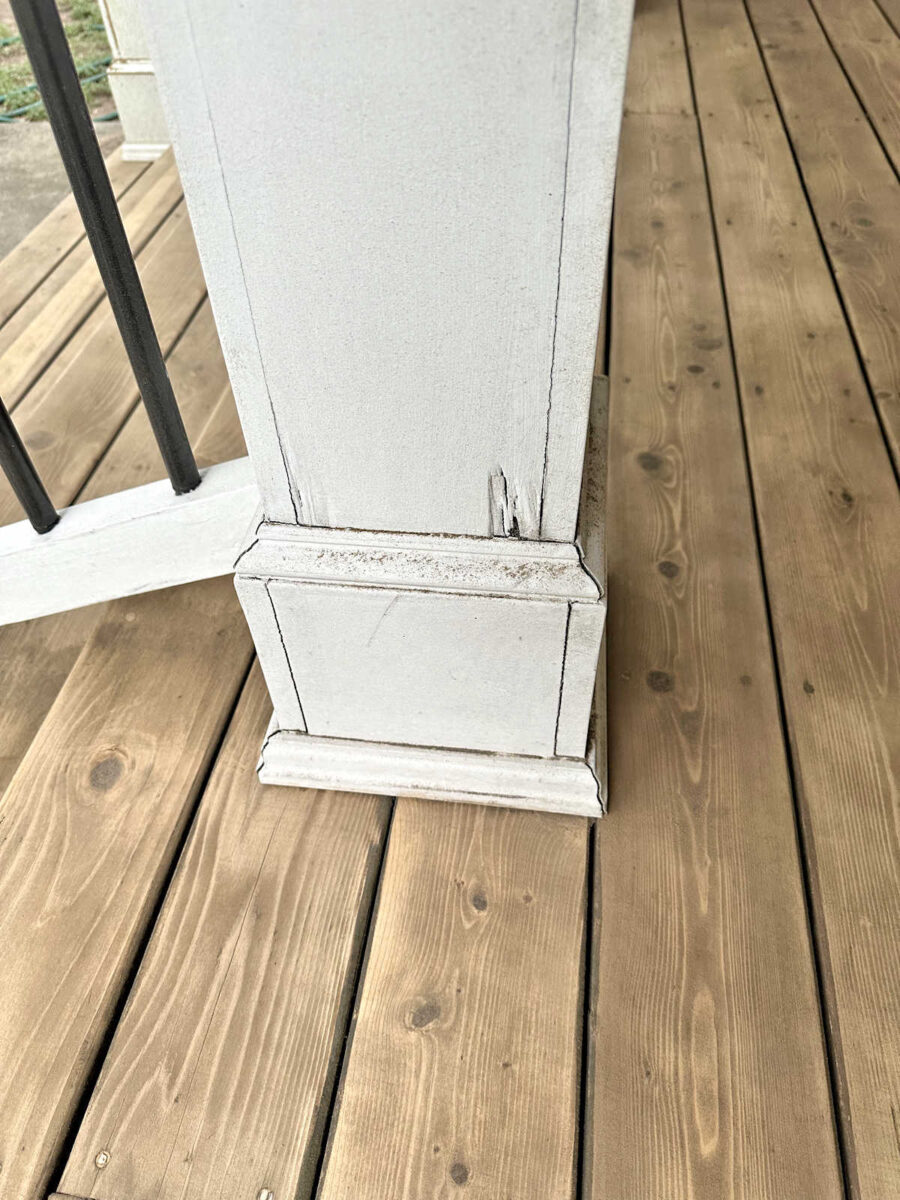
So that’s what I’m planning on doing. That means that those really do need to be done before I prime and paint the porch. Once the porch is painted, I’ll want to give it the full two to four weeks to cure with very minimal use. So once it’s painted, I won’t want to be standing on, using power tools and ladders on it, etc. But at least the porch is now sanded and ready to be primed and painted when I get to that point.
Tomorrow, I’ll be starting on the skirting. Once that’s done, I’ll repair the handrails and swap out those white boards with PVC boards. While I have the handrails detached from the columns, I’ll go ahead and replace the rotted wood on the columns with PVC boards and then reattach the handrails. And then once that’s done, I’ll be ready to prime and paint the porch. And once that’s done, the porch makeover will be done! I won’t have anything hanging over my head that I need to come back and redo in the fall or next year. It’ll all be done. No more wood that can rot, and no more porch boards that will need to be re-stained next year. That’s the goal, at least.
More About Our House Exterior & Yard
see all exterior &
yard diy projects
read all exterior &
yard blog posts

Addicted 2 Decorating is where I share my DIY and decorating journey as I remodel and decorate the 1948 fixer upper that my husband, Matt, and I bought in 2013. Matt has M.S. and is unable to do physical work, so I do the majority of the work on the house by myself. You can learn more about me here.
Sounds like a great plan.
I would use oil based stain and tung oil finish for preserving your beautiful cedar wood. This info is online: Preserving outdoor cedar with an oil-based stain and tung oil requires combining a penetrating stain for UV color protection with tung oil to build a tough, water-resistant seal. This two-step process deeply penetrates the wood grain to protect against harsh weather and decay without peeling.
I think this is the better plan. It has always been my understanding that painting wood outdoors is not the best solution as the paint surface is prone to chipping and peeling whereas stains and oils actually penetrate the wood surface. They may fade in time but they won’t peel. Just my two cents.
It does sound like a great plan. You are correct in the sanding and painting of the porch deck. When they finally give up the ghost, move on to poly-wood. Instead of Trex, we went with Timber Tech, and the Trex stuff that we had first put in when we moved down here 15 years ago, and now compared to the new stuff, there is a huge difference in quality. It seems that the technology for this is moving pretty fast. I think your plan makes a huge amount of sense and not that much work for the results. Can’t wait to see the end product.
Cheers to you, Matt and Fur Babies!
A word of caution — When we bought our house, the deck had just been painted. We’ve been here only a few years and it looks absolutely awful. The paint is peeling off everywhere. We’re not looking forward to the big job of getting the paint all scraped off so we can stain it instead. I hope you have a better experience with your painted porch.
Those were my thoughts too.
Kristi, I’m so glad that you aren’t trading the porch boards to Trex. I’m in Louisiana and further south from you. Also on a lake which might be why this happens. People here who have used manufactured wood like trex had problems with warping. Just a heads up that may influence what you decide. On Grand Isle everyone used a paint stain.l guess you know about that paint. It last a long time even through hurricanes. If this is all something you are aware of please just ignore it.
I was sad to read that you are going to paint the beautiful cedar boards. I love the grain and knots in it. I was also wondering how long paint will last on it. I have no experience with that. I certainly understand wanting a finish that won’t need to be done over in a year or two. I hope everything goes smoothly with the porch and you finish before it’s too hot outside. I’m glad you had a great birthday weekend!
I am thinking the paint will be a bigger pain in a few years when it starts peeling. I would do the tung oil /stain that someone mentioned. I have read that painting cedar is never a good idea. But I’m sure you will work it out.
There’s a great children’s book “If you give a mouse a cookie…” that comes to mind with this trail of projects – one leading to several more (but of course all your project steps are very important to the whole!). Good luck and good weather and speedy completions to these jobs!
If you give a mouse a a cookie is exactly what I was thinking about house projects work!
I was thinking the same thing, one project leading to another. I was thinking Kristi was going to mention the book.
Ha! I actually did mention it when I posted this on my A2D Facebook page. 😀
Kristi I am excited to see your finished porch so you and Matt may enjoy some nice evenings out there. However, I came here to say you new picture is so lovely. Are you still using Tallow and Castor for your skin care?
Agreed. Also curious.
I am! It’s the only skincare I use on my face.
This is my first time commenting. Please do not paint the porch deck boards! On our local radio station, there is a home improvement expert who always recommends products from Cabot and Penafin. I believe they are oil penetrating stains. Please research these products.
Cabot’s Australian Timber Oil is awesome. I use it in Jarrah Brown which seems similar to the look Kristi is going for. Yes, I do re-oil as needed but find that it tends to only be high traffic areas. It keeps the natural look although it’s slightly opaque when several coats are on. Lightly coating and wiping off excess is the key for future coats.
I would caution against painting the wood. We did that. Although we did choose to keep our wooden (not cedar) deck for a couple more years, it looked worse than before as the deck paint wore poorly and peeled in spots. I can’t remember what brand we went with, but something recommended highly by our professional painter who did the prep work and the painting. I wish we would have stained it instead. And I am super happy that we replaced our deck with Trex decking material.
We have a cedar deck that we re-stain about every four years. We power wash it before staining, no need to sand. We use TWP semi- solid oil based. It lasts 3-4 years and just needs cleaning before restaining, no sanding. It is very highly rated for tough weather conditions too. It still allows a bit of wood grain to show and can be tinted. The problem with paint is that it always scratches or shows wear and needs repainting with sanding first. So don’t give yourself more work in the long run. Great idea to replace your wood post & rail boards with trex or whatever brand you prefer though! I enjoy so much how you share the realities, logic and adaptibilty to change needed in DIY. That has been my reality too. I know you will find a great resolution too.
One of the oldest preparations for preserving wood is the equal parts boiled linseed oil + pure turpentine + white vinegar. The vinegar kills any organic matter attacking the wood. The oil and turp penetrate the wood and protect it. Respray every couple of years. There are places in Europe that have wooden fretwork that has lasted for hundreds of years using this formula. No sanding. Maybe a light cleaning to remove dirt but no heavy sanding. Each coat adds to the last one.
Paint? I love it inside. Living in FL, outside not so much. I’ve used it off and on and never have been satisfied with weather exposure. After a couple years it would start peeling. Then comes scraping and sanding before repainting.
Just stain for color & UV protection, then follow with the mixture that will actually protect the wood. It’s also much cheaper. Wood requires an oil to maintain it’s integrity, not dry out and split.
While I read every day I hardly ever post a reply. I’ve used the Behr porch paint, repeatedly. No matter how well I prepped within 2 years it was peeling and chipping. By year 3 I was back to wash, rinse, repeat with sanding, scraping etc. Heed the others advice on using an oil or something of that sort.
The new picture is gorgeous! Aging in reverse. Keep taking care of yourself.
Excellent ideas and thought process!
I too am having second thoughts re: painting the porch, but once done you’ll probably be glad you did it.
When I had my house in Ohio, I always wanted to replace the ugly rusted iron work with sturdy posts and clad them in PVC. Never got around to it (I’m not a DIYer) nor have subsequent owners.
Just think…porch redo will be done AND the shutter rehung!!!😵💫😳😆😬🤣😂😅😁😀—-see? Your fans are good for something😉
You are one busy lady!
I love your new picture. You do look younger.