
How To Hang Grasscloth Wallpaper
I finished installing my grasscloth wallpaper in our bedroom suite last Thursday, so I’ve had a weekend to live with it. I’ve had three days to look at it, live with it, and be surrounded by it, and I love it more and more with each passing day. There’s nothing like grasscloth wallpaper to add natural texture to your walls, but installing grasscloth wallpaper is a bit different from hanging regular wallpaper. It’s not difficult to install, especially if you’ve had experience hanging regular wallpaper, but there are some tips and tricks that I learned along the way. So today, I want to share how to hang grasscloth wallpaper, start to finish, and share those tips and tricks that I learned along the way.
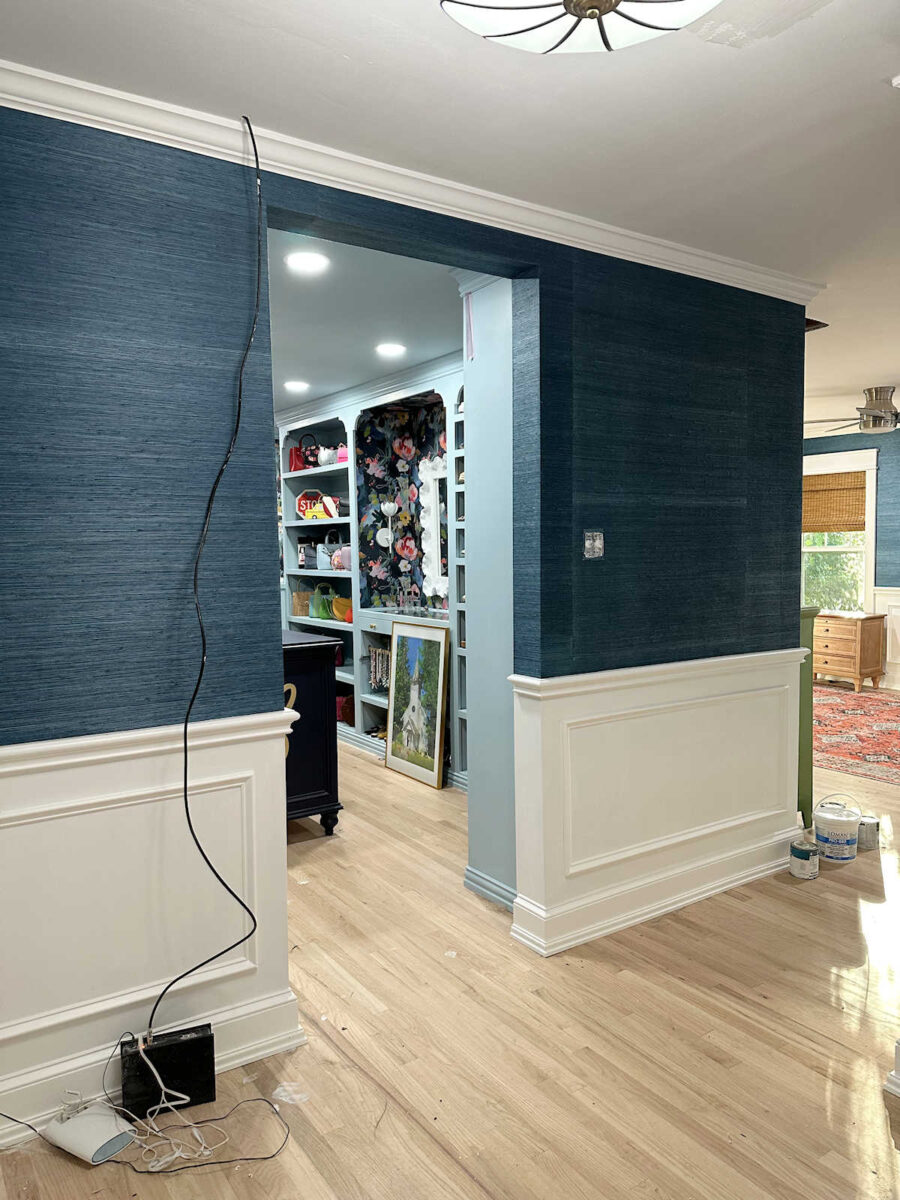
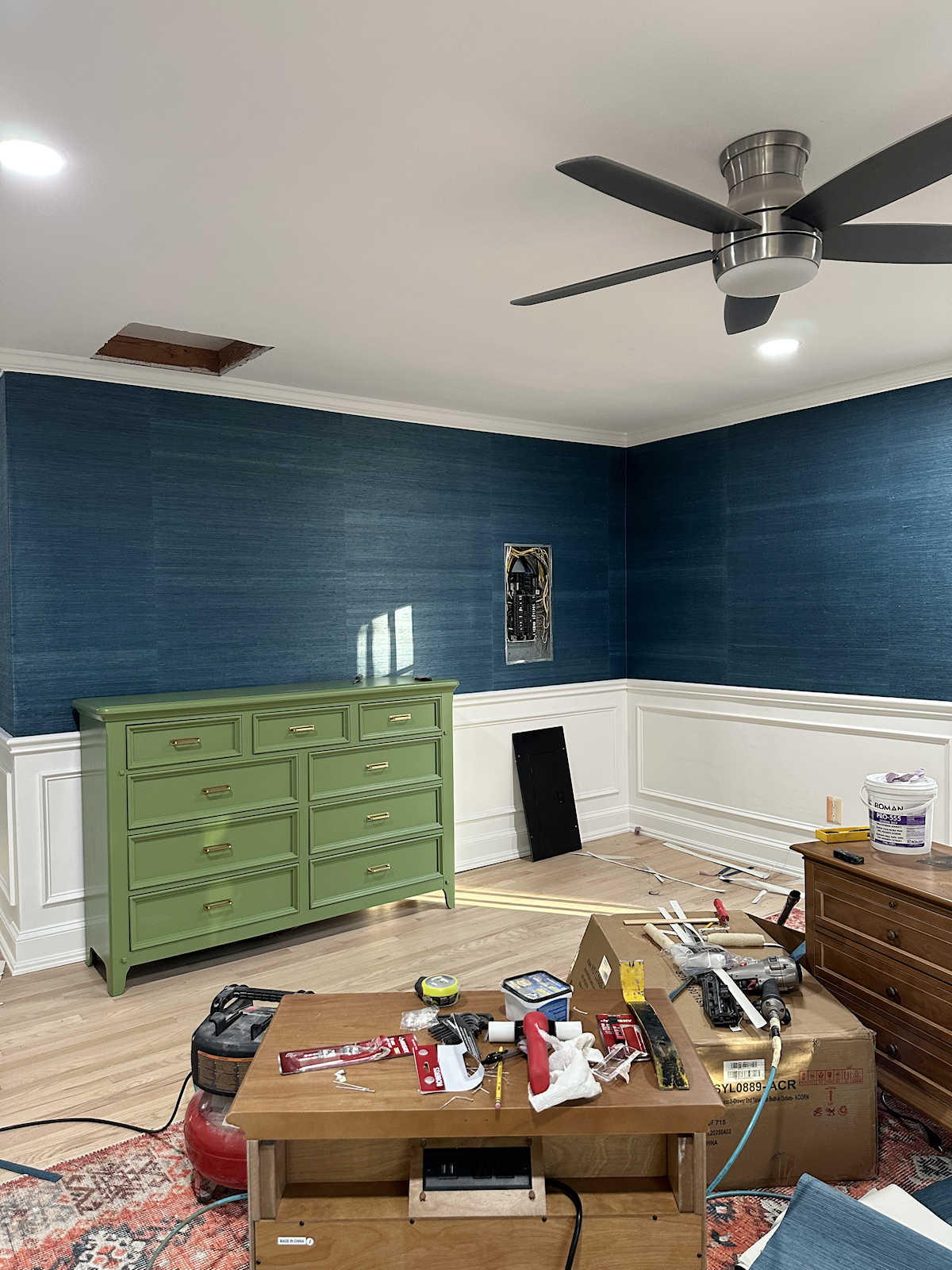
But first, let’s just take another look at these amazing walls. Y’all, I seriously can’t get enough of this dark teal.
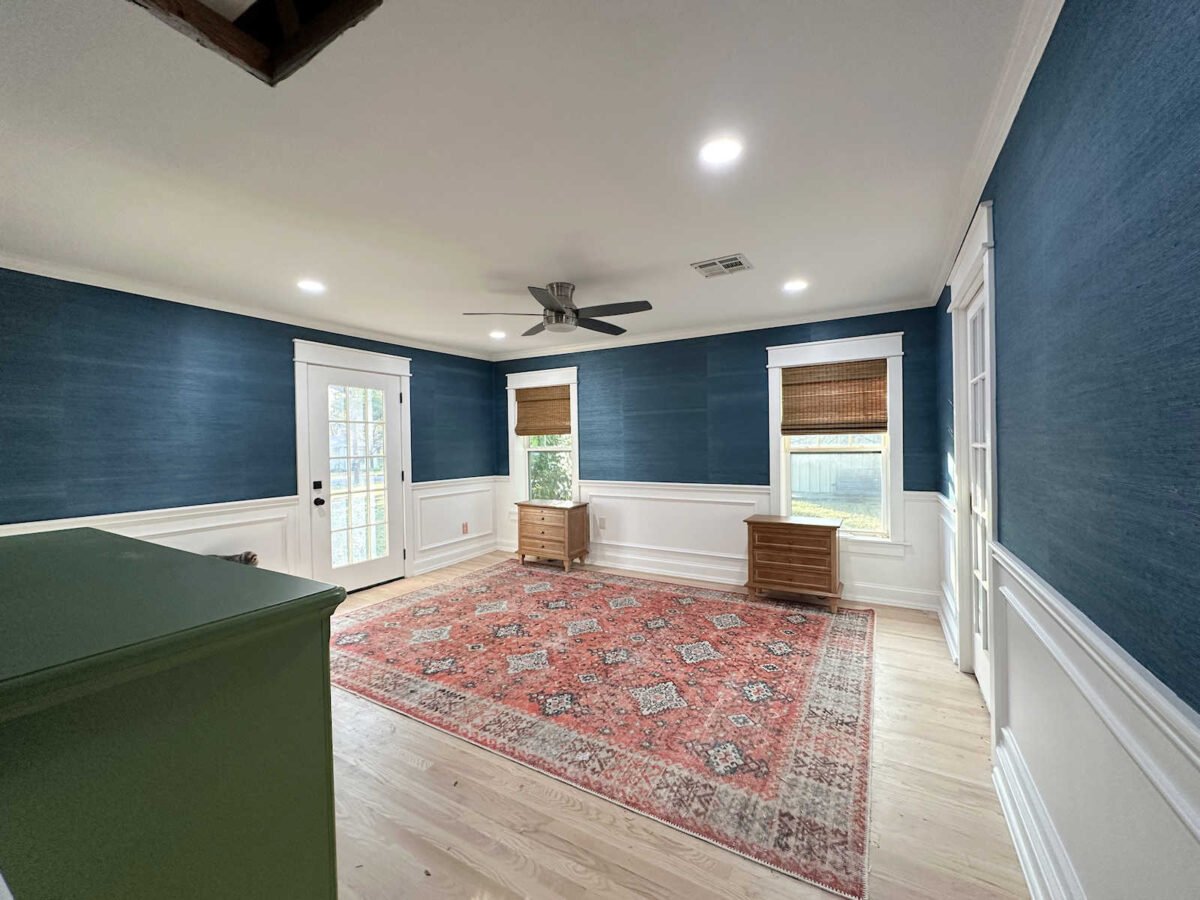
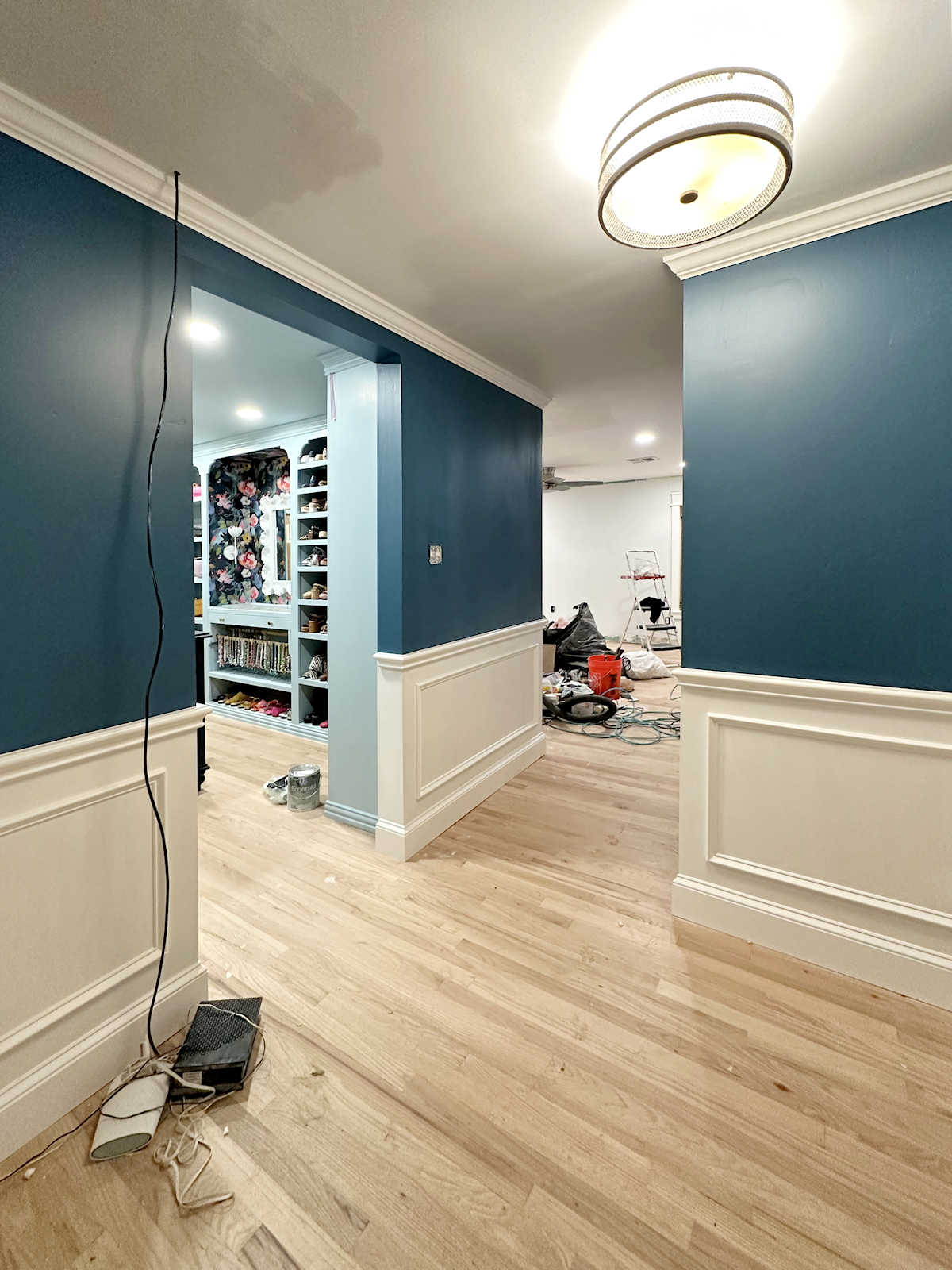
There’s simply no way to get this kind of look with paint. Grasscloth is a totally unique look that can’t be replicated (and I’ve tried!)
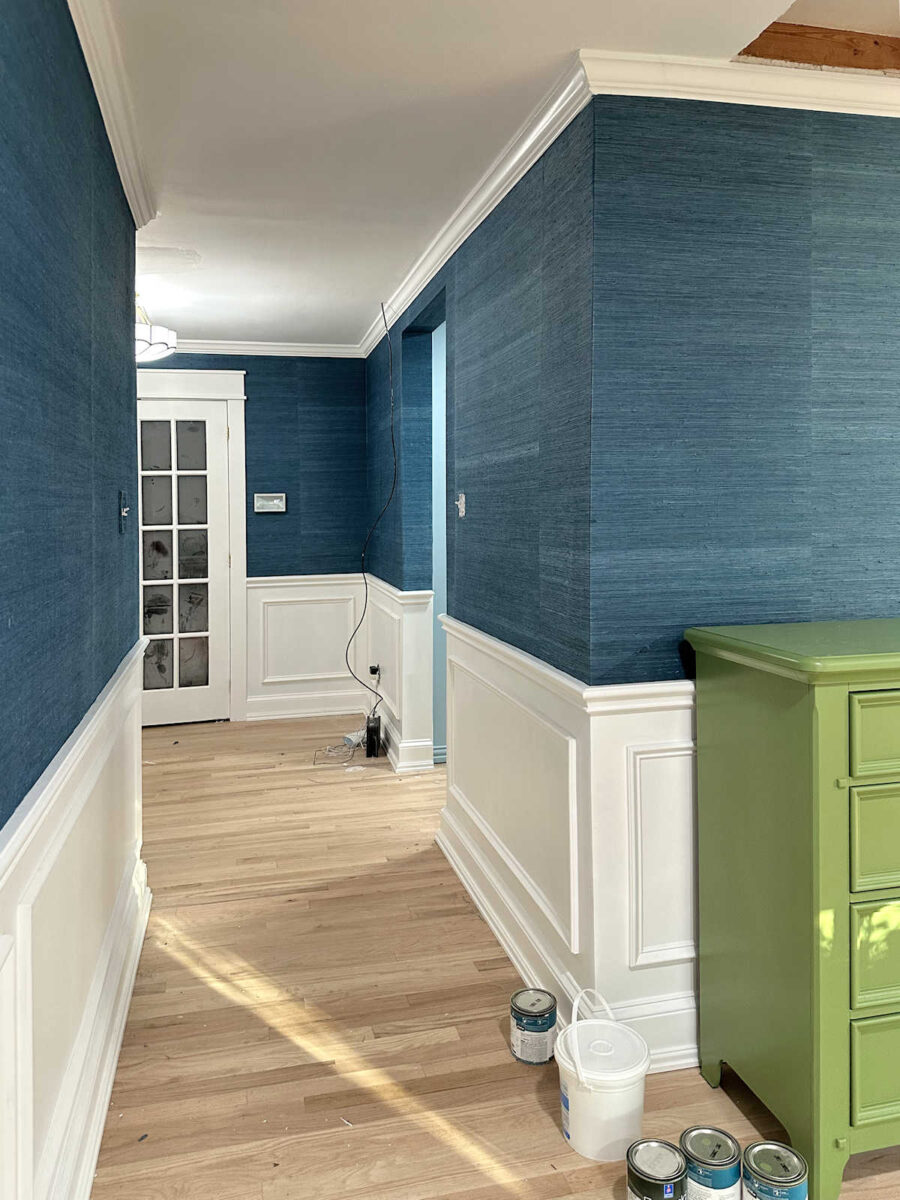
So let me start at the beginning and share the whole process.
1. Paint the walls to match the grasscloth.
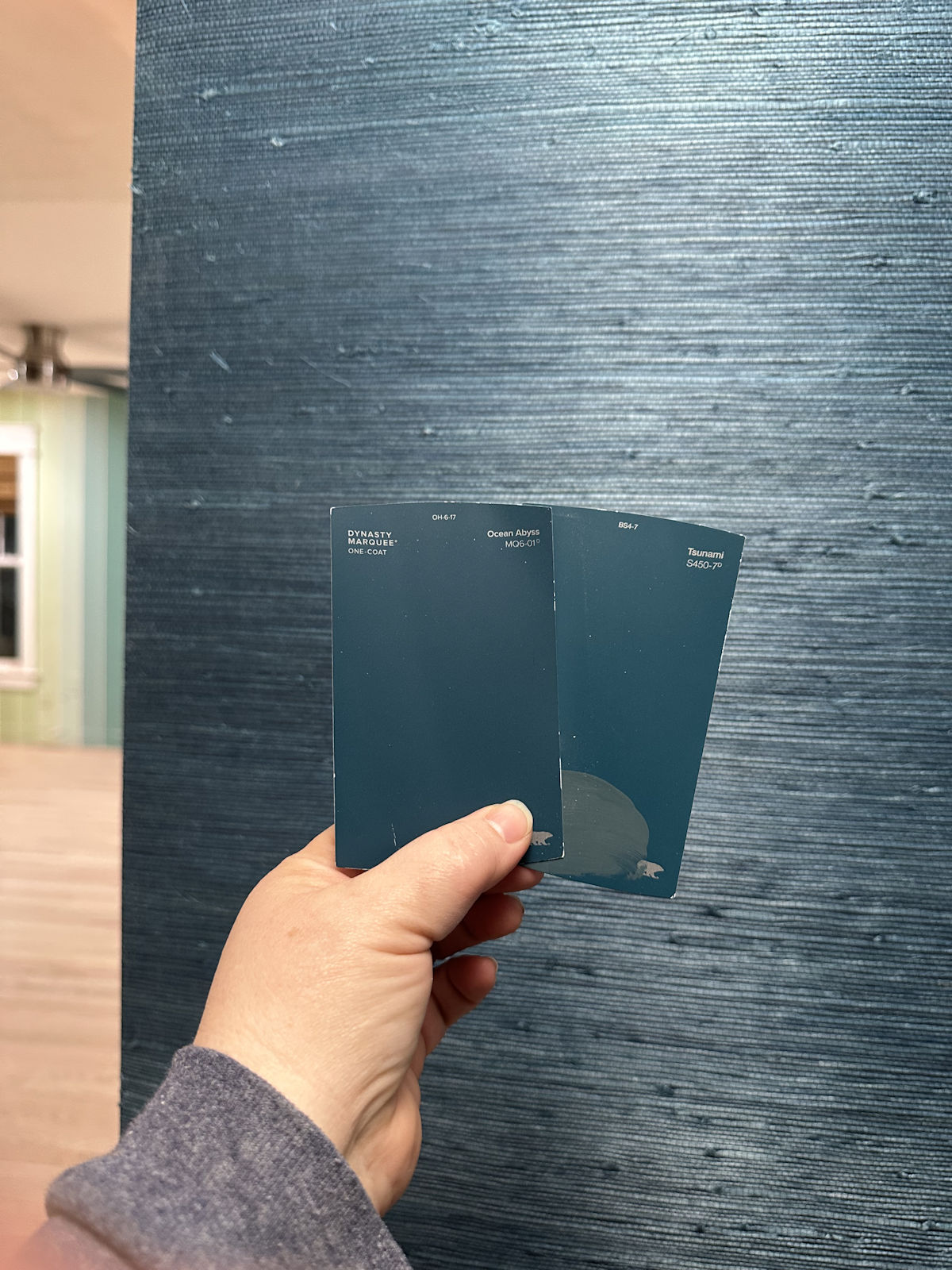
I took a piece of the grasscloth to Home Depot and had it color matched in their Behr Premium Plus paint. I tried to match it to the darkest color in the grasscloth. And then I painted the walls with that color. After painting, I gave the walls about 3-4 weeks so that the paint could cure completely, so this took some planning ahead. If you don’t want to wait that long, I’ve heard that there are primers made specifically for use with wallpaper that can be color matched to your wallpaper and that don’t take nearly as long as latex paint to cure.
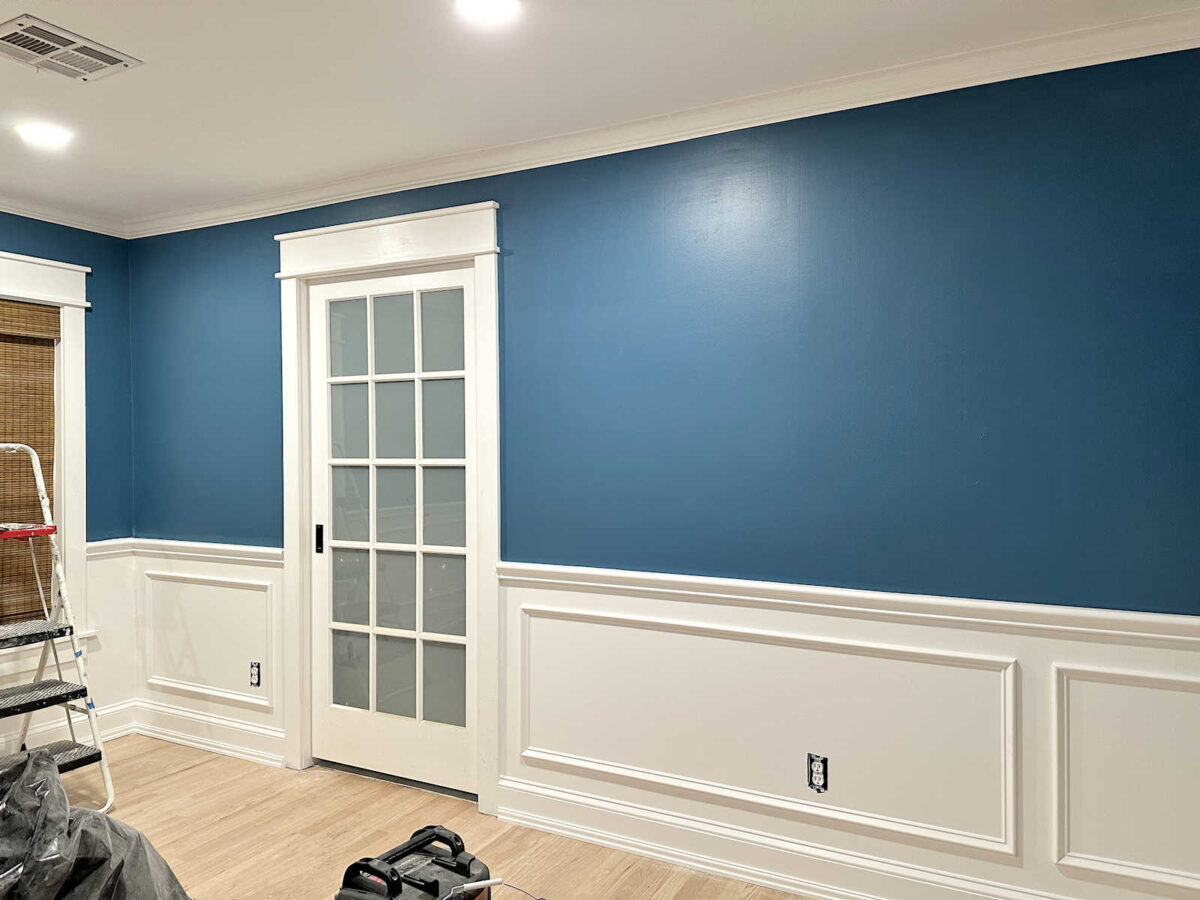
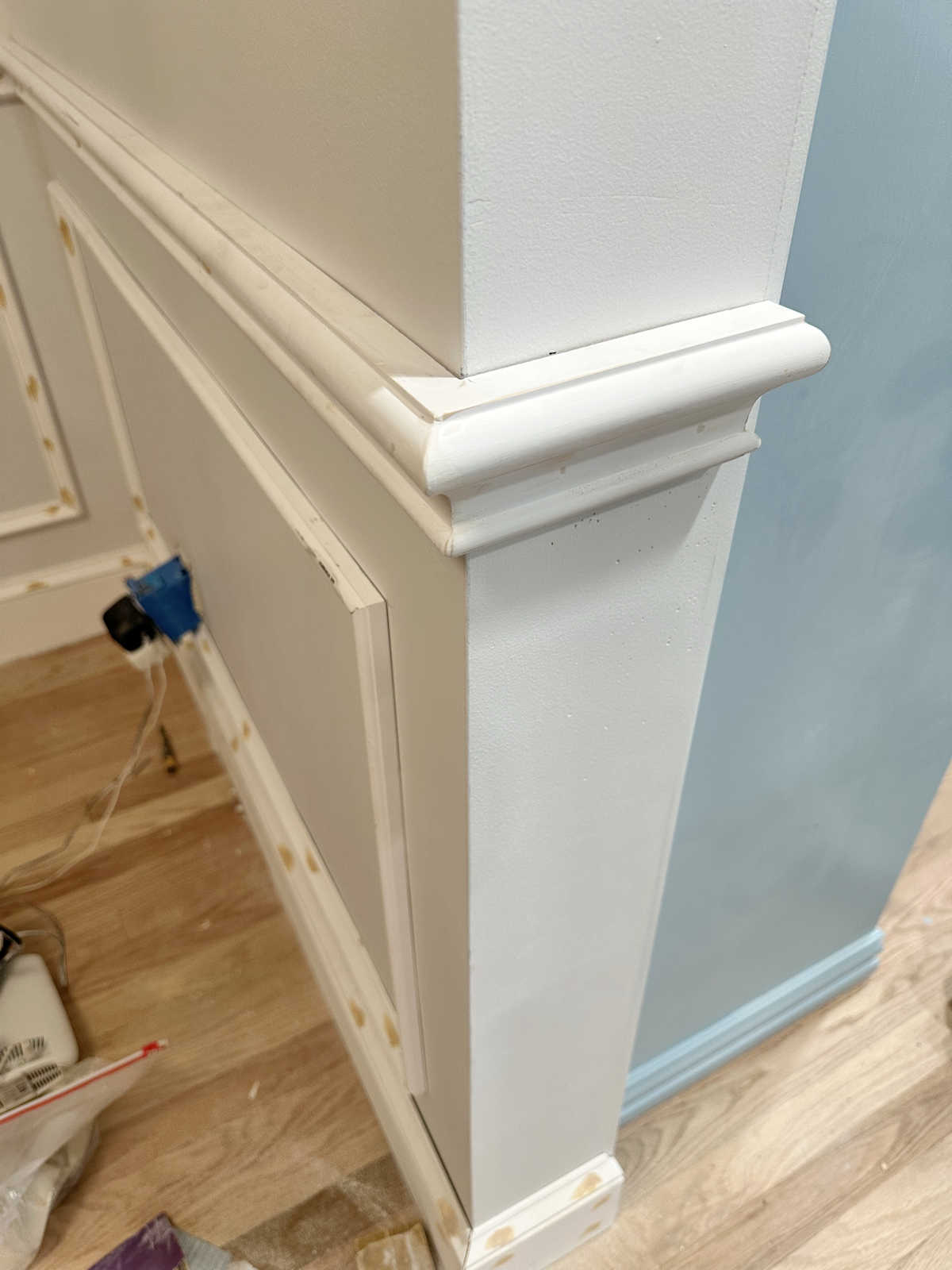
One thing I did that I think made a huge difference is that I painted this little bottom edge of the crown molding the same color as the walls.
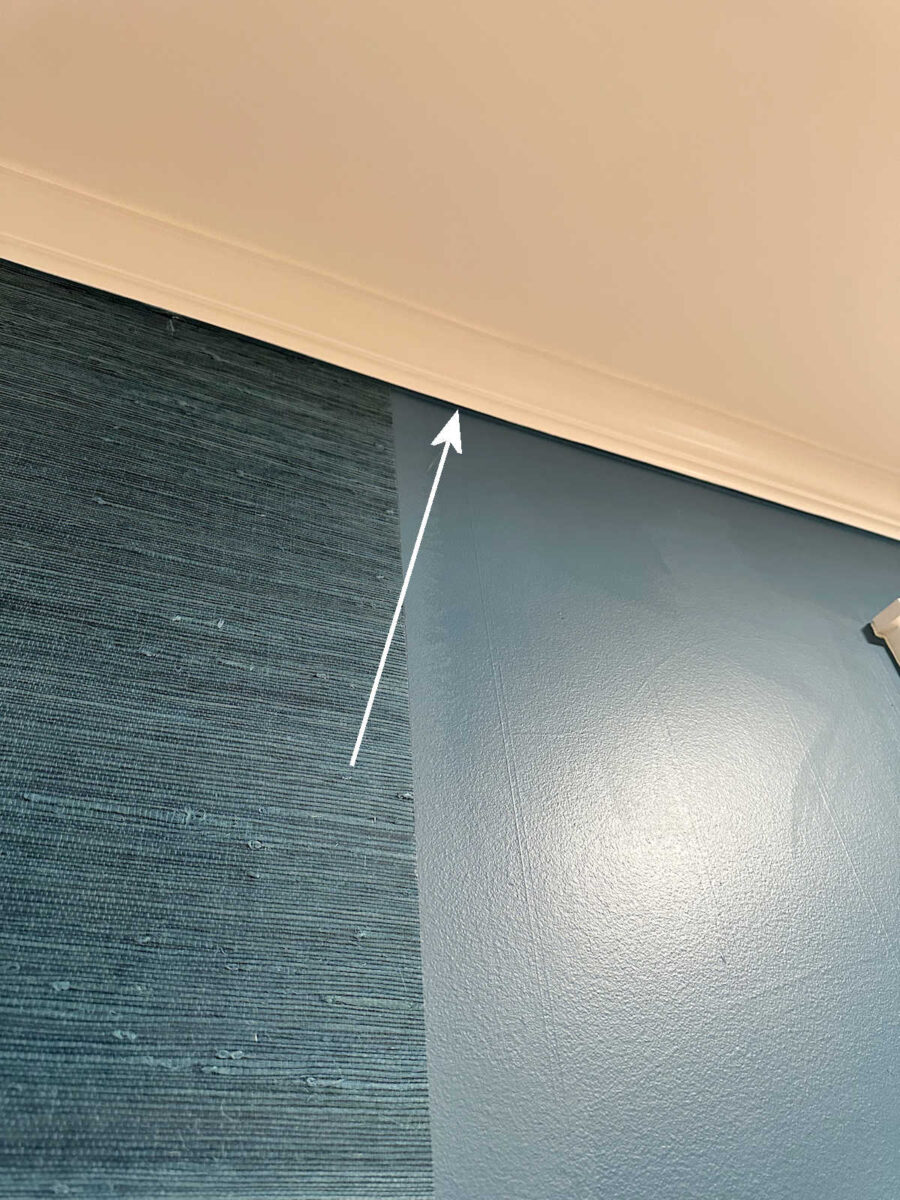
This isn’t as tedious as it may sound. I just used a normal paint brush and painted it on somewhat carefully but quickly, and then used a wet rag to wipe off any paint that got on the face of the crown molding. I did this at the same time I did the cutting in along the top of the walls with the wall color, and it actually went very quickly. But having this little bottom edge the same as the wall color and the grasscloth gave me a really sharp and clean contrast between the grasscloth color and the white crown molding.
2. Cut, mark, and number the pieces of grasscloth.
Since I was only doing the upper part of the walls with wallpaper, I had already figured how many pieces I could get out of each roll of wallpaper. I cut one roll at a time, five pieces from each roll. I numbered the pieces as I cut them, and then I marked the top edge of each piece with arrows so that I knew which end was up and which end was down.

3. Gather your tools.
You really don’t need a lot of tools for hanging grasscloth wallpaper. I used a 6-inch roller with 1/4-inch nap roller covers (marked for smooth surfaces), a roller for seams (found in the flooring department of Home Depot), a straight edge (I used a 10-inch mudding knife), and a utility knife. I used the kind with the snap-off blades because you’ll go through a lot of blades installing grasscloth. In fact, I snapped off a new blade for each sheet of grasscloth.

In addition to what’s shown above, I also kept a wet rag on hand just in case I got any adhesive on the grasscloth so that I could wipe it off immediately. And I also used a 2-inch Purdy sash brush (any high quality paint brush will do) to apply the adhesive along the crown molding, the chair rail, and along the edge of the previously installed piece of wallpaper. And of course, I needed a 7-inch paint pan to pour the adhesive into.
4. Select your adhesive.
I watched a lot of videos and read a ton of comments on those videos to find the right adhesive for installing grasscloth wallpaper. The favorite among the pros seemed to be Roman Pro-880. But pros work really fast and have lots of experience. I found that for me, as a novice in hanging grasscloth wallpaper, it didn’t have enough tack to it to hold the weight of the paper up long enough for me to get it just right (since grasscloth is heavier than standard wallpaper), and it also didn’t hold the seams down enough for my liking. I didn’t like having to go back and babysit the seams, making sure to press them down repeatedly until the adhesive dried enough to hold them down.
So I swapped and went with what seemed to be the second most recommended (which also happens to be my personal favorite) — Roman Pro-555 Extreme Tack. This has been my go-to adhesive for years now. It’s strong enough to hold the heavy paper on the wall without it coming down on your head as you’re positioning it, and it also does a beautiful job at holding the seams down immediately. But it still gives you enough working time if you need to adjust the piece or completely remove the piece and reapply it.

Now here’s the thing. The instructions on the Pro-555 Extreme Tack say very clearly DO NOT ADD WATER. But I’m not very good at following instructions, and I always add water to mine. The Pro-555 is so thick that it’s almost too thick and goopy for a non-pro like myself to work with, and I find that adding just a tiny bit of water (no more than 1/8 cup/30 ml. per gallon) is enough to make it go from that crazy thick and goopy texture to a smooth texture once it’s stirred thoroughly. And that small amount of water has never destroyed the “extreme tack” quality of the product for me. But again, do this at your own risk because the instructions clearly say NOT to add water. I’ve done it every single time I’ve used this product, and I’ve never had an issue with it, but if you decide to follow in my rebellious footsteps, just know that it’s clearly the opposite of what the manufacturer recommends.
5. Carefully choose your starting point.
Because the seams in grasscloth are visible, you do have to be very conscientious of where to start. If you’re only doing one feature wall, you want to be sure that the paper is centered on that wall. You’ll either want a seam right in the middle or you’ll want a full sheet centered in the middle. Having your grasscloth off-center on a feature wall will be very noticeable. If you’re doing a whole room, think about which wall will be the focal point in the room, center the paper on that wall, and work out from there.
In our bedroom, the headboard wall is obviously the focal wall of the room, so I started with one piece centered in the middle of that wall and then worked out from there. I had already measured and figured that this wall required five pieces, and I could get five cuts from each roll of wallpaper. And since I was starting in the middle, I started with the piece marked #3 from that roll.
I applied the adhesive to the wall (not the back of the paper), using my paint brush to get the adhesive along the crown molding and the chair rail, and then I rolled the adhesive onto the middle portion of the wall. I had already measured and marked the width of the first piece on the wall so I knew how wide to go when rolling the adhesive. And then right before I put the paper on the wall, I wiped down the back of the wallpaper with a wet rag just to soften it a bit and make it a little easier to work with.
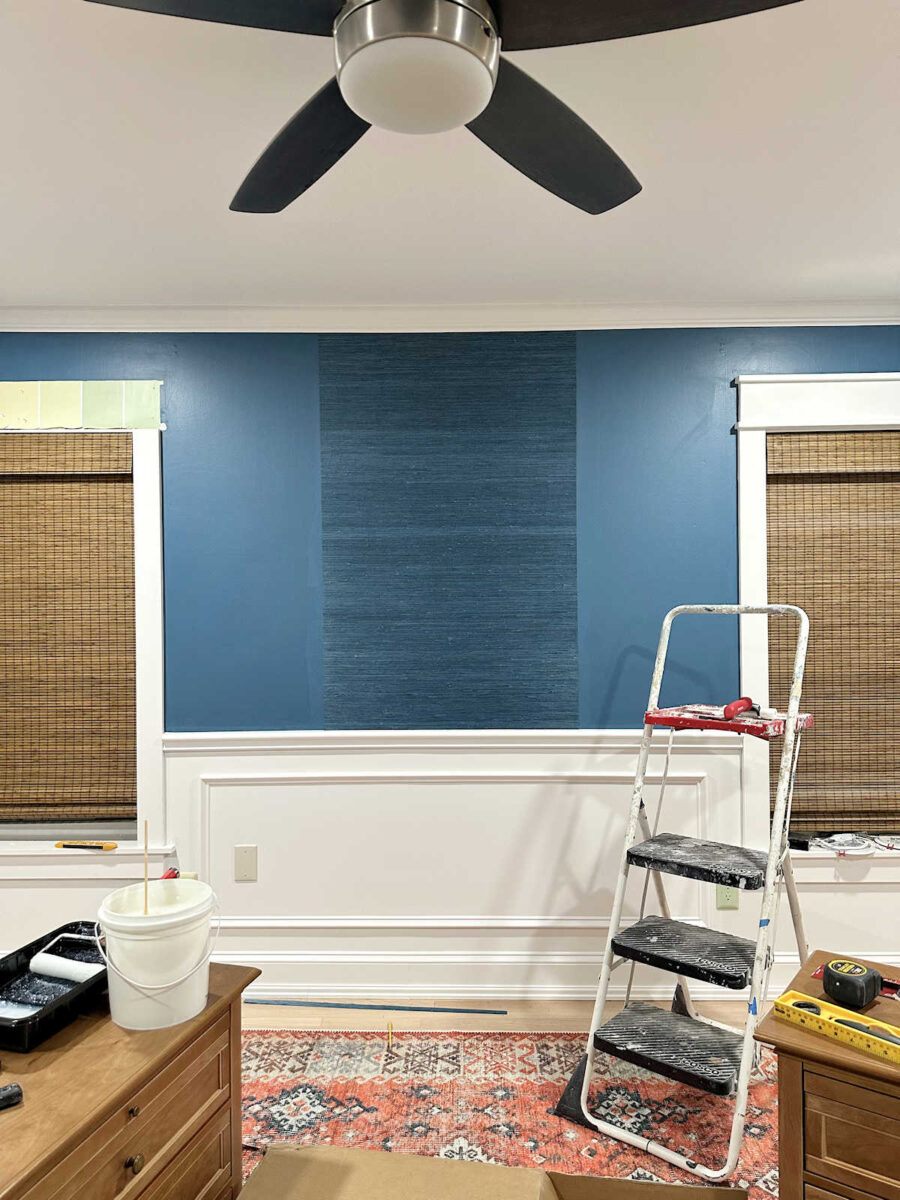
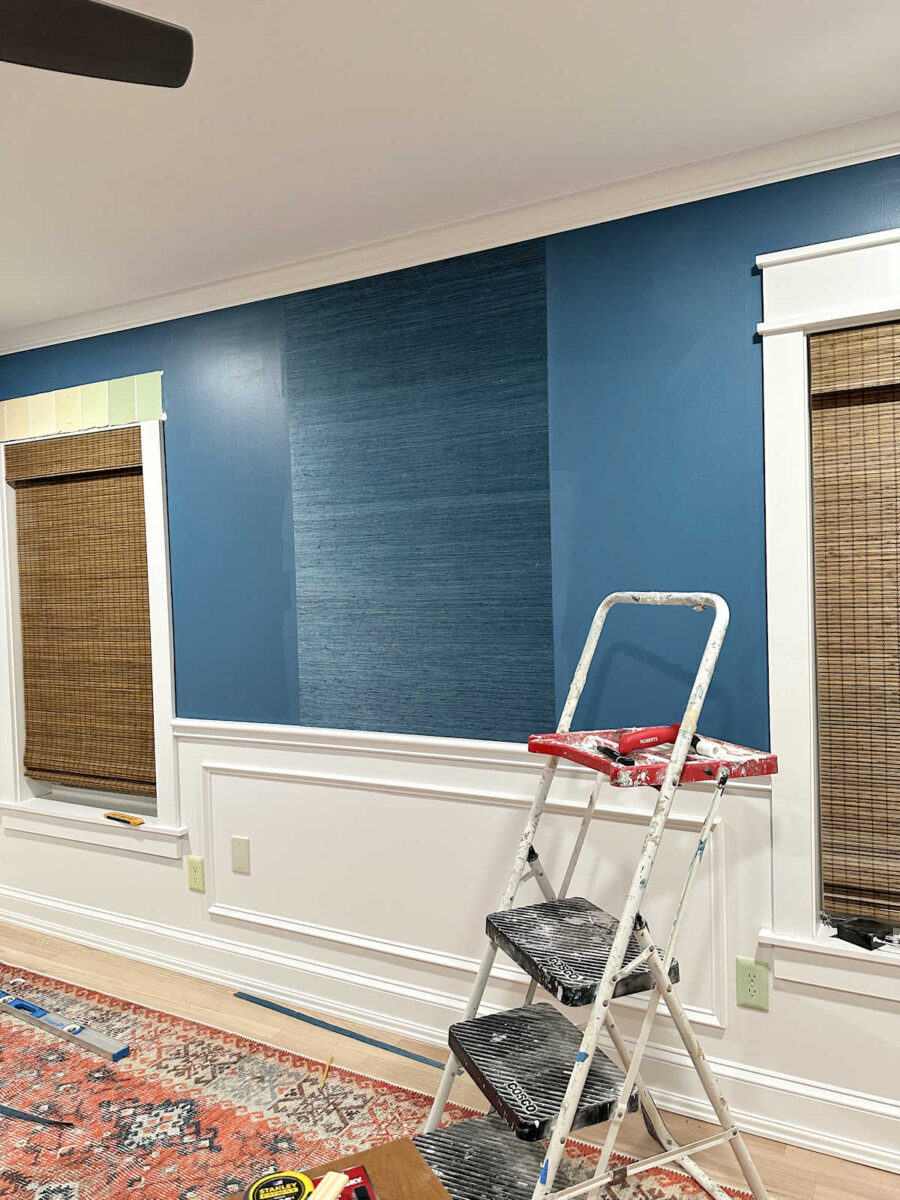
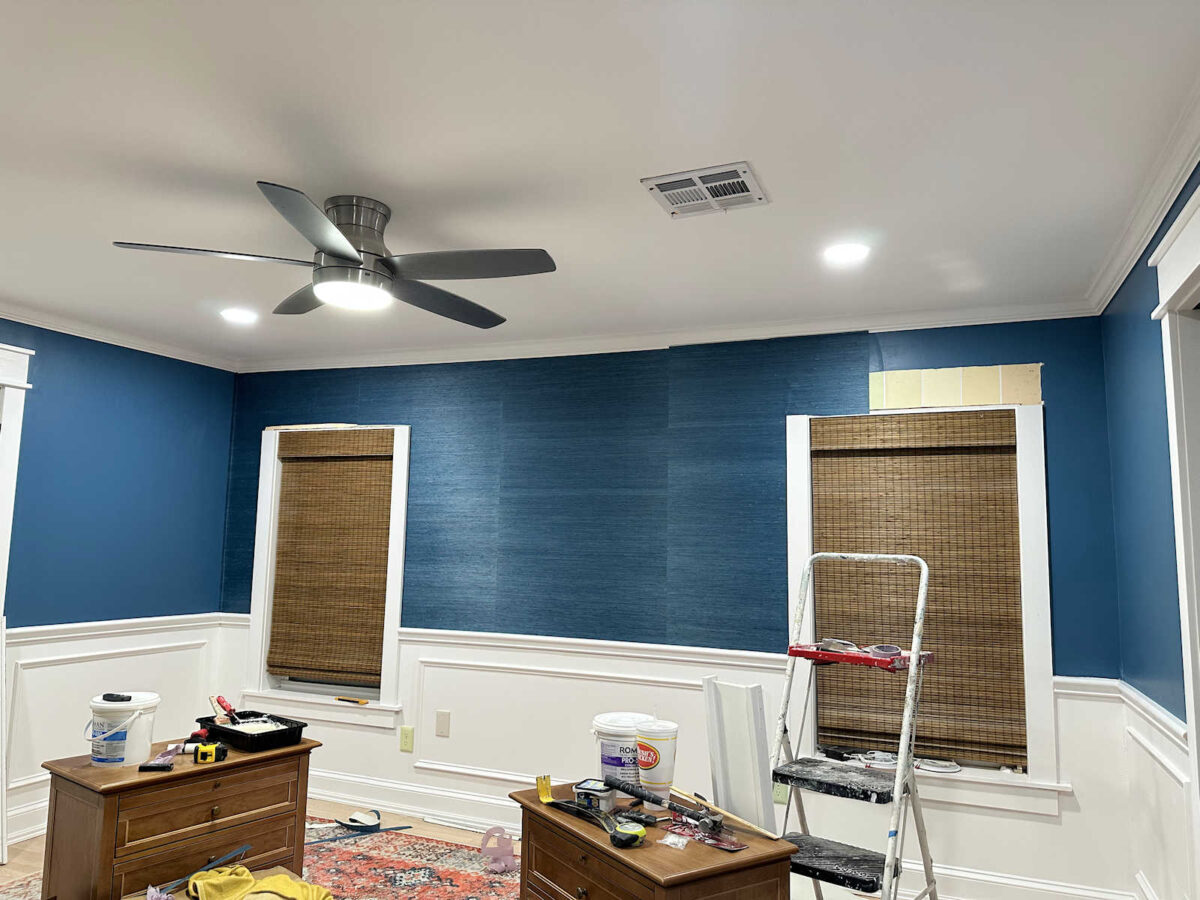
And then I worked out from there, with pieces #2 and #1 going to the left of that first piece, and pieces #4 and #5 going to the right of that first piece.
6. Decide if you want to work around or remove trim
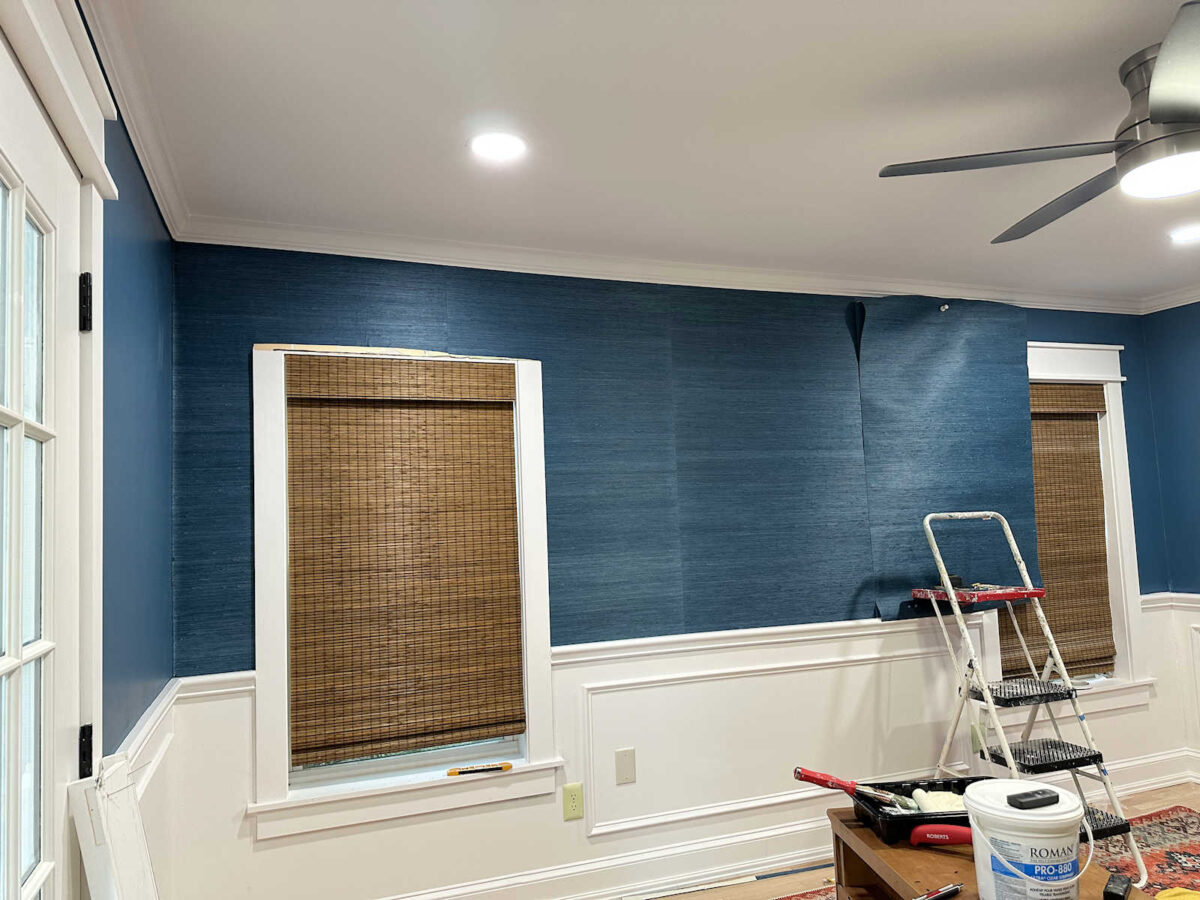
Because of the design of my window and door trim, I decided to remove the top header trim pieces on all of the doors and windows instead of trying to cut around them. But I left the vertical pieces since it was easy to cut straight lines against them. If all of your trim is straight with square corners, it’s easier to leave the trim up. If your trim is irregular like mine is or you have fancy trim above your doors and windows, it might be easier to remove it, install the wallpaper, and then reattach the trim.
7. Mark plumb lines for each new piece.
If you have a laser level, this process will be easier and this step will be unnecessary. But I don’t have a fancy laser level, so before installing each subsequent piece, I measured and marked the width of the next piece from the previous piece.

And then I used my bubble level to mark a plumb line on the wall as a guide for the next piece. This helped me ensure that each piece was being installed straight and square and plumb, because without a guide of some sort (either plumb lines drawn or plumb lines from a laser level), it’s easy for those pieces to start getting askew and you go along.

8. Using the “paste the wall” technique
I decided to paste the wall instead of the back of the paper because I felt like I had more control over it. So I used my paint brush to carefully add paste next to the previous piece of wallpaper…

And then I added paste along the crown molding and the chair rail…

And then I rolled the adhesive onto the center portion of the wall.

And as I mentioned above, before hanging the wallpaper, I used a wet rag to moisten the back of the wallpaper and then attached it to the wall.
I mainly used my hands to smooth out each piece, making sure that there were no air bubbles trapped underneath, and making sure to smooth out any wrinkles. I did not use the roller on most of the pieces. Again, my hands were my main tools for smoothing out the paper and pressing the seams into place. I only used the roller if I had any stubborn bubbles or stubborn seams, and I used the roller very selectively only on those areas.
9. Reverse hang the wallpaper.
When installing a solid color grasscloth wallpaper (i.e., one that doesn’t have a printed design on it), you’ll want to reverse the direction of each piece. In other words, start with your first piece going up (remember those arrows I drew on the back of each piece?). And then the next piece will be installed with those arrows going down. On the next piece, the arrows will go up, and the next piece will go down. Continue this until the whole area is covered.
10. Trimming the paper
I trimmed the paper immediately rather than waiting for it to dry before trimming. To do this, I used my 10-inch mudding knife to make sure that the paper was firmly adhered right down the top edge of the chair rail, and the I kept the mudding knife in place to use as a guide for cutting the paper.
When cutting the paper, you don’t want to cut on the side of the mudding knife next to the wall. You risk tearing the wallpaper if you cut on this side.

Instead, you want to cut on the side between the mudding knife and the trim.

I also used the mudding knife to push the wallpaper into the corners to get really sharp creases in the corners. To do this, I pressed gently at first until I felt the mudding knife actually pressing against the wall in the corner (this takes some patience because grasscloth doesn’t like to fold this way), and then I increased pressure until I was pressing very firmly to get a good, sharp crease.

And then I lifted up on the knife, repositioned it a few inches up, and did the same thing until I had worked my way all the way to the top.

In other words, I didn’t slide the knife up the wallpaper. If you slide the mudding knife up the corner while keeping pressure, you risk the corner of the knife catching on the wallpaper fibers and ripping it. Ask me how I know. 🙂 And getting the wallpaper into the corners didn’t take just one pass from bottom to top. I worked with it very patiently, up and down the corner several times from top to bottom, until I got that sharp crease.
At the bottom and top corners where the wallpaper met the trim, I pressed my mudding knife right into the corner and folded the wallpaper like shown below to get the wallpaper right into the corner where it met the bottom trim.

And then I pulled the wallpaper away from the wall, cut away the excess using scissors (not the utility knife), and pressed the wallpaper back into the corner.

Removing that bulk from the corner allowed me to trim the bottom just like normal while getting right into that corner very easily without having to deal with extra bulk.
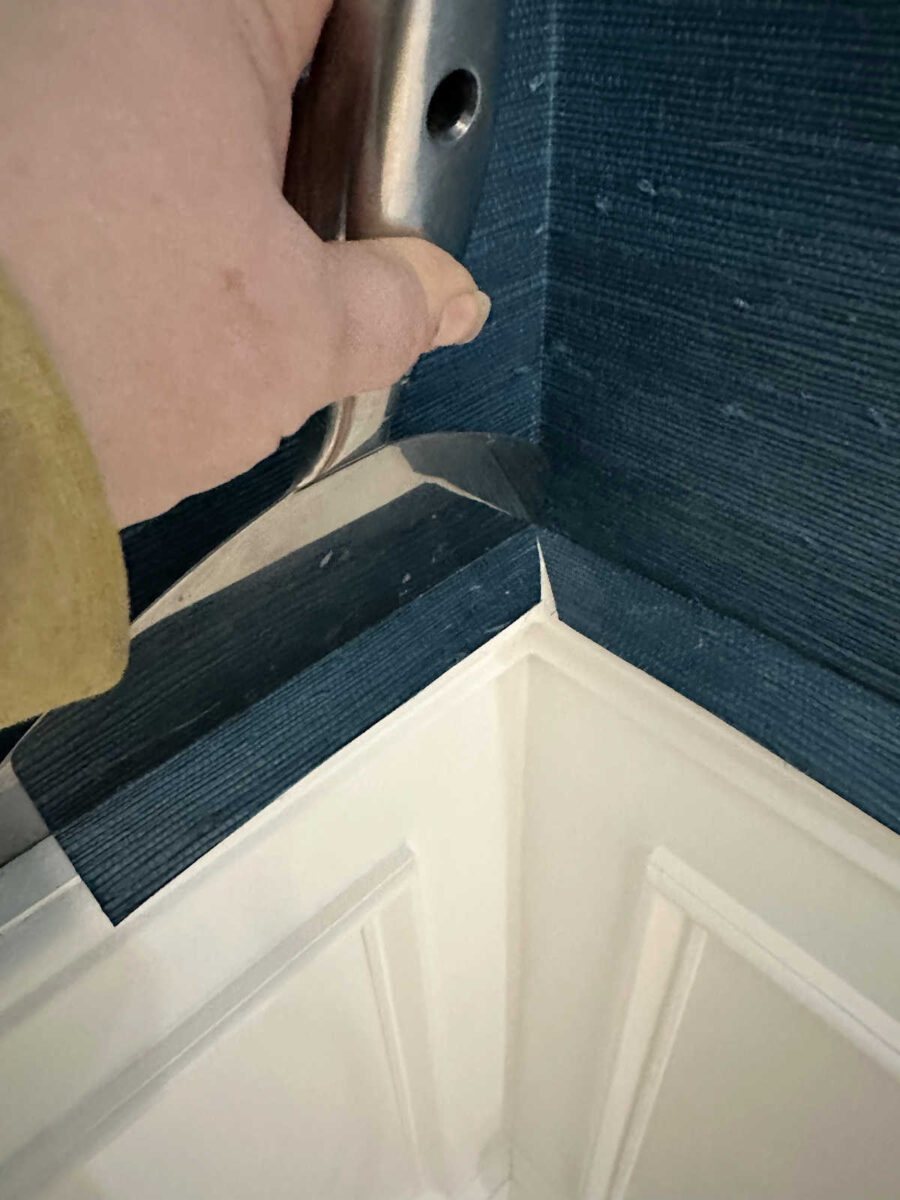
And here’s the finished corner once it was trimmed…

I did the top corners in the exact same way — press the knife right into the corner, fold the wallpaper carefully so that the knife can get all the way into the corner, keep pressing and folding until the knife has pressed the wallpaper right into the corner, pull the paper away and trim away the excess, press the wallpaper back into the corner, and then trim as normal.

11. Working around challenges and piecing together wallpaper
I can’t anticipate or address every challenge that you may come across while installing grasscloth wallpaper, but I’ll share this one challenge that I ran into and show you how I solved it. My closet doorway doesn’t have trim around it, and I wanted the grasscloth to wrap around to the door jambs.
It seemed simple until I started working on it, and then I realized that I couldn’t wrap the same piece of wallpaper around both the side jamb and the top jamb. Since seams are so visible on grasscloth, it was imperative for me to maintain my 36-inch widths on the walls. But by maintaining those 36-inch widths, that meant I could only wrap the wallpaper onto the top jamb, or I could wrap it onto the side jamb, but I couldn’t do both with one sheet of wallpaper. Obviously, I chose to wrap it onto the side jamb since those are bigger and more visible, but that left me with only partial coverage for the top jamb. So I ended up trimming the grasscloth along the edge, leaving the top jamb completely uncovered in this step.
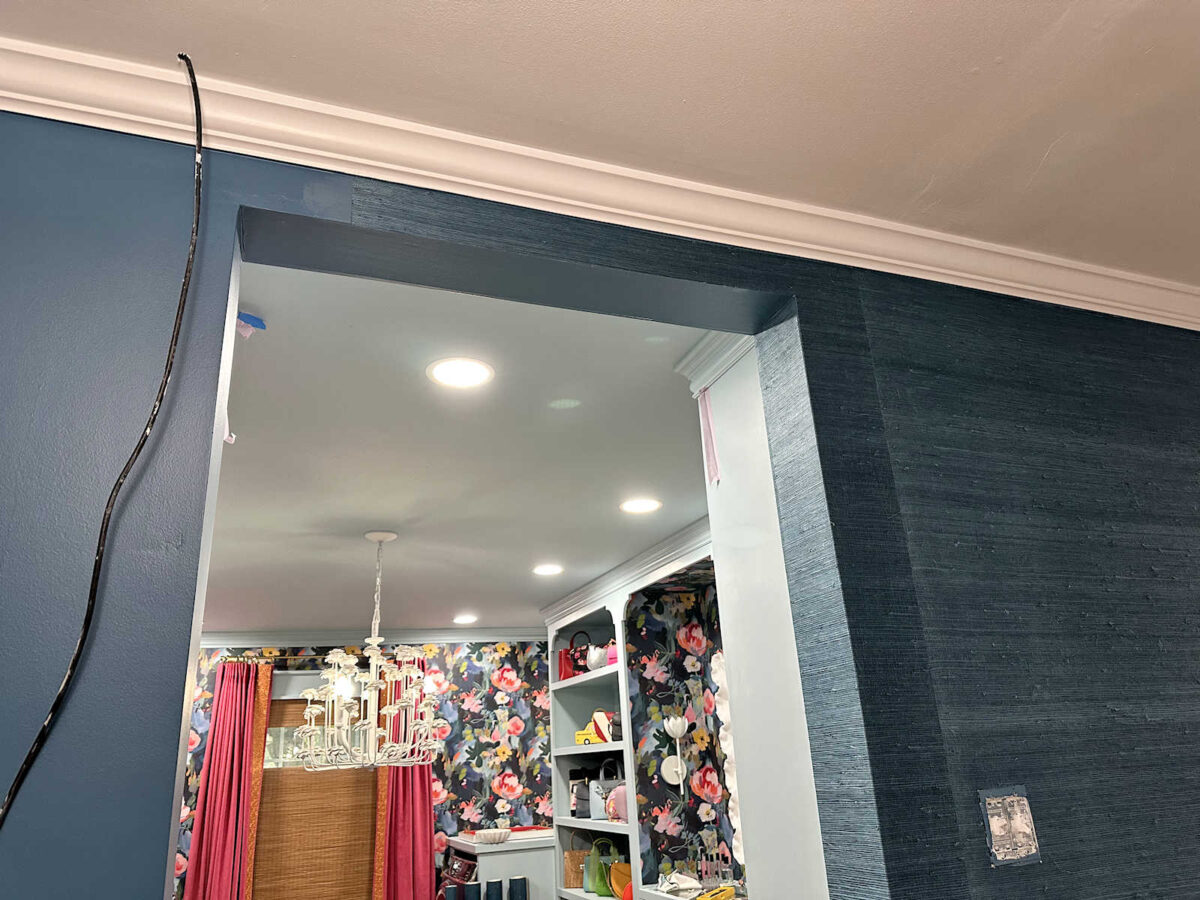
I went ahead and hung the next piece of wallpaper to the left of that one, and I did the same thing — wrap the side jamb of the doorway with the grasscloth and cut away what was left of the excess right at the corner of the top jamb. And then I went back with separate pieces and covered the top jamb, maintaining the seams where the two main pieces meet so that it looks like the wallpaper is seamlessly wrapped around the top jamb. So in reality, those two pieces covering the top jamb are completely separate, but they look like they’re wrapped around from the wall.
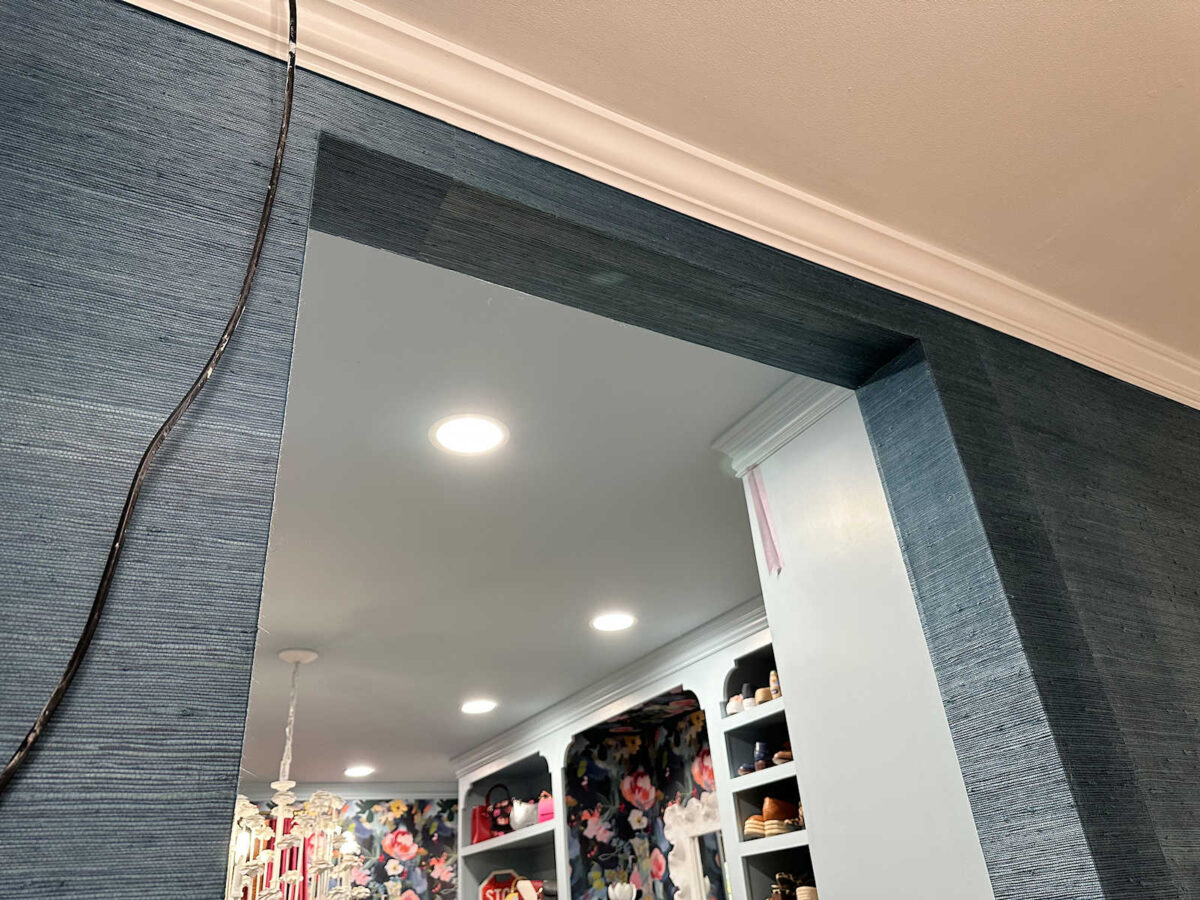
And that’s it! If you have experience hanging regular wallpaper, you shouldn’t have any problems installing grasscloth. I was pretty intimidated by it before I started and even considered hiring out the process because I was so unsure of myself. But I’ve had plenty of experience installing regular wallpaper and couldn’t find anyone in my area experienced in hanging grasscloth wallpaper, so I decided to just go for it.
And now, in hindsight, I’m so glad I didn’t waste the money to hire out this process. It’s only slightly more challenging than installing regular wallpaper.
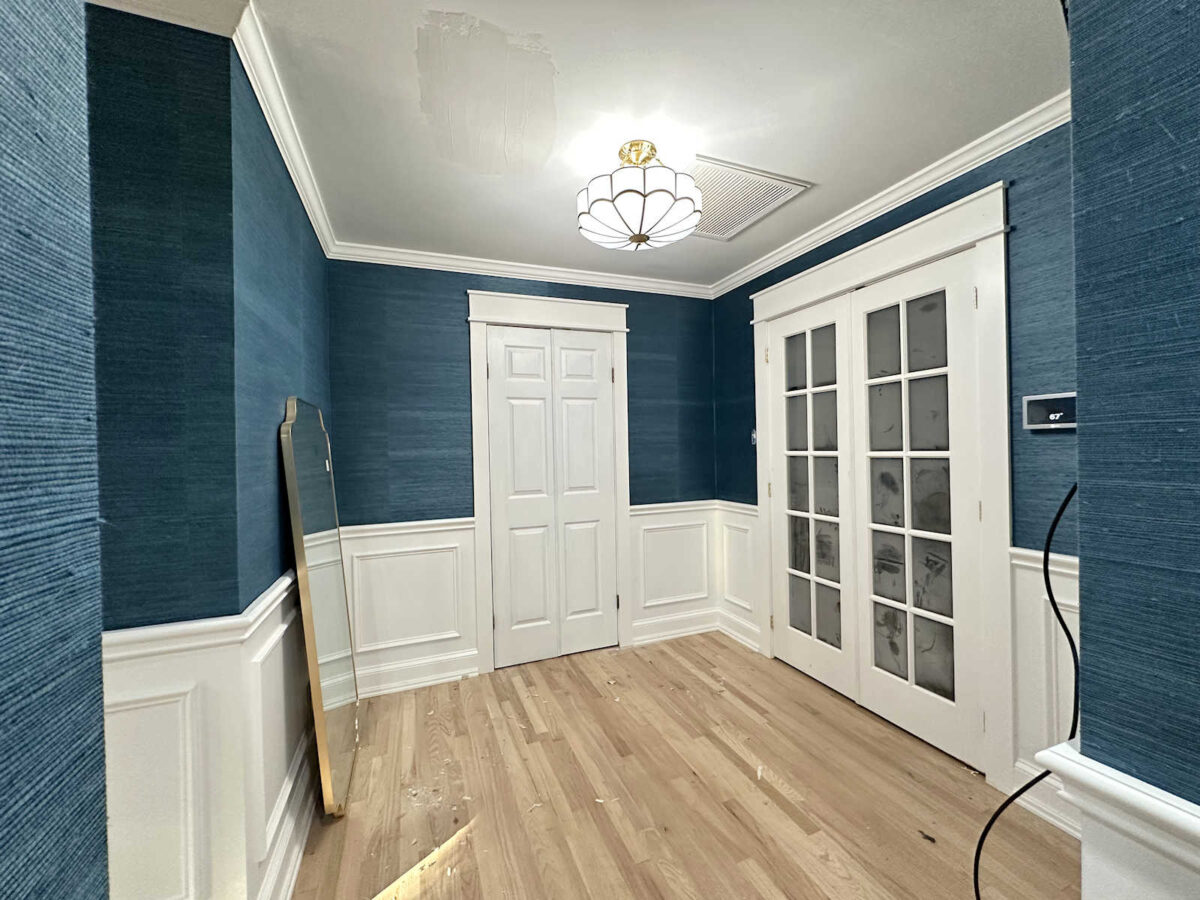
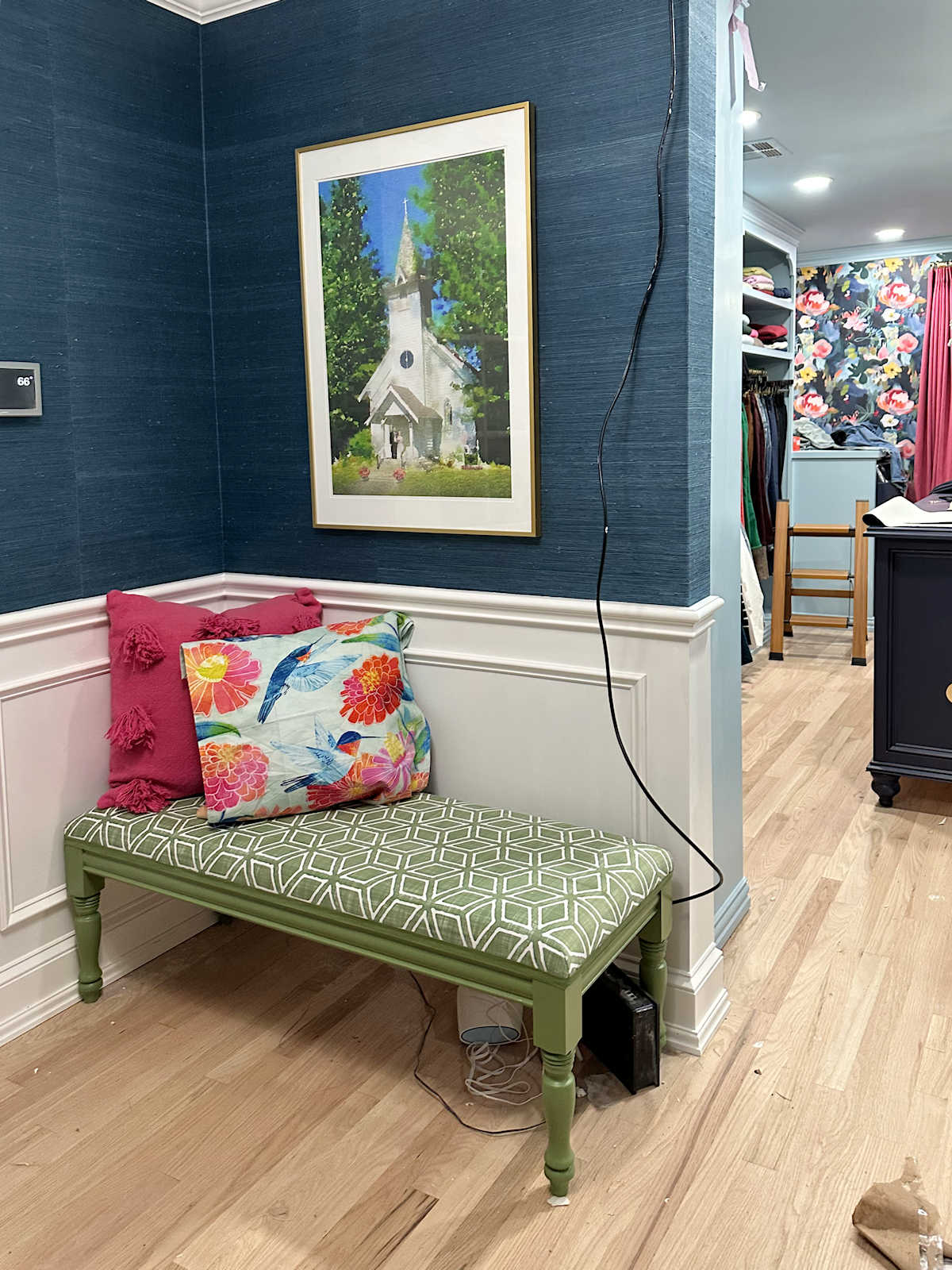
And the payoff is so worth it! There’s just nothing like grasscloth in my book. Now I need to get our router moved to another room so that it’s not distracting from my gorgeous walls. 😀

Addicted 2 Decorating is where I share my DIY and decorating journey as I remodel and decorate the 1948 fixer upper that my husband, Matt, and I bought in 2013. Matt has M.S. and is unable to do physical work, so I do the majority of the work on the house by myself. You can learn more about me here.

I don’t remember if you were going to put a chandelier in your bedroom or not. I have a
Fandelier from Amazon. I have had a crystal one for five years and love it . I keep the fan on medium speed and it’s plenty cool. Love the remote also.
I noticed that there is texture on your walls, but it doesn’t seem to matter with a heavier wallpaper like grasscloth. Can you leave the texture for regular wallpaper?
My walls don’t have standard texture on them (like an orange peel texture). The only texture on my walls is left over from the stripes I painted in the home gym (the texture left from painting stripes right up against painters tape), and the texture just from rolling paint onto the walls. None of that affected the finished look of the grasscloth wallpaper since grasscloth is so thick. But for standard wallpaper, whether or not texture will show is going to depend on the wallpaper. For example, the wallpaper I used in my closet was pretty thick for standard wallpaper. It would easily go over a light orange peel textured wall. But Spoonflower wallpaper is thinner, so any wall texture might show through that wallpaper. It really depends on the specific wallpaper, so I’d suggest contacting the manufacturer before buying wallpaper and asking if the specific wallpaper you want will work over the specific texture you have on your walls.
Thank you!
Amazing! I just love your tutorials! It looks really great. I hae wanted wallpaper, but as little intimdated by all the plumb and squaring bits. Seeing you work through all your issues has really made me less anxious about it all. Thank you for all the transparency and vulnerability! Much appreciated
The grasscloth looks beautiful. I love the color. It appears that you wrapped the grasscloth around the corners and continued it onto the next wall. If your walls aren’t straight this can lead to the wallcovering to be at an angle and not be plumb on the next wall. I’ve always cut the wallpaper about 1/2″ onto the next wall when wrapping around an inside corner then started the new wall with a new plumb line. Did you have this problem? I’m wondering how you will hang your mirror over the chair rail. Is there a trick you use to keep the mirror hanging at an even distance from the wall at the top and bottom and not move like a sewsaw on top ofthe chair rail?
I didn’t have a problem at all with wrapping my wallpaper around the corners, but I cut the paper about 3 inches longer so that I’d have about 1.5 extra inches on top and bottom. But it all worked out perfectly for me.
I’m still trying to figure out how to hang the mirror. I have a plan, so we’ll see if it works out.
Wow I love your tutorials. You do go into the finest and smallest details. Thank You. Wall paper scares the hell out of me. Everything looks beautiful. I need to paint a hallway wall but am going to use one of your tips about painting the trim at the bottom. I have read your blog for a very long time and always appreciate your hard work and dedication.
This looks really great! Love it even more every time I see it! Question regarding inside corners: Will the grasscloth possibly shrink away from the corner with time? Do you overlap/wrap the inside corners a bit and then overlay the next piece right into the corner? Did you have any corners that were not plumb, meaning having to cut the paper at an angle? I have encountered this issue with regular paper at my wonky old house.
I just wrapped my paper right around the corners with no problem at all. I don’t think there’s any chance it’ll shrink away from the corner. I only had one area where I had to cut the side edge of the piece because it didn’t end up plumb, but it was above the doorway between the foyer and the music room, so the cut was small. That was an advantage in pasting the wall instead of the back of the paper. I was able to put the next piece on, put the piece straight so that it overlapped the previous piece a bit, and then use my straight edge to cut through both pieces so that they lined up perfectly with each other and were perfectly plumb.
You have to be so proud…I know I would be!
In the end, did you have any appreciable amount left over?
I knew you were sweating the “no room for error” issue.
I did! I had four whole pieces left! I’m going to roll them up and store them away in case I need to replace a piece in the future if one gets damaged. I’ll guard them with my life since they’re the only four pieces left in the country. 😀
Kristi, I’m just sitting here looking at the photos of your finished wallpapering job and shaking my head in amazement. And not only the wallpapering, but the whole room, from the floor, to the wainscoting, to the trim, to the light fixture, to the furnishings, to it all. There’s nothing in this bedroom that your hands have not touched and improved. And that’s not even talking about the closet/laundry room. You are amazing! You are the only decorating webpage I follow, and I thoroughly enjoy your posts. Your vision, your talent, your skills, just SMH. Ya did good, kid.
Kristi, I noticed that after painting, there’s some paint marks on your hard wood floors.
How do you clean that off? Inhad professional painters get paint spots on my floor because they hurried to finish part of a wall, without covering the floor!
I have tried everything from floor soap and water to specially formulated latex paint remover for hardwood floor! Nothing completely removed it and only dulled the finish, so now it’s very obviously different from the rest of the floor!
Luckily, in the worst area, front door entrance area, I just put down a floor mat
Oh no! I find that mine come off very easily. If one is stubborn, I just leave a wet sponge on it for a few minutes, and then when I come back, it wipes off. I might have to use my fingernail to get all of it up, but so far, I haven’t had one that won’t come off. Most of the white that you see on my floors is drywall mud, though. And that comes off very easily with water.
Kristi, You’re a remarkable and dedicated homemaker in all that you do, and it’s very obvious everywhere you look. I commend you. Your posts are very thorough and cover many topics which is a big part of what draws me to your blog. I enjoy and always look forward to your next one. Someone mentioned that your closet kinda looks unfinished without trim around it, and now that everything is finished, it does look like that to me also. Will you be adding a little something around it to tie in with the rest of the doorways?
I’ll be adding some very small trim to cover the cut edges of the grasscloth, but that’s it. Other than that, it turned out exactly like I envisioned it.
It looks great Kristi! Your detailed instructions and tips are spot on. Hanging grasscloth is quite different than basic wallpaper and requires a bit of prior knowledge in hanging general wallpaper in my opinion. With your hints and tips, I think just about anyone can do this as a first foray into grasscloth. (But they might want to allow an extra roll, that could be returned if unused!) The only extra hint I would give is if you have no experience in wallpapering, do not try to do a bathroom as your first attempt! Everyone thinks since it’s a small space, it would be easy, but there are way too many hassles for wallpaper in a bath. Better to choose a simple space with the least amount of spatial interruptions possible.
Hey Kari. So VERY sick about the wet grass cloth. Its not the biggest problem on earth but you have worked and worked on that project. Im 5 feet tall and that is a lot to take on. So very glad Matt is doing better!! You have my heart girl!!♥️♥️
What wallpaper did you use for this room?
The wallpaper I used has been discontinued, but Thibaut has a similar dark teal grasscloth wallpaper.