
PVC Boards vs. Real Wood Boards — An Update (And Why I’ll Choose PVC Any Chance I Get For Outdoor Projects)
I wrote a similar post to this back in 2022 (almost exactly three years ago), but I wanted to do a follow up because I’ve been using a lot of PVC boards in my projects lately, and I have several more planned for the exterior of our house (hopefully this year). Over the last few years, I’ve come to love PVC boards, and when it comes to outdoor projects, I’ll select PVC boards over real wood any chance I get.
Just recently, I’ve used PVC boards for the shutters on the workshop…

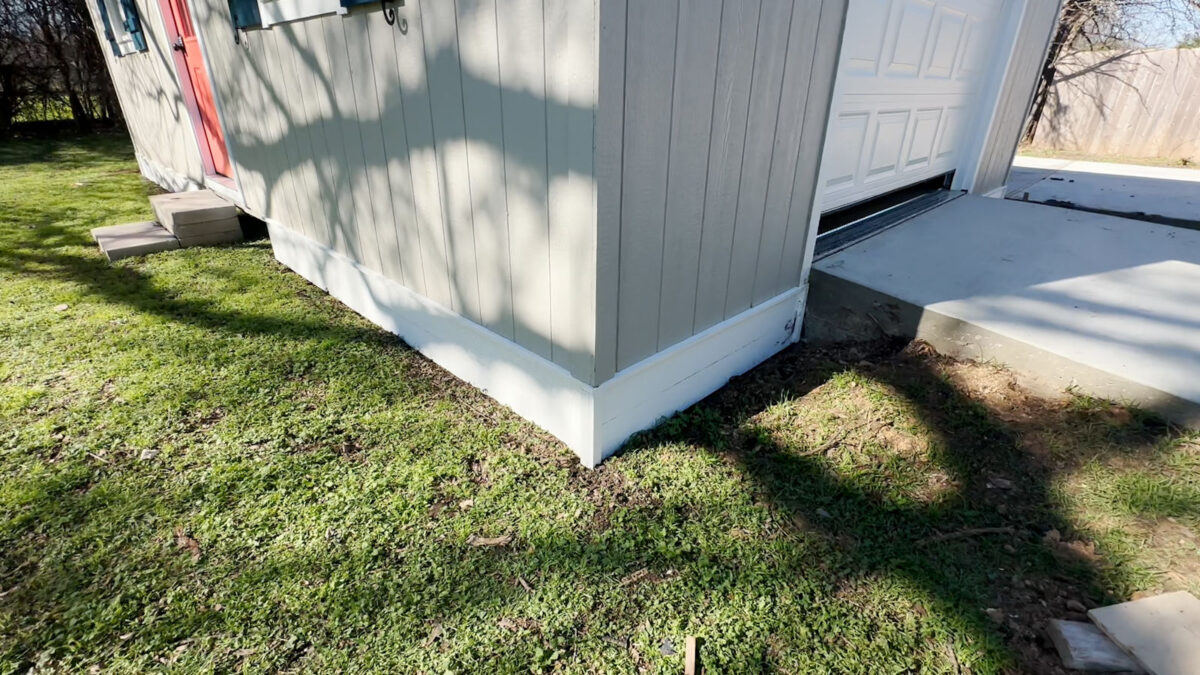

And finally, the window boxes on the workshop…
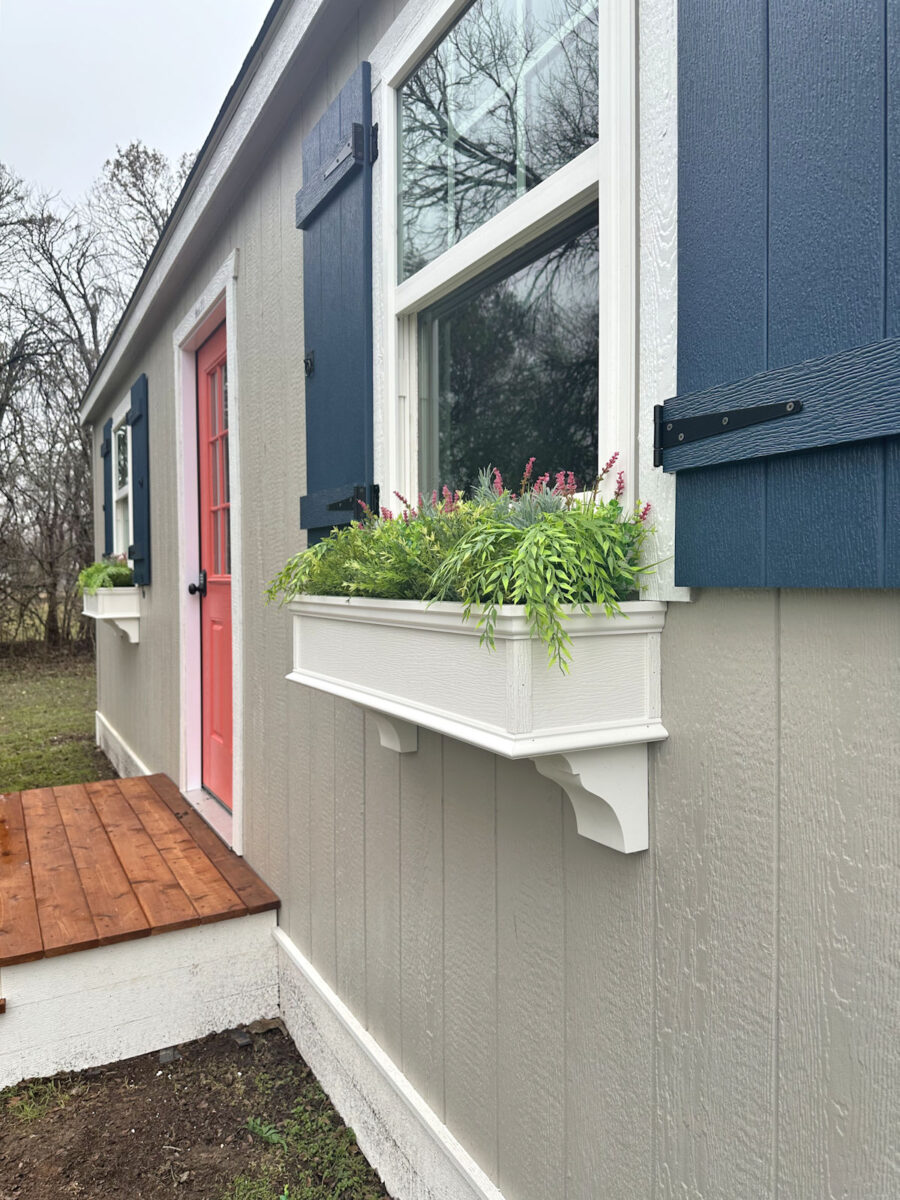
All of those things are made with PVC boards, and from here on out, I’ll choose PVC boards for outdoor projects any chance I get. They’re not appropriate for every project, but when they are, I’ll choose them 100% of the time.
Here are the three reasons I’ll always pick PVC boards over real wood boards when I can.
PVC boards don’t rot
All one has to do is look at my front porch in order to see the vast difference between PVC boards and real wood boards. The columns on my front porch are clad with real wood. I coated that wood with several coats of oil-based primer before painting them with either two or three coats of exterior paint. I finished these columns in March 2018, so almost seven years ago.
Here’s what they look like today…

I mean, this is pretty rough looking. This isn’t just a repair job that calls for a little caulk, wood filler, and paint. These need to be redone…with PVC boards and trim.

This is not what I want the front porch of our house — the first thing people see when they come over — to look like. This is not the welcome I want for guests. Heck, I don’t even want that welcome for myself.

This column on the far right — the one that gets the most exposure to the elements — is the worst. Again, that’s not something that a little caulk and paint can fix.

At some point between finishing the front porch columns in March 2028 and building the front porch steps in August 2018, I learned about PVC boards. So when I built the newel posts for the front steps, I used PVC boards instead of wood. And while they could stand to have a thorough cleaning (you’ll have to look past the dirt and grime), and I took the picture yesterday in the rain, you can see the vast difference between this PVC newel post and the wood columns.

As far as the integrity of the boards, they look just as good today as they did the day I built this. There are no separating joints to be found anywhere on these posts. And again, this was built 6 1/2 years ago.

This is how I want everything outside to hold up, and this is what you get with PVC boards and trim.

Below, you can see the long vertical joints. And again, there are no cracks to be found. Dirt? Yes. 😀 Cracks? No. Rotting? Of course not. It’s PVC, which doesn’t rot.

PVC boards hold paint amazingly well
When I made the shutters for the front of our house and the side of my studio, I chose PVC boards. I wanted the no-rot benefit of the PVC boards for the shutters, but I wasn’t quite as confident about how they would hold paint for the long run. I imagined that after a couple of years, the paint might peel, and I’d be repainting shutters every couple of years.
I was especially concerned about this since I decided to go with a really dark color, and I’ve always heard that dark colors + plastic (think: vinyl siding) + hot Texas sun for months on end could equal disaster, with the dark color and the sun warping the boards or siding. But after contacting the PVC board company and telling them my plans, they said it could be done as long as I use vinyl-safe paint. And I learned that Sherwin Williams can mix vinyl-safe colors. From what they explained to me at Sherwin Williams, they basically replace any black in the color with dark blue, and that makes it vinyl-safe.
I was skeptical, but I decided to take that gamble, fully expecting that I’d be scrubbing off peeling paint every couple of years and repainting. But that hasn’t happened. Here’s a look at the shutters on the front of my studio, which I made in April 2018. This is the picture I took of the brand new, freshly painted shutters after installing them almost seven year ago…

And here’s what those two shutters look like today…

The years have definitely made the sheen of the paint more of an eggshell or even matte finish (which I prefer…y’all know how I feel about shiny paint finishes 😀 ), but there’s no peeling paint in sight. The only thing that looks old on those shutters is the hardware, which is in desperate need of a fresh coat of black spray paint. But as far as the PVC boards themselves, they look great! No peeling paint, no chips in the paint, and no warping of the boards at all. And I haven’t done anything to those in the seven years since I made them.
PVC joints won’t separate as long as they’re put together properly
This is my absolute favorite thing about PVC boards. There’s a big reason that the joints in my wood boards and trim look like this…
While the joints in my PVC boards and trim look like this, with no cracking or separating, over the same amount of time…
So why do those look so amazing (other than the dirt 😀 ) after 6 1/2 years? The key is the PVC glue. When building with PVC boards, don’t ever forgo the PVC glue. That stuff is like magic in a bottle. PVC glue is a combination of solvents and resins that “melt” the boards together, creating a strong chemical bond between the two boards (or trim and board, or two pieces of trim) that are being joined together. It’s basically the equivalent of “welding” the two pieces together.
The main drawback of using PVC boards
There’s always a downside, and of course, the downside to using PVC boards instead of wood is the cost. I didn’t do any exact cost comparisons of the two, but if I had to guess, I’d say that PVC boards are about double the price of wood. So the upfront cost of the project is going to be more. But the payoff of that upfront cost is plain to see.
A homeowner in my neighborhood built and installed shutters several years ago, and while I haven’t seen them up close to verify, I’m pretty sure they were made of cedar that they stained/sealed to protect the wood. While I won’t share a picture on the blog (I’d never do that to my neighbors), let’s me just say that those shutters are looking pretty rough these days. They clearly need regular upkeep and regular staining to maintain that look (much like my front porch and front steps). But my shutters, 6 1/2 years after being installed, still look great.
A limitation of PVC boards
The main limitation of PVC boards is that I would never use them for anything structural. If you watched my video where I installed the skirting around my workshop, you could see just how bendy and flexible the PVC boards are. So I would never use them to build anything large that needs to have lots of structural integrity. Something small like flower boxes are fine. Something large, like steps to a house or workshop, are out of the question.
That’s why, when building the front steps to our front porch and building the steps for the workshop, I built the frame for the steps out of ground contact pressure treated lumber. It’s the wood lumber that gives the steps the structural integrity they need. But then I clad the structure with PVC boards. And that’s also why I’ll be building the workshop pergola(s) out of real wood lumber as well. Those pergolas are large and carry lots of weight, so they need the structural integrity of real lumber.
So you do have to consider the limitation of PVC boards before deciding if and when to use them for a project. But I’ll always choose PVC boards for any outdoor project where I can use them.

Addicted 2 Decorating is where I share my DIY and decorating journey as I remodel and decorate the 1948 fixer upper that my husband, Matt, and I bought in 2013. Matt has M.S. and is unable to do physical work, so I do the majority of the work on the house by myself. You can learn more about me here.
This is such wonderful information. I learn something with every post you write, and it’s invaluable. I’m getting more comfortable with my projects, thanks to you! I’ve even designed my own “work shop” in our storage area which will come to fruition this summer. You are one very amazing woman, and I’m grateful for all you’ve taught me (and others). My best to you and Matt.
I have ripped down some PVC boards and used the glossy side for trim around the new shower in my ensuite. As you say, no rot and they take paint well. I just glued them and no nail holes to fill. One less place to grow mildew.
I really appreciate your posts where you give detailed information on the pros and cons of various construction methods and materials as you did in this one.
This is super useful information. Going to explore further for our more dramatic winter environment. Moisture, freeze, thaw, sun, repeat is a cycle that sure is stressful on building materials. Was not aware of the bonding materials.
You took the words right out of my mouth. We use as much PVC wood up as we can, we have mutant carpenter bees here and they everything they can sink their little teeth into. Our front porch was literally being eaten to oblivion. We took off all the wood two years ago and had them build up the front porch to be even with the front door, we have people who come to the farm with mobility issues, and then they poured concrete, and I mean a lot of concrete. Then they stamped it, of course I had them color it to my favorite gray, and trust me, it’s your favorite color too. The stamping is the Belgian running bond, and it looks like stone. We did the sidewalk to the same way, and anything on the front porch is made out of PVC, and the columns are made from stone dust. You are right about Sherwin Williams; they make some great paint. Before they finished up, I had them clad the giant block of gray concrete in some really nice stone, then paint black rectangles and over that we put in PVC lattice, the small square stuff and frame it out in gray PVC boards. When you drive up to the house, you think that the porch has a crawl space underneath, and the lattice is just there for air circulation. Anyway, it was one of my most favorite projects to date with the house, because now all I have to do is give a pressure wash a couple times a year. No more bees trying to eat us out of house and home. I am happy to report that my husband is on board with the shutters and may even stretch to some window boxes, as long as I keep the plants fake and not require a daily watering. I’ll be shopping for the ones you bought here shortly. Thanks for that.
I think the only downside of PVC, short of the eyewatering price, is that it is a little tougher on the saw blades. I can’t wait to get started, now all we need is cooperation with Mother Nature and this cold snap.
Cheers!